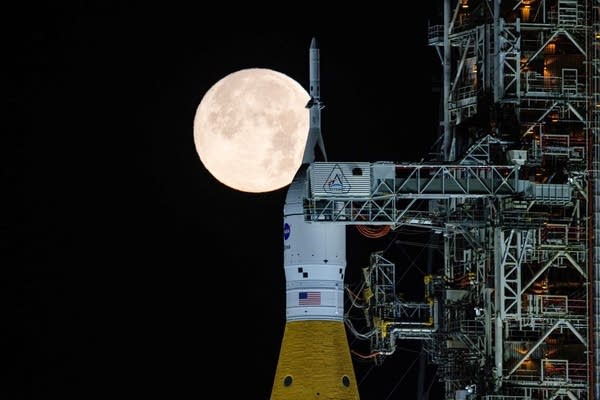
It’s humanity’s first flight to the moon since 1972.
In a throwback to Apollo, NASA’s Artemis II mission will send four astronauts on a lunar fly-around. They’ll hurtle several thousand miles beyond the moon, hang a U-turn and then come straight back. No circling around the moon, no stopping for a moonwalk — just a quick out-and-back lasting less than 10 days.
NASA promises more boot prints in the gray lunar dust, but not before a couple practice missions. The upcoming test flight by Artemis astronauts Reid Wiseman, Victor Glover, Christina Koch and Jeremy Hansen is the first step in settling the moon this time around.
Here’s a snapshot of the Artemis II mission.
The Artemis astronauts are a diverse and international crew
The moon is about to welcome its first woman, first person of color and first non-American.
Koch already holds the record for the longest single spaceflight by a woman. During her 328-day mission at the International Space Station spanning 2019 and 2020, she took part in the first all-female spacewalk.
Glover, a Navy test pilot, was the first Black astronaut to live and work aboard the space station in 2020 and 2021. He also was one of the first astronauts to launch with SpaceX.
The Canadian Space Agency’s Hansen, a former fighter pilot, is the lone space rookie. Their commander is Wiseman, a retired Navy captain who lived aboard the space station in 2014 and later headed NASA’s astronaut corps. They range in age from 47 to 50.
The Space Launch System is more powerful than the Saturn V rocket
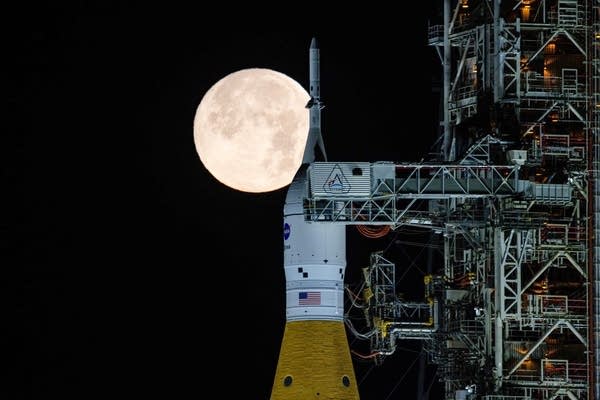
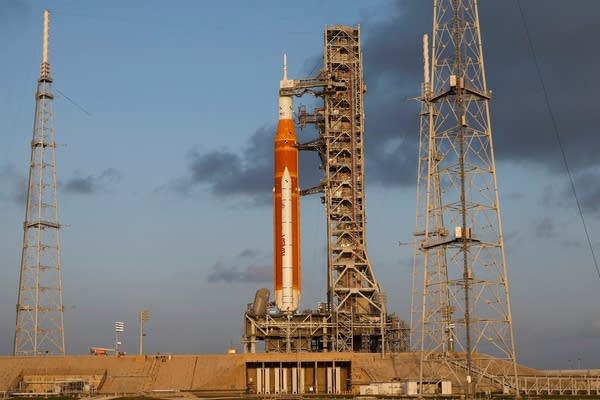
NASA’s new Space Launch System rocket stands 322 feet (98 meters), shorter than the Apollo program’s Saturn V rocket but more powerful at liftoff thanks to a pair of strap-on boosters. Atop the rocket is the Orion capsule carrying the astronauts.
Made of salvaged space shuttle engines and other parts, the SLS uses the same fuel — liquid hydrogen — as the shuttles did. Hydrogen leaks repeatedly grounded the shuttles as well as the first SLS rocket test without astronauts aboard in 2022. More than three years later, Artemis II suffered the same hydrogen leaks during a February fueling practice run, missing the first launch window. A repeat of helium-flow issues bumped the mission into April.
How Artemis II will fly around the moon
After liftoff, the astronauts will spend the first 25 hours circling Earth in a high, lopsided orbit. They’ll use the separated upper stage as a target, steering their Orion capsule around it as docking practice for future moonshots. Instead of fancy range finders, they'll rely on their eyes to judge the gap, venturing no closer than 33 feet (10 meters) to the stage.
“Sometimes simple stuff is the best,” Wiseman said.
If all goes as planned, Orion's main engine will hurl the crew to the moon some 244,000 miles (393,000 kilometers) away. This free-return trajectory made famous in Apollo 13 relies on the moon and Earth’s gravity, minimizing the need for fuel.
On flight day six, Orion will reach its farthermost point from Earth as it sails 5,000 miles (8,000 kilometers) beyond the moon. That will surpass Apollo 13’s distance record, making Artemis astronauts the most remote travelers. After emerging from behind the moon, the crew will head straight home with a splashdown on flight day 10 — nine days, one hour and 46 minutes after liftoff.
What to expect during the Artemis flyby
The Artemis II crew may behold never-before-seen regions of the lunar far side — with the moon appearing the size of a basketball at arm’s length during the closest part of the roughly six-hour flyby. They’ve been poring over maps and satellite images of the lunar far side and anticipate a photo frenzy. Their lunar mentor is NASA geologist Kelsey Young, who will monitor the flyby from Mission Control in Houston.
“The moon is like such a unifying thing,” she said. “What we're doing with this mission is going to bring that a little closer to everybody around the world.”
Besides professional cameras, they’ll carry the latest smartphones. NASA’s new administrator Jared Isaacman added smartphones to the mission for “inspiring” picture-taking.
While NASA and private companies have focused over the years on reaching the moon's near side — the side that constantly faces Earth — only China has planted landers on the far side. That makes the astronauts' observations of the lunar far side all the more valuable for NASA.
Artemis astronauts will splash back down to Earth
Like Apollo, the Artemis mission ends with a splashdown homecoming into the Pacific.
All eyes will be on Orion’s heat shield as the capsule plunges through the atmosphere. It’s the part of the spacecraft that took the biggest beating during 2022’s test flight, with charred chunks gouged out. The heat shield is being retooled for future capsules but remains the original design for Artemis II.
NASA is limiting the heat exposure during reentry by shortening the capsule’s atmospheric descent. Navy recovery ships will be stationed off the coast of San Diego as Orion parachutes into the ocean.