
Thursday is our statewide tornado drill day as part of Minnesota Severe Weather Awareness Week. The drill is designed to help schools, businesses and families practice what to do in the event of a tornado warning and to ensure everyone knows where to go for shelter.
When tornado sirens will sound
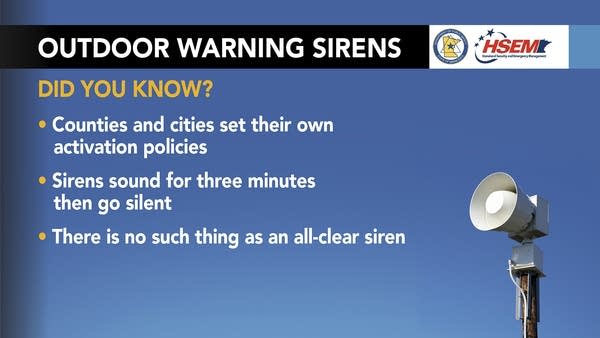
Outdoor warning sirens will sound during the drill times of 1:45 and 6:45 p.m. This is a great opportunity to review your severe weather plan and make sure you’re prepared ahead of the storm season.
Counties and cities control their own warning sirens, the National Weather Service does not activate them. Policies vary by location. Some areas sound sirens only for tornado warnings, while others also use them for severe thunderstorm warnings or damaging wind threats. In some communities, local officials may activate sirens anytime severe weather is a concern, even without a warning from the National Weather Service. Sirens typically sound for two to three minutes.
For details on when sirens are used in your area, check with local public safety officials.
Where to go during a tornado
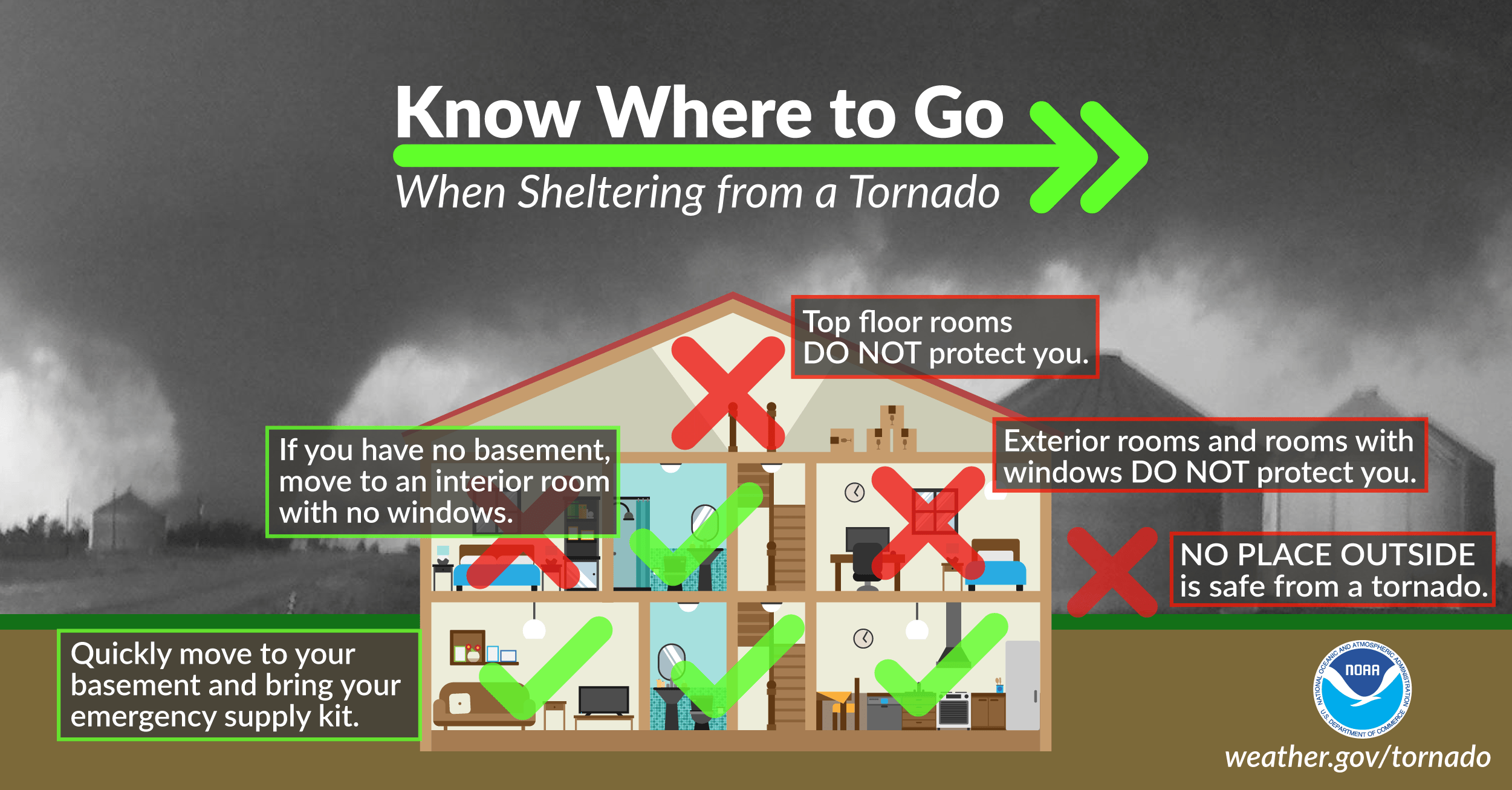
During a tornado drill, you should go to a safe place just like you would in a real emergency. The best place to go is a basement or a storm shelter. If you don’t have a basement, move to a small interior room on the lowest level of your building, away from windows.
Stay away from doors and windows, and get under something sturdy if possible. Whether you are at school or at work, follow the emergency plan and go to the designated shelter area.
Practicing where to go during a drill helps you stay safe and act quickly if a real tornado occurs.
Knowing the difference between a tornado watch vs. warning
Understanding the difference between a tornado watch, warning and emergency is critical during severe weather season.
A tornado watch means conditions are favorable for tornadoes to develop. It does not mean a tornado is happening, but you should stay alert and be prepared in case weather conditions worsen.
A tornado warning means a tornado has been spotted by trained observers or indicated by radar. When a warning is issued, you should take immediate shelter in a safe location.
A tornado emergency is the highest level of alert. It means a confirmed, violent tornado is occurring and poses a severe threat to life and property. This is a rare but extremely dangerous situation requiring immediate action to protect yourself.