
You have been here before. Q2 roadmap, locked and ready. Engineering vendor onboarded, rates agreed. Then week three arrives and so does the first delay email. Scope needs clarification. A senior resource is unavailable. The sprint is being pushed by two weeks. By the time you follow up, it is month two, the budget has crept past estimates, and the product is still not in front of a single user.
This is not bad luck. It is not a resourcing problem. And it is definitely not a people problem. It is a structural problem, one that has been built into the hourly billing model since the first agency invoice was ever raised. When your vendor profits from the time your project takes, they are not incentivised to compress it. They are incentivised to extend it.
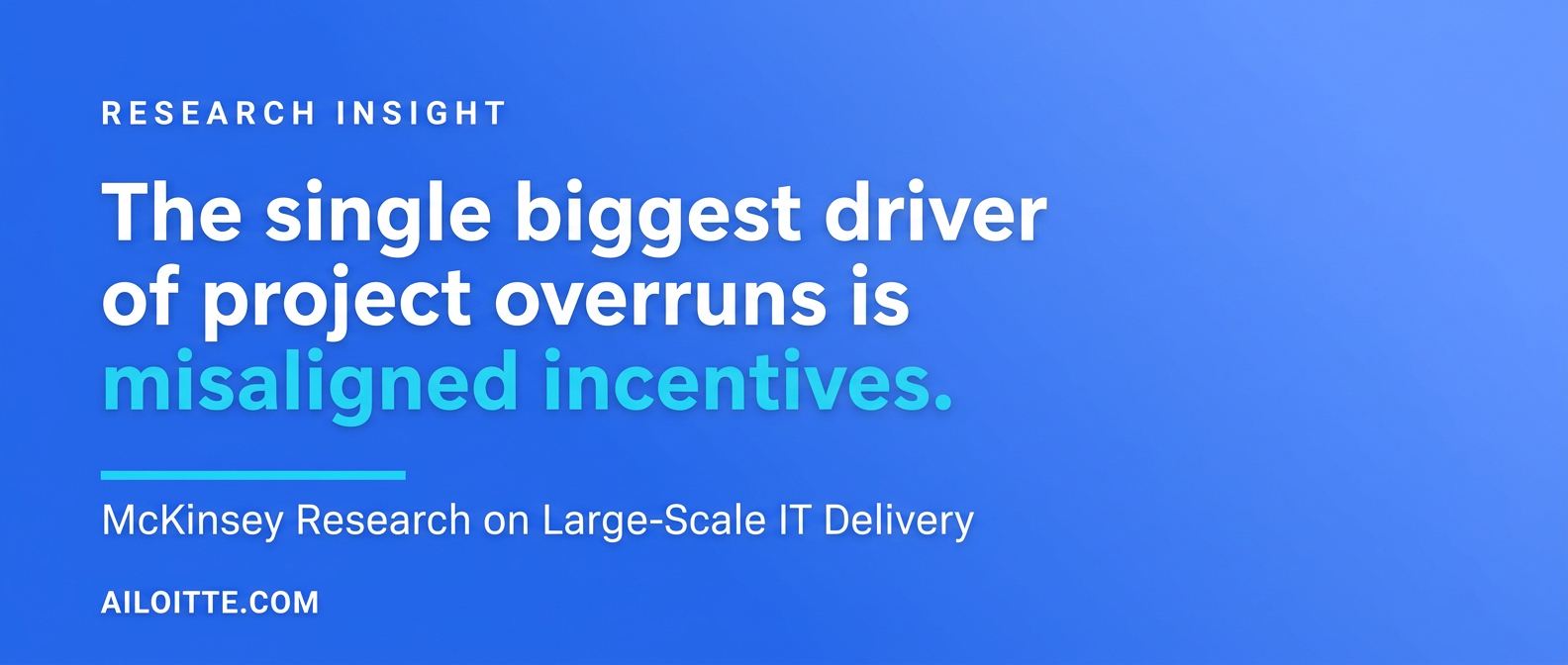
According to McKinsey research on large-scale IT delivery, the single biggest driver of project overruns is poorly defined scope combined with misaligned incentives between client and vendor. The Standish Group CHAOS Report corroborates this finding: Only 31 percent of software projects are delivered on time and on budget under traditional engagement models. The traditional staff augmentation model creates both failure conditions by design. You get a headcount. You get hours. You do not get accountability.

AI Velocity Pods are built to eliminate both conditions. This blog breaks down exactly what they are, why they produce 5X software development results, what the economics look like, and how to know if your next project is the right fit.
Why hourly hiring is dead: the structural argument
To understand why AI Velocity Pods work, you first have to understand why the model they replace is fundamentally broken. Traditional staff augmentation does not fail because the people are bad. It fails because the incentive structure rewards the wrong behaviour.
Platforms like Toptal and Upwork, and most offshore outsourcing arrangements, share the same underlying problem: they bill for time. Every hour logged is revenue for the supplier. Slower delivery directly increases their margin. Here is what that looks like in practice:
- Your vendor adds developers by role, a frontend engineer here, a backend developer there, each billed at an hourly rate.
- Every extra hour logged is revenue for the agency. Slower delivery directly increases their margin.
- Junior developers are frequently placed on your project because they are cheaper to supply. They learn on your budget.
- You spend 10 to 15 hours per week managing tickets, chasing progress updates, reviewing work quality, and policing scope.
- When deadlines slip, the explanation is almost always the same: unclear requirements, additional scope, or team availability.
The fundamental conflict is this: your goal is to ship faster. Their revenue model benefits from shipping slower. These two things are structurally incompatible, and no amount of SLA language in a contract changes the underlying incentive.
This is not a new observation. It is why outcome-based delivery models have been discussed in software engineering for over a decade. What has changed is that AI-native tooling now makes those models operationally viable at a price point that competes directly with hourly agencies. The old model has not just become philosophically outdated. It has become economically uncompetitive.
What is an AI Velocity Pod and how is it different
An AI Velocity Pod is Ailoitte’s delivery unit: a structured combination of senior software architects, governed AI development workflows, and Agentic QA automation, operating as a single outcome-focused system.
Unlike traditional staff augmentation, which adds hourly capacity by role, a Velocity Pod delivers against a defined goal at a fixed monthly cost. The pod profits from efficiency, not from your delays.
What a pod includes
- A senior software architect leading every technical decision with no juniors on your timeline
- Claude and Cursor AI-native workflows for architecture, code generation, refactoring, and documentation
- Agentic QA automation: AI agents write and run end-to-end tests from PR descriptions, ensuring zero-regression delivery
- Dedicated DevOps and infrastructure automation, building for scale from Day 1
- Dedicated VPC deployment with enterprise-grade IP protection and security isolation by default
What a pod is not
- It is not a group of hourly contractors managed by you
- It is not a managed services retainer with vague deliverables
- It is not an offshore team you check in on at sprint reviews
- It is not a body-shopping arrangement dressed up with AI tooling
The structural difference is accountability. A pod has a defined outcome. It has milestone checkpoints. It has acceptance criteria agreed before a line of code is written. When the pod ships, you know exactly what was delivered and whether it matches what was scoped. There is no ambiguity, and there is no incentive to introduce any.
Old model vs AI Velocity Pod: Side by Side
| Feature | Traditional agency | AI Velocity Pod |
| Monthly cost | $25,000+ (variable) | $15,000 (fixed) |
| Code velocity | 1X baseline | 5X faster |
| Management load | 15 hrs/week | 2 hrs/week |
| Security & IP | Shared environments | Dedicated VPC |
| Accountability | Hours logged | Outcomes delivered |
| Onboarding time | 4 to 8 weeks | 7 days to first commit |
| Team seniority | Mixed (juniors included) | Senior-only ownership |
How AI Velocity Pods produce 5X results: the execution mechanics
The 5X claim is not a marketing abstraction. It comes from six specific, traceable execution advantages that compound into dramatically faster delivery. Here is where each one comes from.

1. AI-accelerated coding: 40% faster logic implementation
Every engineer in a Velocity Pod works inside Claude and Cursor, a context-aware coding environment that eliminates boilerplate, accelerates logic implementation, and surfaces architectural options in real time. Cursor IDE alone compresses repetitive development tasks by approximately 40 percent. Claude provides advanced reasoning for complex architectural decisions and automated documentation generation. The result is that a senior engineer operating inside this stack produces output at a rate that is structurally impossible to match with a traditional manual workflow.
2. Agentic QA: zero-regression delivery at every commit
Traditional QA is a bottleneck. Manual testing cycles slow down every release, and regression errors discovered late in the process cost disproportionate amounts of time to fix. Agentic QA eliminates this bottleneck entirely. AI agents write and execute end-to-end tests automatically, based on PR descriptions. Every commit is tested against business requirements, not just syntax. The pipeline catches regressions before they reach a human reviewer, which means QA is continuous rather than sequential and the team can ship without the usual quality-versus-speed trade-off.
3. Senior-only ownership: no ramp-up, no learning curve
Every decision in a Velocity Pod is made by a senior architect. There are no junior developers placed on your project to reduce cost margins. This eliminates one of the most common hidden costs in staff augmentation: the time senior developers spend reviewing, correcting, and re-educating junior contributors. It also means that architectural decisions are correct the first time, reducing the expensive rework cycles that routinely consume 20 to 30 percent of project budgets in traditional engagements. Organisations looking to hire AI developers with genuine senior-level ownership and zero ramp-up will find this model unlike anything available through conventional staffing platforms.
4. Milestone-led governance: clarity before code
Before a Velocity Pod writes a single line of production code, the scope is documented. A scoping brief, milestone map, architecture notes, assumptions and exclusions, acceptance criteria, demo plan, risk log, and release checklist are all produced in advance. These are not bureaucratic overhead. They are what makes the model auditable. They eliminate the ambiguity that causes most delivery disputes. They turn unspoken expectations into visible, agreed decisions.
5. Autonomous pod management: your time cost drops from 15 hours to 2
Traditional staff augmentation requires 10 to 15 hours of client time per week, chasing updates, managing tickets, reviewing work quality, clarifying requirements. A Velocity Pod is self-managing. Product-aware engineers manage themselves against milestone outcomes. You receive progress visibility through defined checkpoints, not through daily standups and ticket reviews. The 13 hours per week you recover is not just a quality-of-life improvement. At a CTO’s time value, it is a significant financial return in itself.
6. 7-day onboarding to steady-state velocity
One of the most expensive phases of any vendor engagement is onboarding, the weeks of ramp-up time before a team is genuinely productive. A Velocity Pod reaches steady-state delivery in 7 days. Not 7 weeks. 7 days. AI agents map the codebase on Day 3. The first PR with Agentic QA arrives on Day 5. Full velocity is operational by Day 7. This compression alone is worth several weeks of billing cycles compared to a traditional onboarding process.
Your competitor is already shipping at 5X. Book a technical fit call today.
The real cost comparison: fixed pod vs variable agency
Most cost comparisons between delivery models stop at the invoice. That is a mistake. The total cost of software delivery includes the invoice, the management overhead, the rework cycles, the delay costs, and the opportunity cost of a roadmap that keeps slipping. When you account for all of these, the economics of a Velocity Pod look dramatically different from the headline rate of a traditional agency.
Direct cost
- Traditional agency: $25,000 or more per month, variable, with hours that can increase without warning
- AI Velocity Pod: $15,000 per month, fixed with no overruns, no extension clauses, no surprise invoices
- Net saving on direct cost alone: $10,000 per month
Management overhead cost
- Traditional agency: 10 to 15 hours per week of CTO or founder time managing the engagement
- AI Velocity Pod: approximately 2 hours per week with pods self-managing against defined milestones
- Recovered time: 13 hours per week, every week, for the duration of the engagement
Security and IP cost
- Traditional agency: shared development environments, inconsistent IP controls, variable security practices
- AI Velocity Pod: dedicated VPC deployment for every engagement, OWASP-aligned security practices, zero-retention data handling for sensitive workflows
Roadmap opportunity cost
This is the number most finance models ignore but founders feel most acutely. A roadmap that slips by six weeks is six weeks of user acquisition, revenue generation, and fundraising leverage left unrealised. At 5X velocity, a Velocity Pod does not just save money. It compresses timelines in a way that can structurally change a startup’s growth trajectory.
Who should hire an AI Velocity Pod and when

AI Velocity Pods are not the right model for every team or every project. Being honest about fit is part of what makes the model work. Here is a clear breakdown of where pods perform best, and where they are not the right choice.
Best fit
- Startup founders building an MVP who need production-ready delivery without hiring a full-time engineering team. The Startup MVP Velocity programme offers a structured path from idea to production in a defined timeframe.
- Scaleups with a defined product roadmap that keeps slipping under current vendor or agency arrangements
- CTOs who want delivery accountability, defined outcomes, milestone checkpoints, and acceptance criteria rather than just additional headcount
- Teams with legacy systems that need modernisation without a full rebuild from scratch
- Regulated industries including healthcare, fintech, and enterprise software that require zero-retention data handling and OWASP-aligned security practices as standard
Not the right fit
- Teams that want to manage engineers directly on a daily basis. Pods are self-managing, and that is both the value and the requirement.
- Projects with no defined outcome or acceptance criteria yet. Scope definition is a prerequisite, not an afterthought.
- Organisations that need headcount to appear on an org chart for internal reporting purposes
If you are evaluating a Velocity Pod and your primary concern is hourly rate rather than delivery outcome, the model is probably not the right fit. The pod model is priced against results, not time. If results are what you are buying, the economics are compelling. If hours are what you are buying, there are cheaper options.
How to get started: from first call to first commit in 7 days
One of the most common hesitations about switching delivery models is the transition cost. The assumption is that onboarding a new model will take weeks of setup before you see any return. With a Velocity Pod, the onboarding process is itself a proof point.
The process
- Book a technical fit call. This is not a sales conversation. It is a delivery scoping exercise. The objective, constraints, timeline, dependencies, and acceptance criteria are defined in this session. If the project is not a fit for the pod model, that gets surfaced here, not six weeks into an engagement. Start the conversation with our team.
- Scope documentation. Before any code is written, the pod produces a scoping brief, milestone map, architecture notes, assumptions and exclusions, risk log, and release checklist. These documents are not bureaucracy. They are what makes the model auditable and argument-proof.
- Pod deployment and VPC setup. The dedicated environment is configured, AI agents begin mapping the codebase, and the delivery system is initialised. This happens on Day 1.
- Codebase context load. By Day 3, AI agents have mapped the full codebase and the team has the context needed to build without ramp-up delays.
- First commit with Agentic QA. By Day 5, a production-ready pull request is submitted with automated QA coverage already in place.
- Steady-state velocity. By Day 7, the pod is operating at full delivery speed. No extended onboarding period. No billing during a learning curve. Just shipping.
The 7-day onboarding is not a target or an aspiration. It is the operational standard the pod model is built to meet. If it takes longer, something in the scoping process was missed and that is caught in the first conversation, not after two months of billing.
The delivery model has changed. Your vendor should too.
Hourly hiring was built for a different era of software development, one where AI tooling did not exist, where senior engineers could not operate at anything close to their current leverage, and where the best available accountability mechanism was a timesheet.
That era is over. AI Velocity Pods are built for the present reality: one where execution speed is structurally achievable, where outcome accountability is operationally enforceable, and where the economics of fixed-cost delivery beat variable billing on every dimension that actually matters to a founder or CTO.
Every week spent in the old model is a week of 5X velocity left on the table. Every hourly invoice is a week where your vendor’s financial incentives pointed in the opposite direction from your delivery goals.
The decision is not complicated. The model that bills for time will always find reasons to use more of it. The model that bills for outcomes will always find ways to compress the timeline. Choose the one whose success is structurally identical to yours.
Book a technical fit call. First commit in 5 days. Full velocity by Day 7.
FAQs
How much does an AI Velocity Pod cost?
AI Velocity Pods are priced at a fixed monthly rate of $15,000, compared to traditional agency models that typically run $25,000 or more per month on a variable hourly basis. The fixed-cost structure means there are no overruns, no extension clauses, and no surprise invoices. The pod model saves approximately $10,000 per month on direct cost alone, before accounting for recovered management time and roadmap compression.
What is the difference between staff augmentation and an AI Velocity Pod?
Staff augmentation adds hourly developer capacity by role, with the vendor billing for time regardless of outcome. An AI Velocity Pod is a complete delivery system: a senior-led team with AI-accelerated workflows, Agentic QA automation, and outcome accountability. The pod delivers against defined goals at a fixed monthly cost. The fundamental difference is incentive alignment: staff augmentation vendors profit from your delays, while Velocity Pods profit from shipping faster.
How quickly can an AI Velocity Pod get started?
A Velocity Pod reaches steady-state delivery in 7 days. Day 1 covers kickoff, stack sync, and VPC setup. By Day 3, AI agents have mapped the codebase. A production-ready pull request with Agentic QA coverage arrives by Day 5. Full velocity is operational by Day 7. This is the operational standard, not an estimate.
What types of software projects are best suited to the pod model?
AI Velocity Pods are best suited to startups needing MVP delivery at speed, scaleups with defined roadmaps that keep slipping, legacy modernisation programmes, and enterprise software builds requiring security compliance. The model requires a defined outcome and acceptance criteria before engagement begins. It is not suited to open-ended exploratory work or projects with no delivery definition yet.
Can I hire AI developers through Ailoitte outside of the pod model?
Yes. For teams that need AI-native engineering talent with a more flexible engagement structure, Ailoitte offers a dedicated hire AI developers programme. The pod model is recommended for outcome-based delivery with full governance. The hiring model suits teams that need to integrate senior AI engineers into an existing structure.
How does Ailoitte ensure security and IP protection?
Every Velocity Pod engagement runs in a dedicated VPC environment, meaning your codebase and data are never in a shared environment. Ailoitte uses OWASP-aligned engineering practices, zero-retention data handling for sensitive workflows, and governed code generation processes. Ailoitte is ISO 9001:2015 and ISO 27001:2013 certified.

Discover how Ailoitte AI keeps you ahead of risk

Sunil Kumar
Sunil Kumar is CEO of Ailoitte, an AI-native engineering company building intelligent applications for startups and enterprises. He created the AI Velocity Pods model, delivering production-ready AI products 5× faster than traditional teams. Sunil writes about agentic AI, GenAI strategy, and outcome-based engineering. Connect on
LinkedIn

Stephan is the sports journalist for the Maple Grove Report.