There's something fishy going on in the frigid, dark depths of Lake Superior.
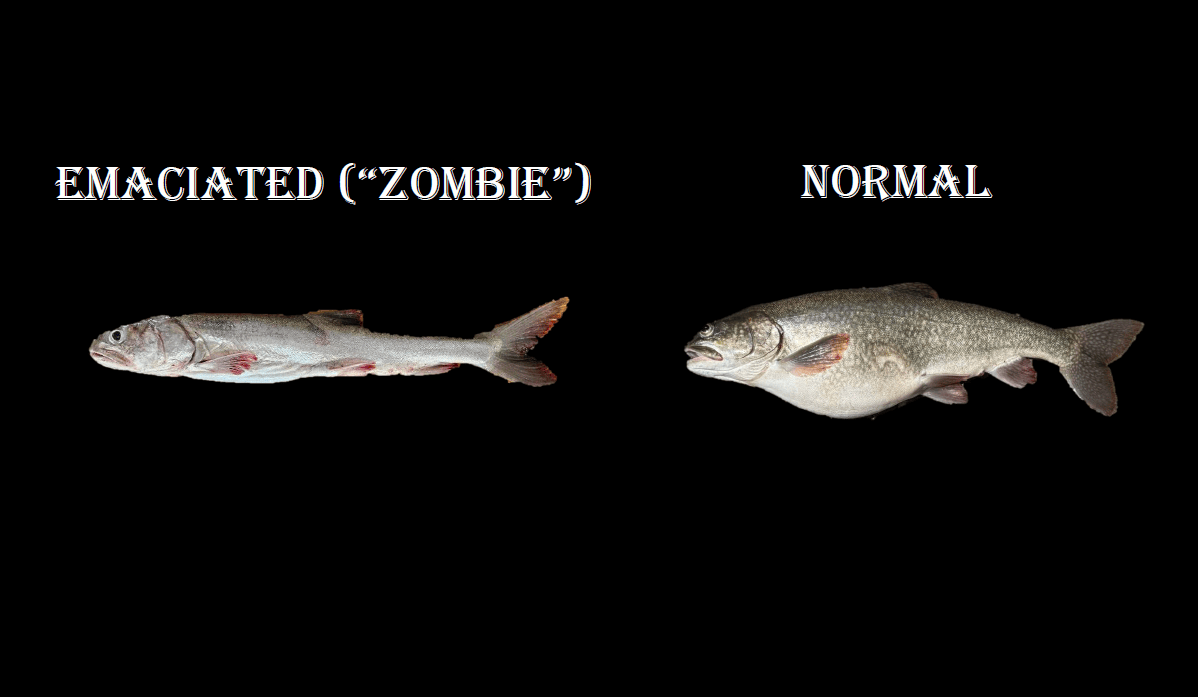
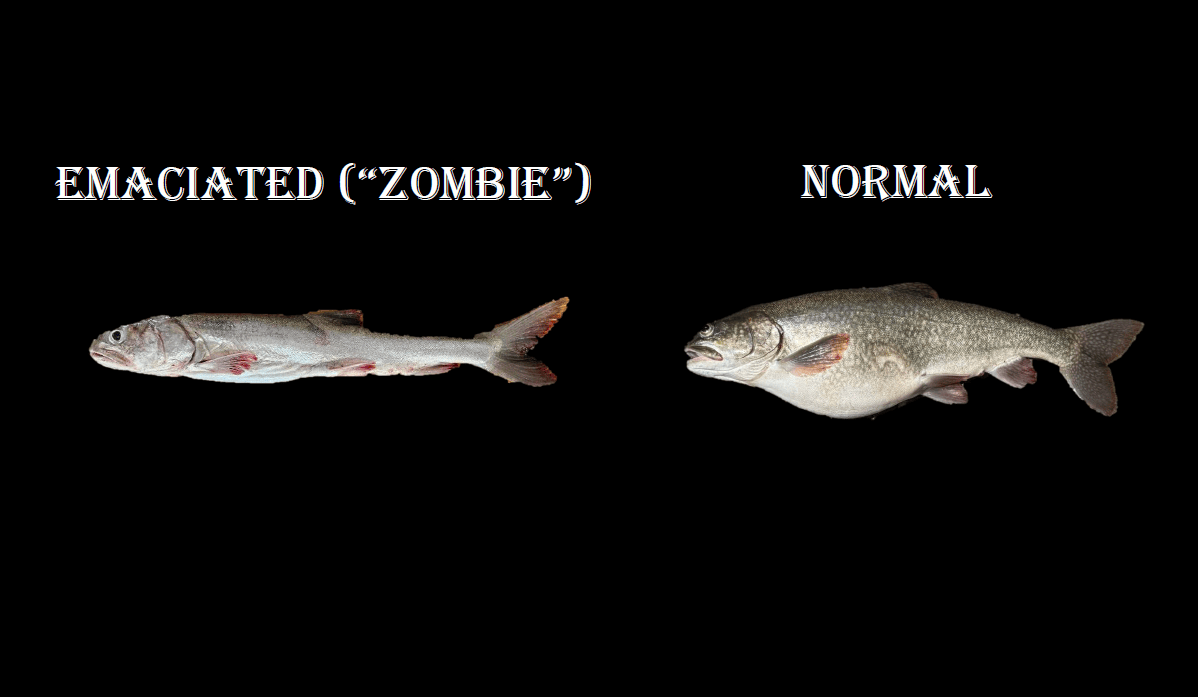
In the deepest part of the lake, a quarter mile below the surface, researchers are discovering a growing number of extraordinarily thin lake trout that weigh about half their typical, healthy body weight. Scientists have dubbed them "zombie fish."
The fish are so skinny they look like they’re suffering from a famine, said Shawn Sitar, a fisheries research biologist for the Michigan Department of Natural Resources. “That's how emaciated these are,” he said.
Scientists don’t know yet what’s behind the phenomenon, or if there's even a problem. Researchers are first trying to determine what’s causing the severely underweight fish, what the long-term implications might be, “and then, if something is necessary, what we can do to prevent that from being a problem,” said Greg McClinchey, legislative affairs and policy director for the Great Lakes Fishery Commission.
The condition is occurring in one of four sub-species of lake trout known as siscowets that live in the deepest part of the lake. They have adapted to have very high body fat content, which allows them to survive in such harsh conditions. “So they should be very robust," said Sitar.
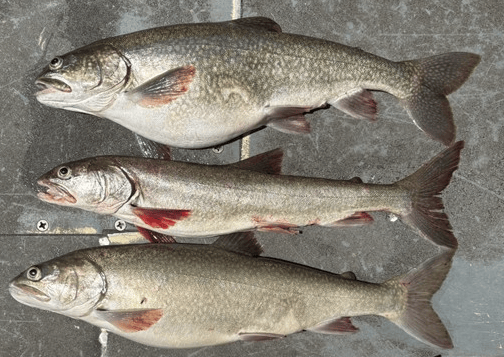
But instead, some fish they’ve surveyed have only about a third of the fat content of healthy fish of the same age and length. They look gaunt and like they’ve been stretched thin. Some also have deformed spines.
Sitar and his colleagues were the first to document that siscowets and other fish live in the deepest part of Lake Superior, more than 1,300 feet below the surface, about 30 miles north of Pictured Rocks National Lakeshore in Munising, Mich.
No light reaches it. The water pressure is immense. Yet there is a delicate food web that exists there.
Researchers place gill nets far below the surface to catch lake trout to survey them. It’s dangerous work in such deep areas because of the amount of tension on the net when they pull it back into the boat.
Over the past decade, Sitar has observed slight declines in the number of sicowet. Their condition has also deteriorated. But those trends have accelerated in the past couple years.
Last year, in one of the nets they pulled up from the deepest part of the lake, “we saw 50 percent of our catch in deep water looking like these zombies,” he said. “Something was wrong in deep water areas."
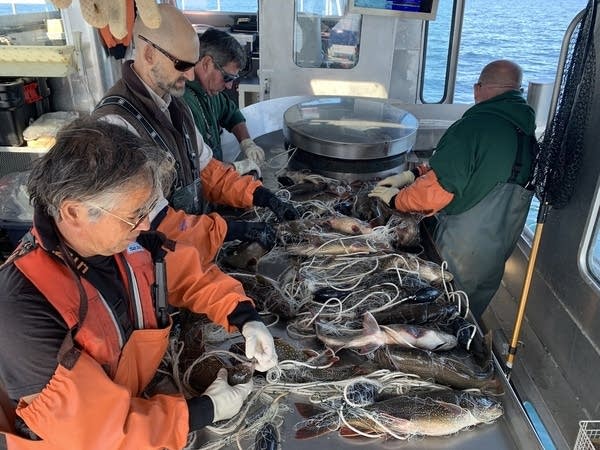
In shallower areas, researchers have found the number of “zombie” fish ranging from 12 to 37 percent of the total fish they’ve surveyed. But Sitar says some of the healthy fish, what researchers call “normies,” may be on their way to becoming “zombies.”
Sitar has a few theories to explain what's happening. The first hypothesis is that fish are starving in extremely deep water because of some natural ecological event.
The researchers have so far only found zombie fish in the deepest holes in the lake, a thousand feet or deeper. Those are extreme environments, with very few food sources– similar to arctic conditions or high-altitude ecosystems on land.
So if one of the fish the trout prey upon has been depleted for some reason, it could cause starvation among siscowets, Sitar explained, "Because they can't get enough daily calories to sustain themselves."
The condition could also be disease related. In June scientists will conduct a fish health assessment to make sure there isn’t a disease spreading among fish.
A third possibility could be that sea lamprey are weakening a large number of siscowets. Sitar suspects that’s not the issue, because lamprey leave wounds behind where they attach to lake trout, and scientists aren’t seeing many more scars on zombie fish than others.
Researchers are also investigating whether the trout have been contaminated by a toxin. The zombie fish have slightly higher levels of mercury in their tissue than healthy trout. Sitar doesn’t know yet if that’s the cause. But it’s something they plan to investigate.
So far, zombie fish have only been observed in extremely deep areas off the shore of Michigan’s upper peninsula. Minnesota DNR fisheries scientists say they haven't seen any zombie fish yet. But they may conduct some surveys next year to see if the fish are also haunting Lake Superior’s North Shore.
This discovery comes at a time when lake trout overall are thriving in Lake Superior. 60 years ago the lake’s top predator was nearly wiped out by the invasive eel-like lamprey. But a control program managed by the Great Lakes Fishery Commission, a binational treaty organization between the U.S. and Canada, has allowed the lake trout to slowly recover.
Two years ago the commission announced that lake trout were fully recovered in most of Lake Superior, and after a decades-long pause, the Fond du Lac Band of Lake Superior has resumed harvesting them. Now the organization is helping to coordinate research into the “zombie fish” to determine whether it’s a problem that requires some sort of action.
“We want to make sure that we're not looking down the barrel of something much worse than we might imagine,” said McClinchey.