
The path to a pardon in Minnesota starts with the Clemency Review Commission. On Friday, it is scheduled to hear from 27 people who are seeking pardons. At least one of the applicants will sign on from immigration detention outside the state. Immigration status is a driving force behind several of the applications.
Legal experts say that pardons can be an effective tool for immigrants who had permanent status in the U.S. but lost it due to a criminal conviction. In some cases, it may be the only tool left.
St. Paul-based lawyer Nico Ratkowski said he used this strategy when representing a woman on probation for welfare fraud.
“That was causing her to be at extreme risk of deportation, to be ineligible for a green card,” he said. “I just gave it a shot.”
It worked. In 2021, the State Board of Pardons granted his client the first “full and absolute pardon” in 35 years.
“I don’t think that would have occurred without the immigration angle,” Ratkowski said.
The case taught him that pardons can be a powerful tool for immigrants in specific circumstances. Since then, he’s trained other lawyers in this approach. He said growing awareness, plus heightened stress over immigration status, is leading more people to try it, but he said it’s not an option for everyone.
‘An extraordinary act’
Those in charge of recommending or granting pardons consider a range of factors, such as the severity of a crime, how old an individual was when they were convicted, the time that has passed and evidence that they’ve turned their lives around. Crimes like theft, for example, make for easier cases than violent crimes. Experts say the process can also be political and slow.
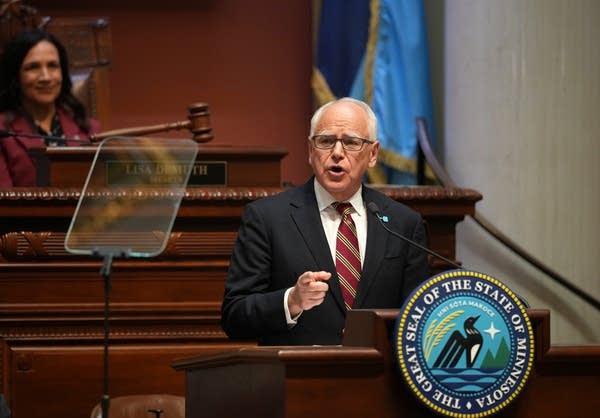
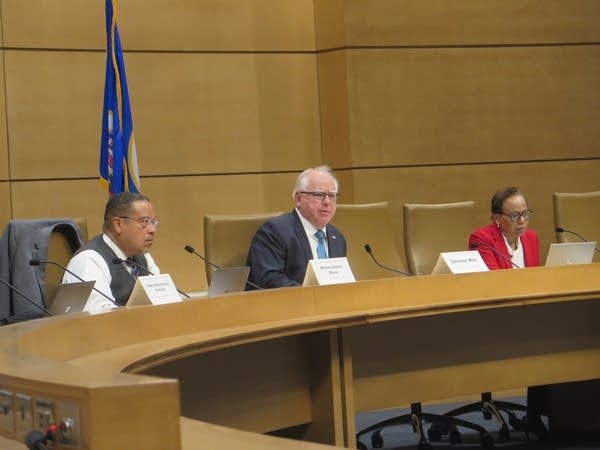
The Clemency Review Commission is a relatively new board, created by the legislature in 2023, that investigates and hears applications. It does not have the power to grant pardons, but it makes recommendations to the Board of Pardons, which does have that authority. That board is made up of Minnesota’s governor, attorney general and chief justice of the Supreme Court at the time. It meets twice a year.
Once an individual has a pardon certificate, they can bring it to their immigration case, Ratkowski said.
Former immigration judge Ryan Wood saw a few pardon cases, but he said he can count them on one hand.
“It was relatively rare when I was on the bench, because it's an extraordinary act, and they only apply to certain crimes and for certain individuals,” he said.
It only works for people who once had permanent resident cards or entered the U.S. with lawful status. And for crimes involving domestic violence or firearms, for example, Wood said a pardon has no effect on a deportation order.
Still, in a subset of cases in Minnesota, a pardon could make a difference.
‘A unique situation’
Tina Huynh-Chandee and approximately 20 of her husband’s friends and family are planning to show up in person for his hearing Friday. Her husband is At “Ricky” Chandee. He will join the meeting from ICE detention in El Paso, Texas. She said they want “to show the committee, and show Ricky himself, that we're all there still behind him, fighting for him.”
Chandee faces deportation over a second-degree assault conviction from 1993. The couple considered the pardon route years ago, but a lawyer told them it would not work. They took different advice this year and applied before Chandee was arrested by ICE. Huynh-Chandee believes there is a chance he could avoid deportation.
“I honestly don't know,” Huynh-Chandee said. “It's 50-50. Like with everything else we're going through. So we're just hoping for the best result.”
Three other people with hearings have final deportation orders that relate to past convictions. MPR News has not been able to reach them or their lawyers, but their applications have some things in common — with each other and with Chandee’s story.
All four men came to the U.S. as refugees from Laos when they were children. Nearly all of their criminal convictions, for crimes including receiving stolen property, committing a crime for the benefit of a gang and kidnapping, are more than 20 years old.
The applications cite hardships like trauma, addiction and gang violence that lawyers, supporters and the applicants say contributed to their crimes. They detail the men’s roles in their families as caregivers for parents and children. Two of the applications mention relatives who fought in the U.S. Secret War in Laos.
Between Dec. 1 and mid-March, about 90 people who were born in Laos and arrested in Minnesota were detained by ICE. That’s according to statistics the Deportation Data Project obtained through the Freedom of Information Act. The data is likely incomplete, as MPR News has reported. Of those 90 people, it showed 59 had criminal convictions that were more than 20 years old.
Ryan Wood, the former immigration judge, said pardons may apply to more cases in Minnesota than some other states because it has a large refugee population. For refugees with convictions, changing federal and international policies have increased their risk deportation.
“We’ve seen the government exercise power that we've never seen before with specific countries like Laos, Vietnam, even Cuba,” he said.
In the past, several countries refused to accept many deportees from the U.S. But some, including Laos, have shifted their stance under pressure from the Trump administration. Wood said the federal government is also using less discretion in cases where deportation orders are many years old. All of this, he said, could lead more people to try to resolve those orders through pardons.
Wood said Congress could provide a different remedy, by creating a statute of limitations for deportation orders, where they could no longer count after a certain number of years.
“It’s an enormous burden on the system where we're not letting bygones be bygones,” he said.
For its part, the Department of Homeland Security has celebrated the arrests of people with criminal records, arguing the Trump administration’s approach is making communities safer. It condemned the state of California’s recent pardon of an immigrant with a 1997 conviction for attempted murder. DHS called that move “insanity.”
Whatever Minnesota’s Clemency Review Commission determines Friday, decisions will be up to the Board of Pardons, which next meets in June.