The Stanley Cup Playoffs are full of new blood, and so far three teams have advanced to the second round after not even making the postseason last year.
Buffalo, Colorado, Minnesota, Philadelphia and Anaheim have advanced from the first round, with the Flyers (six years) and the Ducks (eight) enjoying their first playoff trips in a long while. The Sabres ended the longest drought in NHL history at 14 seasons and are now through after eliminating Boston.
The Avalanche and Wild, who will face each other, each lost in the first round a year ago. Another newcomer is on the way, too: Whoever wins the Montreal-Tampa Bay series didn’t make the second round last year either, making a pair of early exits.
The second round includes six out of eight new teams. Only Carolina, which hosts the Flyers in Game 1 on Saturday, and Vegas, which defeated Utah next faces Anaheim, made it this far a year ago.
“That’s the exciting part of where the league is at and where these teams are at,” Hall of Fame defenseman Chris Pronger said recently. “New teams (are) getting into the playoffs and showcasing some of these young players that are on the rise that maybe haven’t had that experience. And now they get a chance to kind of understand what it’s all about and what it means to play in the playoffs.”
A new Cup winner was guaranteed last month when back-to-back champion Florida was eliminated from contention late in a season derailed by injuries.
There will now be two new finalists after Edmonton got knocked out in the first round by the Ducks. Oilers captain Connor McDavid said they “were an average team all year” and did not live up to high expectations.
The Hurricanes, who have advanced in each of the past eight years since Rod Brind’Amour took over as coach in 2018, host one of the upstart teams in the field: Philadelphia last reached the playoffs during 2020 pandemic.
“There was never a doubt,” said Flyers goaltender Dan Vladar, who had a 42-save shutout in the Game 6 overtime victory against Pittsburgh. “Good things happen to good people, and we are good people here.”
In the West, the Presidents’ Trophy-winning Avalanche have been waiting around since sweeping Los Angeles. In the playoffs for a ninth year in a row, they next face the Wild, who beat Dallas in a six-game showdown of Central Division powerhouses.
“It’s going to be a hard-fought series,” Colorado captain Gabriel Landeskog said. “High-quality teams, high-quality players, good goaltending and special teams. It’s going to be a battle.”
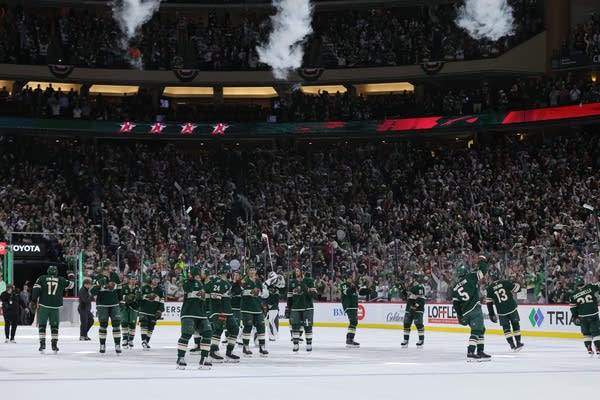
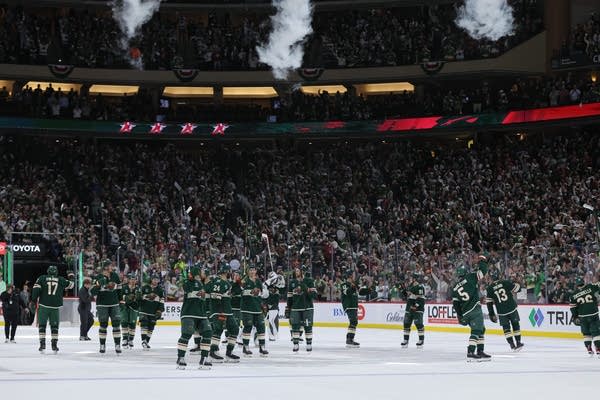
Minnesota finally won its opening series after losing its past eight, reaching the second round for the first time since 2015. Rookie goalie Jesper Wallstedt noticed a fan crying in the stands during the clinching Game 6 win, and it made him realize how much it meant beyond the locker room.
“There’s so many more people who are with us on this road and this journey,” Wallstedt said. “The excitement and joy to get past the first round is huge.”
The Ducks in coach Joel Quenneville’s debut season advanced for the first time since a run to the Western Conference Final in 2017.
“Now we’ve got a taste of playoff hockey,” Quenneville said. “I think we can feel at this moment that it’s so much fun playing games that have the meaning and the building being as loud and excited as it is. It seems to grow from this level on.”