
Boundary Waters canceled permits, no-shows up last year


Canoes on the shore of a lake as the sun rises.

The number of permits to visit the Boundary Waters Canoe Area Wilderness that were never used continues to climb, the U.S. Forest Service reports.

The agency said more than 40 percent of permit reservations for the sought-after quota season of May 1 through Sept. 30 were never used last year.

A permit is always required to enter the Boundary Waters. Visitors who want to paddle and camp overnight between May 1 and Sept. 30 are required to get a quota permit through a first-come, first-served system.

The most popular dates and entry points fill up quickly when the Forest Service makes quota permits available in late January.

Some people reserve multiple dates, then cancel later when they decide on their plans. Others fail to cancel and their permits go unused, limiting availability for other visitors.

Both cancellations and no-shows have been on the rise since 2020, said Cathy Quinn, assistant wilderness program manager for the Superior National Forest.
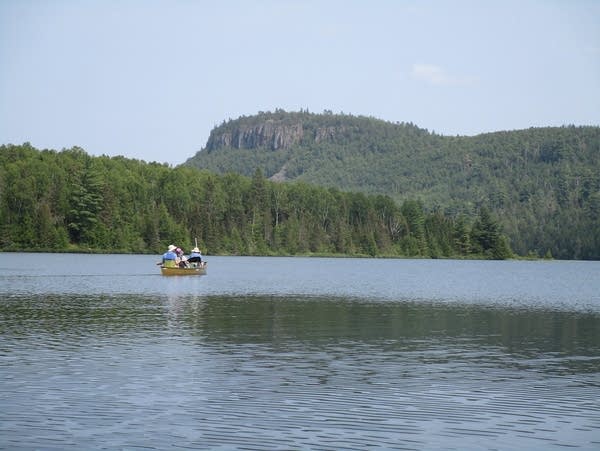
A view of rocky cliffs above canoeists on a lake
A view of the cliffs above Rose Lake in the Boundary Waters Canoe Area Wilderness, along the Minnesota-Ontario border, in summer 2024.
Paul Tosto | MPR News 2024

“We suspect that the cancellation rate has gone up because people are reserving more permits than they actually intend to use,” Quinn said. Then, they end up cancelling the extra permits as their schedules firm up, as they watch the weather forecast, “or sometimes plans just change,” she said.

The Forest Service reports that both no-shows and cancellations climbed in 2025 from the previous year. There were 3,674 no-shows — up from 3,572 in 2024 — and a record-high 12,096 cancellations, up from 11,244 the year before.

There’s a “scarcity complex” where people think there aren’t enough permits for everyone, Quinn said. But she said the number of permits issued for the Boundary Waters has stayed relatively steady, at around 26,000 annually.

When people cancel permits or don’t show up, it makes it more difficult for others to try to figure how how and when to visit, Quinn said.

“It gives the impression that there isn't as much access to this wilderness area than there actually is,” she said.

The Boundary Waters do get busy during peak months of July and August, and some entry points are more popular than others. But if people are willing to explore new areas or visit at a different time of year, there are plenty of opportunities, Quinn said.

“There's room for everybody,” she said. “But you may not go exactly at the ideal time you were thinking, or that primo entry point that you had in mind.”

Quinn urges people to cancel a permit as soon as possible if their plans change, to give others a chance to use it. People looking to plan a trip should keep checking the reservation system for newly available permits, she said.

The Forest Service is working with the Boundary Waters Canoe Area Wilderness Collaborative, a group of people interested in the wilderness area, on possible changes to the reservation system aimed at reducing the cancellation and no-show rate.

“We're looking for ways to incentivize people to cancel their permits earlier — but first and foremost, only book what they actually know they can use,” Quinn said.



Source link

Leave a Reply

Subscribe to Our Newsletter

Get our latest articles delivered straight to your inbox. No spam, we promise.

Recent Reviews


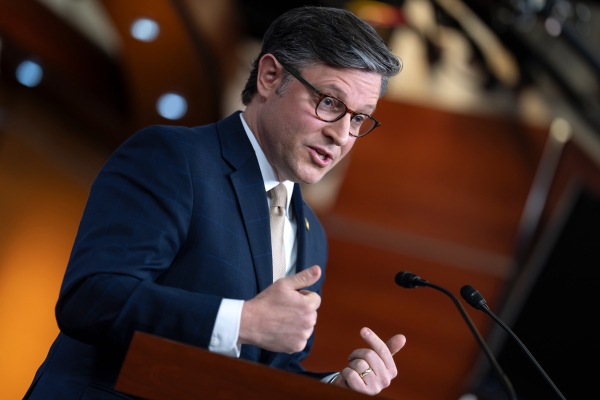
Speaker of the House Mike Johnson, R-La., takes questions at a news conference at the U.S. Capitol on April 21, 2026.

Speaker of the House Mike Johnson, R-La., takes questions at a news conference at the U.S. Capitol on April 21, 2026.
Speaker of the House Mike Johnson, R-La., takes questions at a news conference at the U.S. Capitol on April 21.
J. Scott Applewhite | AP

The House of Representatives voted Thursday to reopen most of the Department of Homeland Security, ending the longest agency shutdown in U.S. history.

The House passed a bill funding DHS, minus dollars for Immigration and Customs Enforcement and Customs and Border Protection. The measure passed by voice vote on what was the 76th day of the shutdown.

Democrats refused to back funding for many of the agency's immigration functions in an unsuccessful effort to secure reforms including body-worn cameras and broad restrictions on face coverings after federal law enforcement killed two American citizens in Minnesota earlier this year.

The Senate, led by Republican Majority Leader John Thune, R-S.D., unanimously advanced this funding legislation in March. At the time, Speaker Mike Johnson, R-La., referred to the proposal as "a joke" and refused to bring it up for a vote. Many members of the House Republican conference refused to fund the agency in a piecemeal fashion and did not want to negotiate over reforms to immigration enforcement operations.

On April 1, Johnson reversed course. He announced the funding bill would be voted on "in the coming days." More than four weeks later, he finally made good on that commitment.

In an effort to appease his hardline members, Johnson waited to bring the Senate's proposal to a vote until that chamber's Republicans started the arcane procedural process, known as reconciliation, to fund all of DHS — including Immigration and Customs Enforcement (ICE) and Customs and Border Protection (CBP) — for the remainder of Trump's term without any backing from Democrats.

The funding bill comes as Secretary of Homeland Security Markwayne Mullin warned the agency was close to running out of funds to pay staff.

"We have reached all the emergency funds we can reach into," Mullin told Fox News on Friday. "I am completely out of the slush fund, I have no place to move at the end of the month."

Mullin said the agency was relying on appropriated funds from last year's One Big Beautiful Bill, which allocated more than $150 billion to DHS on top of its regular annual appropriations funding.

President Donald Trump signed a memo this month authorizing DHS to use some of the money from that legislation to fund the department's operations — potentially infringing on the powers granted to Congress by the Constitution to direct how taxpayer money is spent.

Copyright 2026, NPR


Source link