Feds ask to dismiss lawsuit alleging agent misconduct


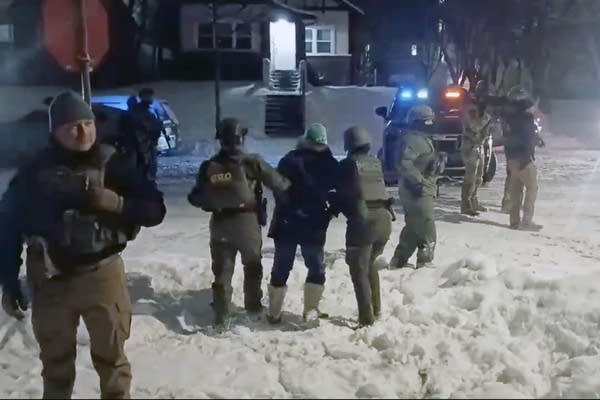
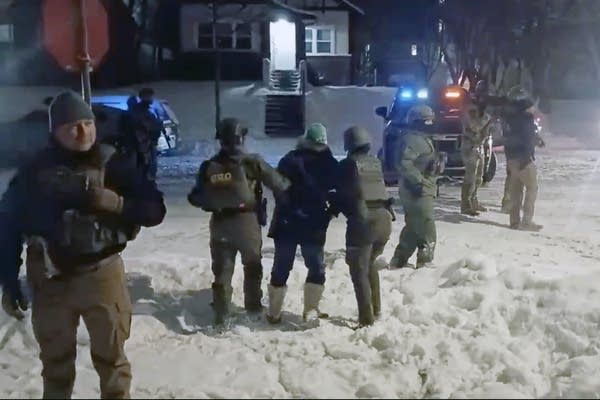
A person is detained by officers

A federal judge heard arguments Monday in a lawsuit over ICE and border patrol agents’ treatment of protesters during the immigration enforcement surge in Minnesota.

The lawsuit, brought by the ACLU of Minnesota and several law firms, alleges that plaintiffs were illegally detained and threatened during the operation.

Attorneys for the federal government asked the court to dismiss the suit. In federal court in Minneapolis, they argued that it’s moot, now that the surge that began last December has ended.

“There has been such a significant drawdown of surged agents and officers,” Department of Justice attorney Kathleen Jacobs said. “There is no likelihood of subsequent harm.”

But Judge Kate Menendez questioned if the federal government had met the legal standard to eliminate the possibility of harm. She asked attorneys for the federal government about statements from federal officials, including White House Border Czar Tom Homan, who said when the surge ended that the government could hypothetically bring more agents in again.

“The government is robustly defending the legality,” Menendez said to Jacobs during the hearing. “You don’t point to a single official saying, ‘we won’t come back’ or ‘we won’t do this again.’”

Attorneys for the federal government said that was purely hypothetical. Jacobs said there are currently fewer than 300 ICE and border patrol agents on the ground in Minnesota.

Attorneys for the plaintiffs also argued that people are still facing possible repercussions, even after the surge’s end. They said allowing the lawsuit to continue could address that.

Attorney Caitlinrose Fisher pointed to some plaintiffs’ claims that federal agents took photos of them, saved their license plate numbers and told them they were entered into a database of domestic terrorists.

In January, Menendez issued a preliminary injunction stemming from this case, which barred federal agents from using chemical irritants against peaceful observers and protesters. But an appeals court overturned that order weeks later.

Menendez said she plans to rule soon on whether to dismiss the case or allow it to continue.


Source link

Leave a Reply

Subscribe to Our Newsletter

Get our latest articles delivered straight to your inbox. No spam, we promise.

Recent Reviews


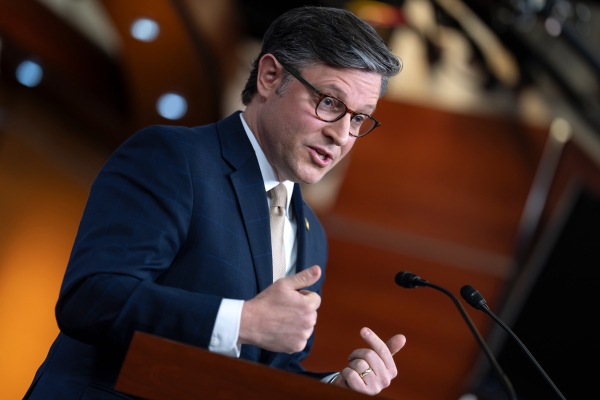
Speaker of the House Mike Johnson, R-La., takes questions at a news conference at the U.S. Capitol on April 21, 2026.

Speaker of the House Mike Johnson, R-La., takes questions at a news conference at the U.S. Capitol on April 21, 2026.
Speaker of the House Mike Johnson, R-La., takes questions at a news conference at the U.S. Capitol on April 21.
J. Scott Applewhite | AP

The House of Representatives voted Thursday to reopen most of the Department of Homeland Security, ending the longest agency shutdown in U.S. history.

The House passed a bill funding DHS, minus dollars for Immigration and Customs Enforcement and Customs and Border Protection. The measure passed by voice vote on what was the 76th day of the shutdown.

Democrats refused to back funding for many of the agency's immigration functions in an unsuccessful effort to secure reforms including body-worn cameras and broad restrictions on face coverings after federal law enforcement killed two American citizens in Minnesota earlier this year.

The Senate, led by Republican Majority Leader John Thune, R-S.D., unanimously advanced this funding legislation in March. At the time, Speaker Mike Johnson, R-La., referred to the proposal as "a joke" and refused to bring it up for a vote. Many members of the House Republican conference refused to fund the agency in a piecemeal fashion and did not want to negotiate over reforms to immigration enforcement operations.

On April 1, Johnson reversed course. He announced the funding bill would be voted on "in the coming days." More than four weeks later, he finally made good on that commitment.

In an effort to appease his hardline members, Johnson waited to bring the Senate's proposal to a vote until that chamber's Republicans started the arcane procedural process, known as reconciliation, to fund all of DHS — including Immigration and Customs Enforcement (ICE) and Customs and Border Protection (CBP) — for the remainder of Trump's term without any backing from Democrats.

The funding bill comes as Secretary of Homeland Security Markwayne Mullin warned the agency was close to running out of funds to pay staff.

"We have reached all the emergency funds we can reach into," Mullin told Fox News on Friday. "I am completely out of the slush fund, I have no place to move at the end of the month."

Mullin said the agency was relying on appropriated funds from last year's One Big Beautiful Bill, which allocated more than $150 billion to DHS on top of its regular annual appropriations funding.

President Donald Trump signed a memo this month authorizing DHS to use some of the money from that legislation to fund the department's operations — potentially infringing on the powers granted to Congress by the Constitution to direct how taxpayer money is spent.

Copyright 2026, NPR


Source link