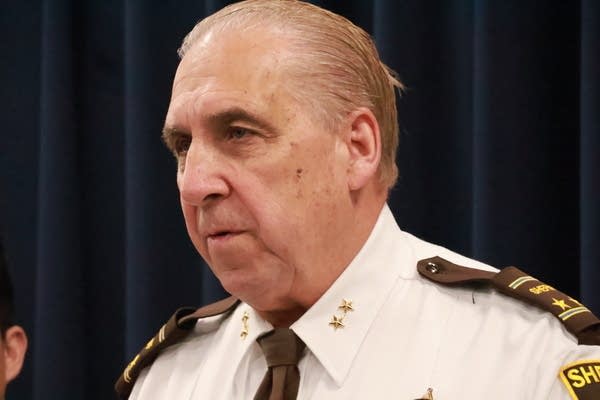
The Minnesota State Fair assistant police chief said in a whistleblower lawsuit that Ramsey County Sheriff Robert Fletcher threatened to withhold resources from the fair unless the assistant chief was fired.
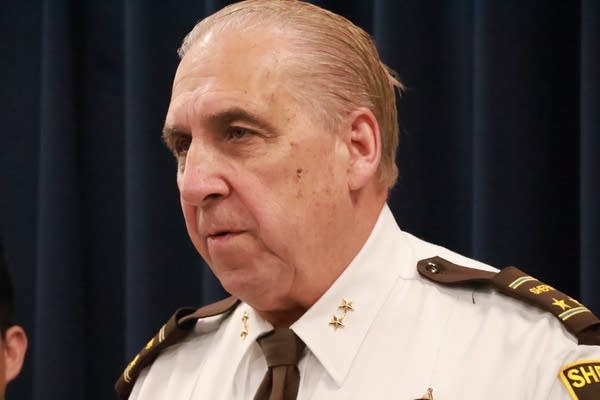
Michael Coffey, who is also a sergeant with the Cottage Grove police, filed a complaint under the Whistleblowers Act last week seeking reinstatement and damages against Fletcher and the State Agricultural Society, which governs the fair.
In the complaint, Coffey claimed Fletcher demanded Coffey be terminated after the Cottage Grove officer informed officials, including State Fair Police Chief Ron Knafla and the FBI, that Fletcher and Ramsey County sheriff’s deputies illegally used excessive force and chemical munitions on bystanders during the 2025 state fair. At least one of those cases was caught on video, Coffey said.
Coffey said in the lawsuit he received a video on Aug. 31, the second-to-last day of the fair, of a young man on the ground with “multiple officers on top of him and Sheriff Fletcher deploying a canister of chemical munitions to the face of the restrained man before pointing the canister at a surrounding crowd.”
Fletcher told a commander whom Coffey worked with that he had not deployed any chemical munitions, according to the filing.
Fletcher did not respond to an MPR News inquiry about whether he used chemical munitions on bystanders.
Ben Bauer, Coffey’s attorney, said Coffey is being punished for trying to do what is right.
“He reported what he believed to be unlawful conduct and that’s what we would expect and want from any officer in that position.”
In an e-mailed statement to MPR News, Fletcher said Coffey’s “lack of experience in mitigating gang violence jeopardizes the safety of the public and the officers who work at the State Fair.”
He also said Coffey made several false accusations and is motivated “by his desire to be the next State Fair police chief and his awareness that many members of the law enforcement community are opposed to that.”
According to the complaint, Fletcher set a Dec. 15 deadline to State Fair CEO Renee Alexander. If Coffey was not terminated, Fletcher said he would remove Ramsey County Sheriff’s Office resources from the fair.
Coffey said Knafla, a Ramsey County deputy under Fletcher, changed his schedule and cut his overtime pay. Coffey also claims interference with his contract because Fletcher demanded his termination, which led to a cutback of his overtime hours and a shift to daytime hours.
As a result, according to the complaint, Coffey suffered “economic damages, lost wages and future wages, compensatory damages arising from mental anguish, emotional distress, humiliation, embarrassment, loss of reputation and other pain and suffering.”
Coffey said he learned from a colleague in November months after the fair ended that Fletcher demanded his termination, according to the complaint.
Alexander, the fair’s CEO, told Coffey that same month his job responsibilities would be changed and shifted him to daytime hours due to Fletcher’s threats to withhold resources, according to the complaint.
A State Fair spokesperson said the fair’s actions were “entirely proper” and the fair would not comment further while litigation is pending.