
Minnesota lawmakers could receive police security for a limited time under a plan that passed the House of Representatives on Wednesday.
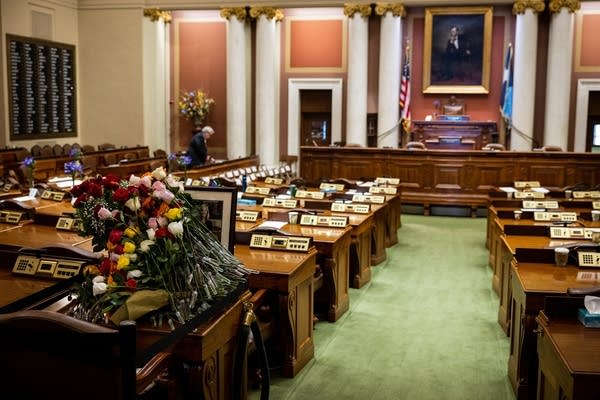
Following the fatal shooting of House DFL Leader Melissa Hortman and her husband, Mark, and the shootings of Sen. John Hoffman and his wife, Yvette, in June, lawmakers sought to expand security measures at the Capitol and beyond.
Public officials in the state have tracked an uptick in threats in recent years. Lawmakers broadly agreed that more needs to be done to ensure their safety, including taking individual steps to cool rhetoric that can spark violence.
“If judges and elected officials are not safe from violence then our democracy ceases to exist,” Rep. Kelly Moller, DFL-Shoreview, said. “Political violence is real. It happened here in unimaginable ways. It continues to happen. Our democracy cannot tolerate this violence and neither can we.”
The bill, which passed with a 92-42 vote, would give legislative leaders the authority to call on State Patrol officers to provide personal security to a lawmaker if there is a credible threat to their life or safety.
It would also:
-
Keep in place weapons screening and enhanced security staffing at the Capitol beyond the end of the legislative session.
-
Require lawmakers, constitutional officers, Supreme Court justices and Minnesota’s congressional delegation to provide their contact information to the Department of Public Safety so that they could be contacted by law enforcement in the event of an emergency.
-
Create a clearer chain of command for which state law enforcement authority has responsibility over the Capitol complex and over elected officials when they’re off campus.
-
Set up a task force to determine best practices for lawmaker safety and security and offer recommendations.
-
Set up mandatory reporting requirements about Capitol security measures, threats to officials and protocols in place to protect them while in St. Paul and while away.
Republicans raised concerns about isolating themselves from members of the public with the changes and encouraged Democrats to also implement additional school safety measures this year. Two children were killed and dozens injured in August at Annunciation Catholic Church and School. Lawmakers in the narrowly split Capitol have disagreed about the best way to ensure safety in the classroom.
“I struggle with voting to protect us as politicians before we can agree to vote to find things that we can come together on to protect our kids in school,” said Rep. Ben Bakeberg, R-Jordan.
There were also concerns among Republican lawmakers about the expense to the state to retain Capitol security measures and to implement new off-campus security in certain cases.
Democrats agreed that the issue of school safety is important but said it should be resolved separately from the Capitol security plan. They also noted that without strong safety measures in place for public officials, fewer people could step up to run for office.
“While we serve in public office, we're also human beings with families, staff and communities who are impacted by the increasing volume, volume and seriousness of threats directed at elected officials,” said Rep. Julie Greene, DFL-Edina. “This body understands these heartbreaking consequences intimately. Consequences are not feelings or theater or make believe.”
Some GOP members also agreed that the state should take additional actions to ensure the safety of lawmakers and other public officials, like constitutional officers and judges.
“This is an important topic, and it's an important bill,” said House GOP Leader Harry Niska, of Ramsey. “There are good provisions and reforms in this bill. We recognize the need for this, especially on June 14, as we saw, definitely a need for a more coordinated response at the state level, at the very least.”
Lawmakers expressed concerns after the June 14 assassination of the Hortmans and shooting of the Hoffmans since there wasn’t a clear communication chain to get information about the potential threat to officials.
The state Senate has approved a similar measure, setting up a potential conference committee where members from both bodies would come together to reach a deal. Each chamber would then have to approve a compromise bill before it could reach Gov. Tim Walz.