Rescued Wisconsin beagles to find homes in Minnesota


Animal rescues in Minnesota are welcoming dozens of beagles into their care this week from a biomedical research breeding facility in Wisconsin.

Ridglan Farms was accused of mistreatment by a special prosecutor. Animal rights activists tried to bust into their building last month before larger animal rescues stepped in.

Many of the dogs are now on the road to adoption thanks in part to the Beagle Freedom Project, which is coordinating the rescue of 500 of the 1,500 dogs.

The Twin Cities-based Animal Humane Society is picking up 50 dogs on Thursday. Fifteen will be made adoptable through the Tri-County Humane Society in St. Cloud and Ruff Start Rescue in Princeton, Minn. The Bond Between in Minnetonka took in 30 beagles earlier this month.

These are dogs that have never been outside, seen grass or had extensive human contact, Liv Hagen, welfare director for the Animal Humane Society, told the MPR News Morning Edition show.

“These dogs essentially don’t know how to dog,” said Hagen. “They don’t know what it means to be loved by a human. To be a member of the family.”

Beagle rescue (Liv Hagen)

Hagen said the beagles might hide in the initial weeks or months after rescue. New experiences have to come slowly and humans must have patience, she emphasized.

“The world is very new and it's very, very big for them, and so it can be quite overwhelming,” Hagen said. “Every one of these dogs is an individual, so they're all going to respond a little bit differently to these new experiences, but generally, what we see are dogs that are quite under-socialized.”

While a dog with those needs might be too much for some families, Hagen said the best way people can help is by adopting other shelter dogs. Her group also welcomes volunteers, fosters and donations.


Source link

Leave a Reply

Subscribe to Our Newsletter

Get our latest articles delivered straight to your inbox. No spam, we promise.

Recent Reviews


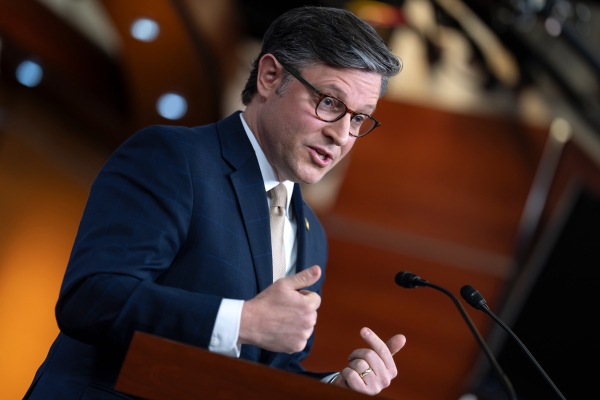
Speaker of the House Mike Johnson, R-La., takes questions at a news conference at the U.S. Capitol on April 21, 2026.

Speaker of the House Mike Johnson, R-La., takes questions at a news conference at the U.S. Capitol on April 21, 2026.
Speaker of the House Mike Johnson, R-La., takes questions at a news conference at the U.S. Capitol on April 21.
J. Scott Applewhite | AP

The House of Representatives voted Thursday to reopen most of the Department of Homeland Security, ending the longest agency shutdown in U.S. history.

The House passed a bill funding DHS, minus dollars for Immigration and Customs Enforcement and Customs and Border Protection. The measure passed by voice vote on what was the 76th day of the shutdown.

Democrats refused to back funding for many of the agency's immigration functions in an unsuccessful effort to secure reforms including body-worn cameras and broad restrictions on face coverings after federal law enforcement killed two American citizens in Minnesota earlier this year.

The Senate, led by Republican Majority Leader John Thune, R-S.D., unanimously advanced this funding legislation in March. At the time, Speaker Mike Johnson, R-La., referred to the proposal as "a joke" and refused to bring it up for a vote. Many members of the House Republican conference refused to fund the agency in a piecemeal fashion and did not want to negotiate over reforms to immigration enforcement operations.

On April 1, Johnson reversed course. He announced the funding bill would be voted on "in the coming days." More than four weeks later, he finally made good on that commitment.

In an effort to appease his hardline members, Johnson waited to bring the Senate's proposal to a vote until that chamber's Republicans started the arcane procedural process, known as reconciliation, to fund all of DHS — including Immigration and Customs Enforcement (ICE) and Customs and Border Protection (CBP) — for the remainder of Trump's term without any backing from Democrats.

The funding bill comes as Secretary of Homeland Security Markwayne Mullin warned the agency was close to running out of funds to pay staff.

"We have reached all the emergency funds we can reach into," Mullin told Fox News on Friday. "I am completely out of the slush fund, I have no place to move at the end of the month."

Mullin said the agency was relying on appropriated funds from last year's One Big Beautiful Bill, which allocated more than $150 billion to DHS on top of its regular annual appropriations funding.

President Donald Trump signed a memo this month authorizing DHS to use some of the money from that legislation to fund the department's operations — potentially infringing on the powers granted to Congress by the Constitution to direct how taxpayer money is spent.

Copyright 2026, NPR


Source link