Man shot by Virginia cop had history of mental illness


officer points gun from squad

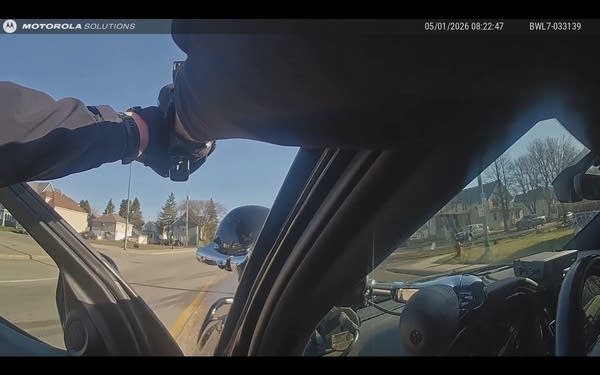
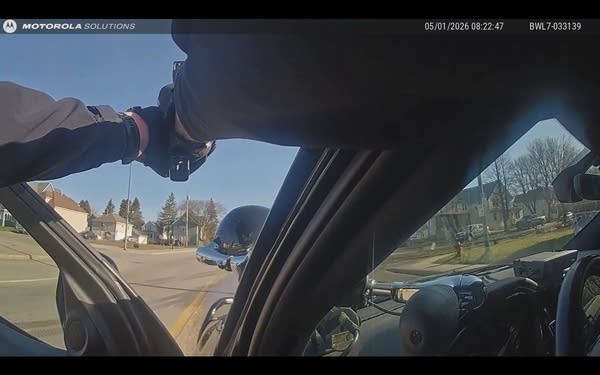
Authorities in the Iron Range community of Virginia, Minn., on Friday released body-worn camera and squad car video of Ethan Roy Basche’s fatal encounter with a police officer.

According to a preliminary investigation from the Minnesota Bureau of Criminal Apprehension, Basche, 31, was holding a torch lighter when Virginia Police Lt. Henry Trunk shot him just before 8:30 a.m. on May 1. In a news release accompanying the video, Virginia police noted that the lighter “was consistent with the appearance of a firearm.”

The BCA previously said that Trunk had responded to a report of a man wearing a ski mask and walking along Second Avenue West “holding and waving what appeared to be a handgun.”

On the video, Trunk is seen stopping his squad car in the middle of the street and can be heard ordering Basche to put his hands in the air.

After Trunk shouts the command a second time, Basche raises his arm and points the lighter in Trunk's direction. Trunk pauses for about a second, then fires three shots from behind his open squad car door. Basche spins 360 degrees before lying on the ground.

The two videos released by Virginia Police can be seen here.

Basche’s obituary describes him as having a “larger than life” creative presence and who enjoyed “the simple life” on the Iron Range.

St. Louis County courts have civilly committed Basche five times, beginning in 2020. According to a 2022 order from Judge Rachel Sullivan, Basche had diagnoses including schizophrenia, antisocial personality disorder, and severe methamphetamine use disorder.

In a September 2025 civil commitment order, Judge Bhupesh Pattni noted that Basche had a “documented history of delusional thoughts, paranoia, hallucinations, including command hallucinations that are suicidal and homicidal in nature” and had been unsuccessful with treatment.

A year earlier, Pattni wrote that Basche “expressed that he feared for the life of his mother and for his own safety and that he believed he was being hunted by unknown persons.” In the order, the judge also noted that Basche reported using methamphetamine “to stay up all night to protect his mother and himself.”

A celebration of Basche’s life is scheduled for May 23 at True Hope Fellowship in Virginia.

The BCA continues to investigate the shooting and is expected to send its findings to the St. Louis County Attorney’s Office for review.

Source link

Leave a Reply

Subscribe to Our Newsletter

Get our latest articles delivered straight to your inbox. No spam, we promise.

Recent Reviews


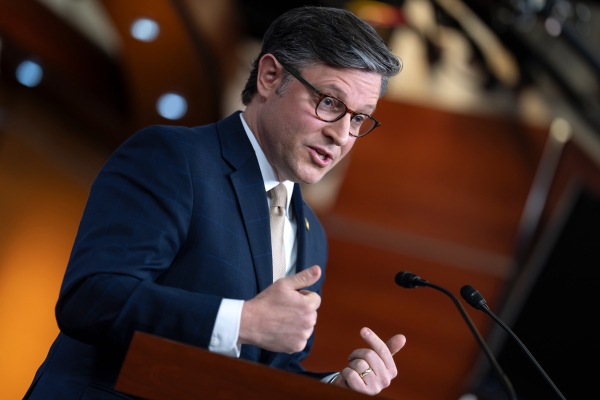
Speaker of the House Mike Johnson, R-La., takes questions at a news conference at the U.S. Capitol on April 21, 2026.

Speaker of the House Mike Johnson, R-La., takes questions at a news conference at the U.S. Capitol on April 21, 2026.
Speaker of the House Mike Johnson, R-La., takes questions at a news conference at the U.S. Capitol on April 21.
J. Scott Applewhite | AP

The House of Representatives voted Thursday to reopen most of the Department of Homeland Security, ending the longest agency shutdown in U.S. history.

The House passed a bill funding DHS, minus dollars for Immigration and Customs Enforcement and Customs and Border Protection. The measure passed by voice vote on what was the 76th day of the shutdown.

Democrats refused to back funding for many of the agency's immigration functions in an unsuccessful effort to secure reforms including body-worn cameras and broad restrictions on face coverings after federal law enforcement killed two American citizens in Minnesota earlier this year.

The Senate, led by Republican Majority Leader John Thune, R-S.D., unanimously advanced this funding legislation in March. At the time, Speaker Mike Johnson, R-La., referred to the proposal as "a joke" and refused to bring it up for a vote. Many members of the House Republican conference refused to fund the agency in a piecemeal fashion and did not want to negotiate over reforms to immigration enforcement operations.

On April 1, Johnson reversed course. He announced the funding bill would be voted on "in the coming days." More than four weeks later, he finally made good on that commitment.

In an effort to appease his hardline members, Johnson waited to bring the Senate's proposal to a vote until that chamber's Republicans started the arcane procedural process, known as reconciliation, to fund all of DHS — including Immigration and Customs Enforcement (ICE) and Customs and Border Protection (CBP) — for the remainder of Trump's term without any backing from Democrats.

The funding bill comes as Secretary of Homeland Security Markwayne Mullin warned the agency was close to running out of funds to pay staff.

"We have reached all the emergency funds we can reach into," Mullin told Fox News on Friday. "I am completely out of the slush fund, I have no place to move at the end of the month."

Mullin said the agency was relying on appropriated funds from last year's One Big Beautiful Bill, which allocated more than $150 billion to DHS on top of its regular annual appropriations funding.

President Donald Trump signed a memo this month authorizing DHS to use some of the money from that legislation to fund the department's operations — potentially infringing on the powers granted to Congress by the Constitution to direct how taxpayer money is spent.

Copyright 2026, NPR


Source link