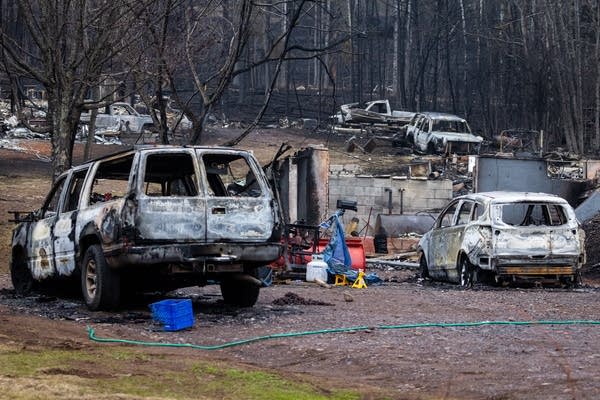
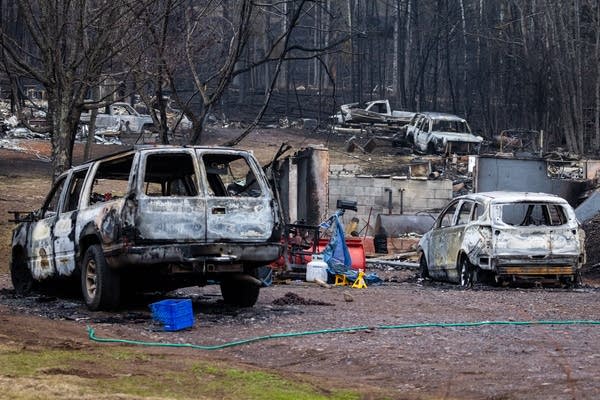
Authorities say the destructive Stewart Trail wildfire northeast of Two Harbors is now fully contained.
That’s as of an update from the Minnesota Interagency Fire Center late Monday. Wildland firefighting crews on the North Shore — and also battling the large Flanders Fire in Crow Wing County — have been aided by cooler, more humid weather and light rain.
The Stewart Trail Fire was sparked by a downed power line amid windy, dry conditions on Friday — and quickly spread across more than 350 acres. It burned more than 30 buildings, including eight homes or cabins.
While the fire is now reported as 100 percent contained — meaning that crews have created lines around the entire perimeter, that they believe will keep the flames from spreading — Highway 61 remains closed to thru-traffic between Two Harbors and Silver Bay.
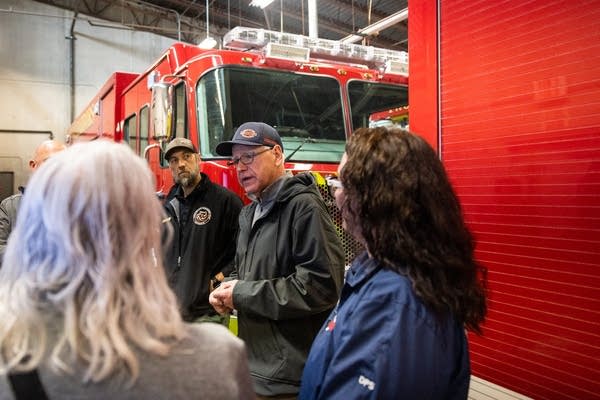
Minnesota Gov. Tim Walz traveled to Two Harbors on Monday and thanked firefighters, first responders and local officials for their work combating the Stewart Trail fire and safely evacuating residents.
“These are days we don’t ever want to happen, but when they do, the response we’ve seen so far up here is one that we should all be very proud of,” Walz said at the incident command center at the Two Harbors fire station, where he made remarks and held a briefing with local, county and state officials and fire officials.
State incident commander Mike Hill said Monday that he anticipated turning the fire’s management over to local officials “sometime midweek.”
“There’s not much smoke left in the air, but the next phase is lifting evacuations, opening the highway, and trying to get people back to normal to the degree that we can,” said Hill. “That’s our primary focus right now.”
County officials have reduced the size of the evacuation zone, and were escorting residents to their properties within the burn area Monday afternoon.
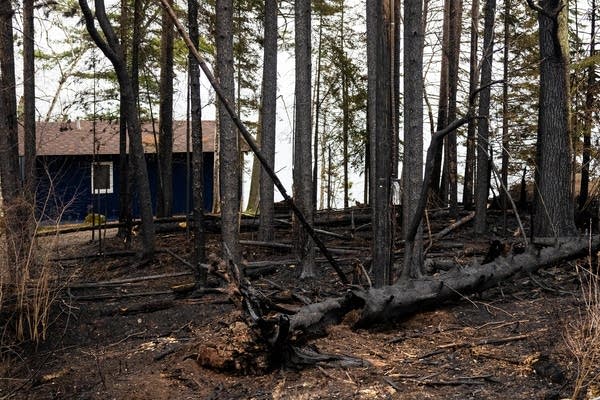
While the fire destroyed many structures, fire crews from Two Harbors and other neighboring departments saved countless other structures from being destroyed in the fire, said Two Harbors Fire Chief Mark Schlangen. He said it was “pretty personal” work for crews trying to keep the flames away from homes in their own community.
“You could see siding that was burning that was extinguished, could see eaves that were started that were extinguished,” Schlangen said. While the homes lost are a tragedy, he said, “I want all the crews to know that their efforts really mattered.”
Lake County Sheriff Nathan Stadler also thanked neighboring law enforcement agencies for their help in the stressful first hours after the fire ignited.
“A lot of people ask how many houses were evacuated,” Stadler said. “We did it so quickly, we have no idea. We weren't able to take numbers, we just wanted to get people out safely.”
Walz thanked Stadler and other officials for their work. “No one died, no one’s injured at this point, and that is the ultimate responsibility,” he said.
“Evacuation is a tough thing,” Walz added. It “comes fast, can cause a lot of confusion, but by all of the reports coming in, (was) just done incredibly professionally.”
Minnesota Department of Natural Resources Commissioner Sarah Strommen said more than 500 wildfires have ignited across the state so far this year, many of them in recent days. But the public doesn’t hear about most of them, because most are extinguished quickly.
“It starts with the training, it starts with fire prevention outreach and education,” said Strommen. “This is an ongoing year-round effort that folks at the local level, state levels, and federal levels are engaged in.”
In Two Harbors, Walz highlighted the role that first responders in a small, rural community played in keeping people safe.
“I appreciate listening to the stories and understanding what it takes for volunteer firefighters and a small sheriff's department to evacuate people in a very dangerous situation, and to do so with no injuries, no death. That’s an amazing story,” Walz said.