Mpls City Council rejects training center purchase


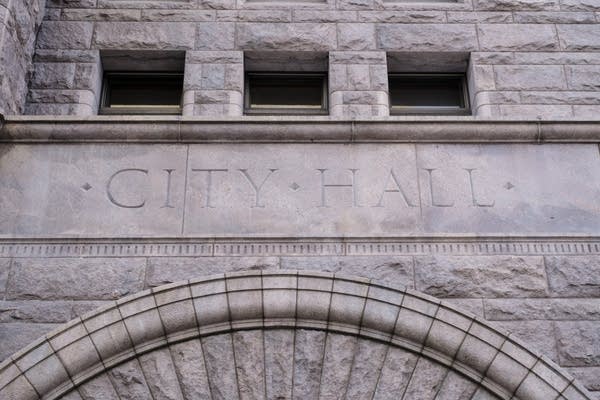
Minneapolis City Hall

The Minneapolis City Council has rejected a plan to spend $6 million to acquire property for a new public safety training center.

After more than an hour of debate — and after a previous vote in March was postponed — the council voted 7-6 on Thursday to deny the purchase.

The proposed training center, proposed for a site in the Windom neighborhood of south Minneapolis, would have included training and wellness spaces for first responders, including the city’s police and fire departments.

Council member Jamal Osman said at Thursday’s meeting that he supports the idea of a new training center — but questioned spending millions on the property when the city doesn’t yet have the estimated $38 million to build the center.

“The only plan I have heard from the mayor’s leadership or administration was that — let’s just buy it and hope we will find the money in the future,” Osman said. “Well, that costs a lot of money for the city of Minneapolis. We’re going to spend $6 million, plus the upkeep of the property — and we don’t know how many years we’ll be sitting on that. It might be the next 20 years. That is not a smart decision.”

Mayor Jacob Frey spoke at the meeting and said rejecting the land purchase now will only mean higher costs for a training center in the future.

North Minneapolis council members LaTrisha Vetaw and Pearll Warren implored their fellow council members to support the purchase — noting that current police training facilities are amid residential neighborhoods on the North Side, while the new site is in a more industrial area.

Council member Linea Palmisano, who also supported the land purchase, said the training center is a way for the city to meet mandates to overhaul its police department, under terms of a consent decree with the state.

“This proposal is about building the infrastructure we need for that promised reform and structural change,” Palmisano said at Thursday’s meeting. “This is how we get there. It’s about first responders training together and not in separate silos. It’s about improving our response to critical events and emergencies.”

Council member Robin Wonsley disputed that the training center is a necessity.

“I wanted to flag, again, this weaponization of the settlement agreement to constantly use as a tool to rubber stamp every request by MPD,” Wonsley said. “What we can learn from other cities is we don't need to bankrupt ourselves by fulfilling the needs of consent decrees for our police department.”

Opponents said the city has greater needs than the training center, that should be a priority for available funding.



Source link

Leave a Reply

Subscribe to Our Newsletter

Get our latest articles delivered straight to your inbox. No spam, we promise.

Recent Reviews


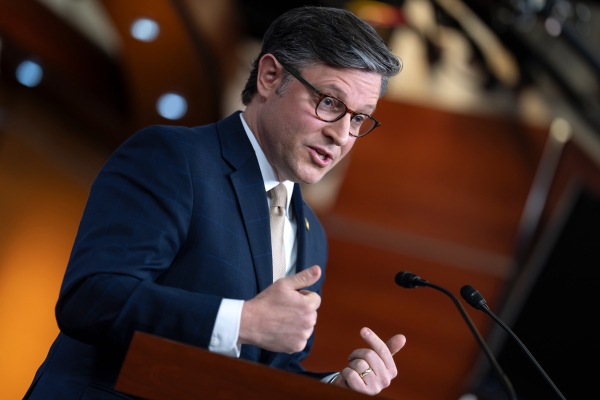
Speaker of the House Mike Johnson, R-La., takes questions at a news conference at the U.S. Capitol on April 21, 2026.

Speaker of the House Mike Johnson, R-La., takes questions at a news conference at the U.S. Capitol on April 21, 2026.
Speaker of the House Mike Johnson, R-La., takes questions at a news conference at the U.S. Capitol on April 21.
J. Scott Applewhite | AP

The House of Representatives voted Thursday to reopen most of the Department of Homeland Security, ending the longest agency shutdown in U.S. history.

The House passed a bill funding DHS, minus dollars for Immigration and Customs Enforcement and Customs and Border Protection. The measure passed by voice vote on what was the 76th day of the shutdown.

Democrats refused to back funding for many of the agency's immigration functions in an unsuccessful effort to secure reforms including body-worn cameras and broad restrictions on face coverings after federal law enforcement killed two American citizens in Minnesota earlier this year.

The Senate, led by Republican Majority Leader John Thune, R-S.D., unanimously advanced this funding legislation in March. At the time, Speaker Mike Johnson, R-La., referred to the proposal as "a joke" and refused to bring it up for a vote. Many members of the House Republican conference refused to fund the agency in a piecemeal fashion and did not want to negotiate over reforms to immigration enforcement operations.

On April 1, Johnson reversed course. He announced the funding bill would be voted on "in the coming days." More than four weeks later, he finally made good on that commitment.

In an effort to appease his hardline members, Johnson waited to bring the Senate's proposal to a vote until that chamber's Republicans started the arcane procedural process, known as reconciliation, to fund all of DHS — including Immigration and Customs Enforcement (ICE) and Customs and Border Protection (CBP) — for the remainder of Trump's term without any backing from Democrats.

The funding bill comes as Secretary of Homeland Security Markwayne Mullin warned the agency was close to running out of funds to pay staff.

"We have reached all the emergency funds we can reach into," Mullin told Fox News on Friday. "I am completely out of the slush fund, I have no place to move at the end of the month."

Mullin said the agency was relying on appropriated funds from last year's One Big Beautiful Bill, which allocated more than $150 billion to DHS on top of its regular annual appropriations funding.

President Donald Trump signed a memo this month authorizing DHS to use some of the money from that legislation to fund the department's operations — potentially infringing on the powers granted to Congress by the Constitution to direct how taxpayer money is spent.

Copyright 2026, NPR


Source link