SCOTUS won't intervene in Flores' suit against NFL


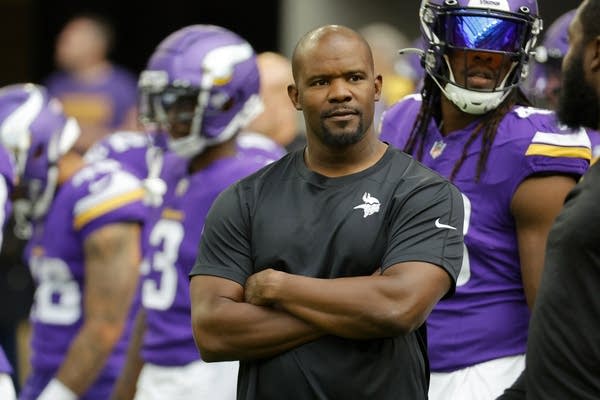
a man watches football players

The Supreme Court on Tuesday refused to intervene in a discrimination lawsuit led by former Miami Dolphins head coach Brian Flores against the NFL, allowing the case to proceed toward trial.

The justices rebuffed an appeal from the league, which wanted the case handled through its arbitration process rather than open court in New York. Justice Brett Kavanaugh dissented from the decision not to hear the case.

Flores, who's Black, sued the league and three teams in February 2022, alleging the league was “rife with racism” regarding its hiring practices when it comes to Black coaches. He was later joined in the lawsuit by fellow Black coaches Steve Wilks and Ray Horton.

Flores, who was fired by the Dolphins shortly before the suit was filed, is now the Minnesota Vikings' defensive coordinator.
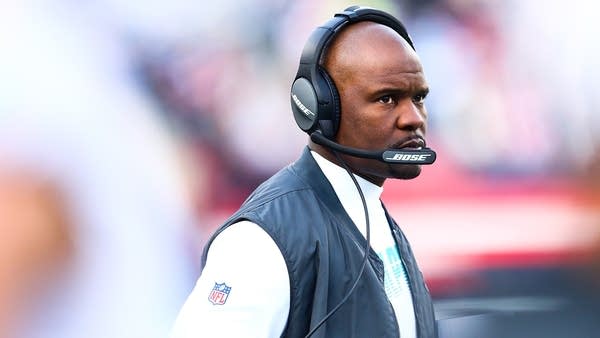
Former head coach Brian Flores of the Miami Dolphins looks on during a game against the New England Patriots.
Head coach Brian Flores of the Miami Dolphins looks on during a game against the New England Patriots at Gillette Stadium on Dec. 29, 2019 in Foxborough, Massachusetts.
Adam Glanzman | Getty Images file

The NFL has argued Flores should go through arbitration rather than the legal system, but lower courts have sided with the plaintiffs. The league said it respected the Supreme Court decision, which allows lower-court rulings to stay in place, but is "fully prepared to defend ourselves as this matter proceeds.”

David Gottlieb and Douglas Wigdor, attorneys for the plaintiffs, said they were pleased with the decision. “The NFL must now accept that its commissioner cannot be the arbitrator over discrimination claims against the league and its teams. We look forward to litigating these claims in court,” they said in a statement.

Flores was fired after posting a 24-25 record over three years without a playoff appearance. The Dolphins did have back-to-back winning seasons before Flores was dismissed.

Flores sued the NFL as well as the Denver Broncos, the New York Giants and the Houston Texans. He interviewed with the Broncos in 2019 and the Giants and Texans in 2022.

Wilks, who was fired as the New York Jets' defensive coordinator in December, joined the lawsuit by claiming the Arizona Cardinals in 2018 hired him as a “bridge coach” — promoting him to interim coach after they fired another coach but then passing over him for the full-time role. He said the Cardinals didn’t provide him with a realistic chance to succeed.

Horton, who last coached in the NFL in 2019, alleged the Tennessee Titans didn’t offer him a genuine interview for the head coaching position in 2016.


Source link

Leave a Reply

Subscribe to Our Newsletter

Get our latest articles delivered straight to your inbox. No spam, we promise.

Recent Reviews


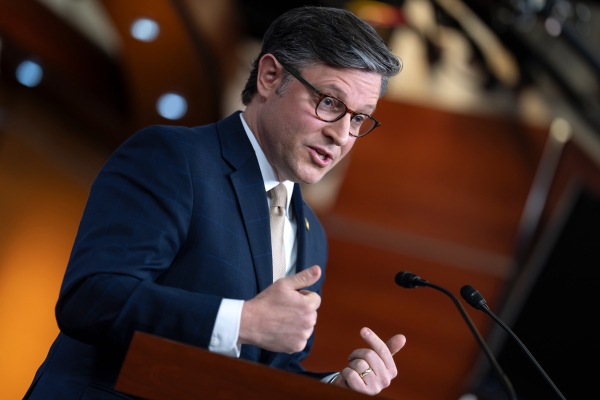
Speaker of the House Mike Johnson, R-La., takes questions at a news conference at the U.S. Capitol on April 21, 2026.

Speaker of the House Mike Johnson, R-La., takes questions at a news conference at the U.S. Capitol on April 21, 2026.
Speaker of the House Mike Johnson, R-La., takes questions at a news conference at the U.S. Capitol on April 21.
J. Scott Applewhite | AP

The House of Representatives voted Thursday to reopen most of the Department of Homeland Security, ending the longest agency shutdown in U.S. history.

The House passed a bill funding DHS, minus dollars for Immigration and Customs Enforcement and Customs and Border Protection. The measure passed by voice vote on what was the 76th day of the shutdown.

Democrats refused to back funding for many of the agency's immigration functions in an unsuccessful effort to secure reforms including body-worn cameras and broad restrictions on face coverings after federal law enforcement killed two American citizens in Minnesota earlier this year.

The Senate, led by Republican Majority Leader John Thune, R-S.D., unanimously advanced this funding legislation in March. At the time, Speaker Mike Johnson, R-La., referred to the proposal as "a joke" and refused to bring it up for a vote. Many members of the House Republican conference refused to fund the agency in a piecemeal fashion and did not want to negotiate over reforms to immigration enforcement operations.

On April 1, Johnson reversed course. He announced the funding bill would be voted on "in the coming days." More than four weeks later, he finally made good on that commitment.

In an effort to appease his hardline members, Johnson waited to bring the Senate's proposal to a vote until that chamber's Republicans started the arcane procedural process, known as reconciliation, to fund all of DHS — including Immigration and Customs Enforcement (ICE) and Customs and Border Protection (CBP) — for the remainder of Trump's term without any backing from Democrats.

The funding bill comes as Secretary of Homeland Security Markwayne Mullin warned the agency was close to running out of funds to pay staff.

"We have reached all the emergency funds we can reach into," Mullin told Fox News on Friday. "I am completely out of the slush fund, I have no place to move at the end of the month."

Mullin said the agency was relying on appropriated funds from last year's One Big Beautiful Bill, which allocated more than $150 billion to DHS on top of its regular annual appropriations funding.

President Donald Trump signed a memo this month authorizing DHS to use some of the money from that legislation to fund the department's operations — potentially infringing on the powers granted to Congress by the Constitution to direct how taxpayer money is spent.

Copyright 2026, NPR


Source link