The craft beer industry is hurting.
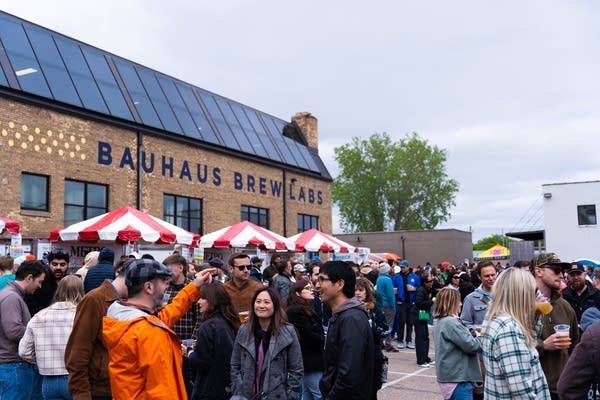
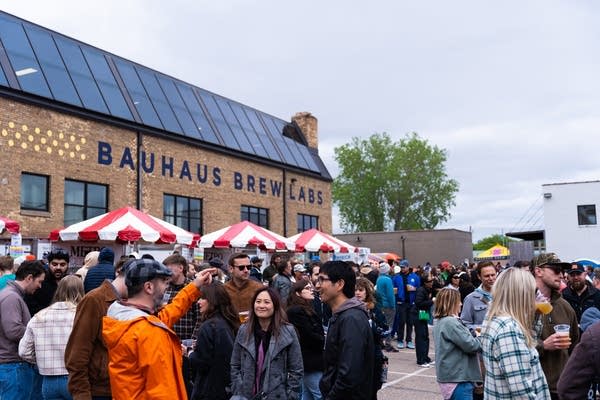
Bauhaus Brew Labs, the decade-old brewery, will soon be the latest in a list of Minneapolis closures: HeadFlyer Brewing closed in April and Dangerous Man Brewing shut down in 2023.
“I want to cry,” said Jana Brom-Palkowski, a Bauhaus employee for most of its 12-year existence. She said the brewery’s closure is a dagger to the northeast Minneapolis neighborhood.
“We've been through a lot in this city and in this neighborhood, and people have continued to show up and support us for so many years,” she said. “How can we walk away looking at that is nothing less than really lucky.”
Smaller taprooms are feeling the light dim on craft beer’s golden age. For over a decade the news about breweries wasn’t last call — it was mostly bottoms up.
The 2010s were a boomtime for craft beer. Taprooms popped up across the country, injecting new life into forgotten places — old factories, warehouses and the like with large open spaces, exposed brick and metal beams. The remnants of the industrial Midwest that sat vacant for decades were once again packed with a new generation of people eager to sip on a crafted lager, hefeweizen or IPA.
So, what happened?
The Brewers Association, an industry group, says there were around 9,000 breweries across the country by 2020. More than 450 taprooms opened that year alone, compared to just 128 that closed.
By 2024, there were more taprooms closing than opening. In 2025, 219 taprooms closed compared to 151 that opened.
It was the worst year since the trade group started keeping track in 2018. Some of those closures included Invictus Brewing in Blaine, Schram Haus Brewery in Chaska and Foremost Brewing Cooperative in Owatonna.
Mike Rulf, the CEO of Dual Citizen Brewing Company in St. Paul, has taken notice of the closings.
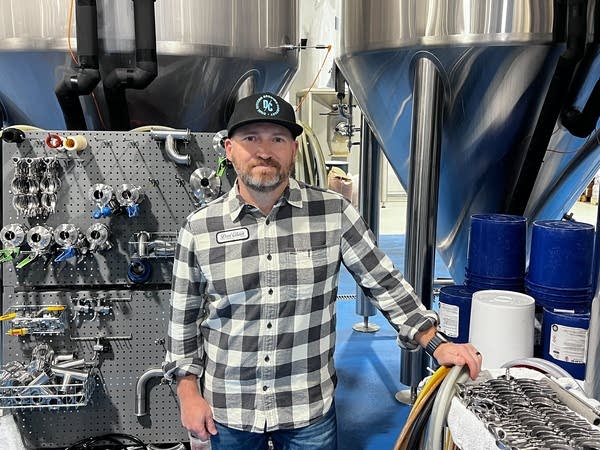
Dual Citizen opened in 2018 — near the peak of the craft beer boom. Rolf says they're doing what they can to ward off financial headwinds. That includes crafting their own non-alcoholic beverages and THC drinks.
They also curate a welcoming environment for their Dual Citizen taproom with themed gatherings, game nights and fundraising with local nonprofits, Rulf said.
Each month, the brewery partners with a Minnesota nonprofit called Dual Purpose. The brewery will host events for a gathering of the community.
“This is what we're all about,” said Rulf. “We make it easy for people to get involved, and that's what keeps us going.
“People loved going to these taprooms and learning about beer,” Rulf said. “I still think people like to do that, but I think you have a shift in the culture of drinking that is changing.”
Rulf credited part of the shift to people making health conscious decisions by not drinking as much alcohol.
But there are also more options for those who continue to drink. The market has a plethora of alcoholic seltzers, THC drinks and mocktails.
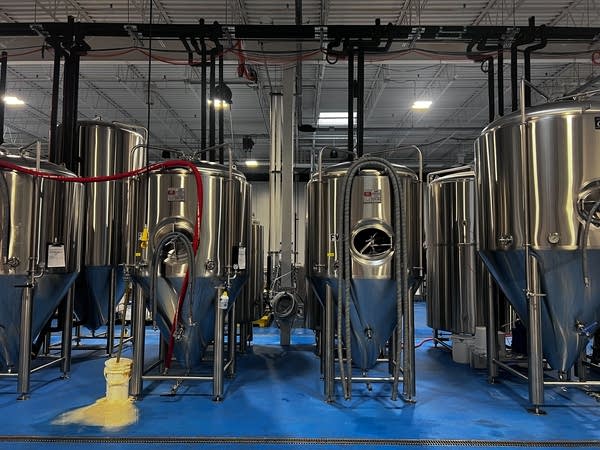
In 2023, Dual Citizen built a separate brewing facility on the border of Minneapolis and St. Paul. The warehouse is used to can and distribute beer at a larger scale.
“Our biggest challenge is being able to sell beer profitably at scale in what is really shelf shrinking shelf space,” Rulf said.
He said Dual Citizen can produce about 2,000 barrels of beer a year out of the facility. That is miniscule compared to larger breweries with name recognition that can easily put out anywhere from 50,000 to 70,000 barrels.
Minnesota Craft Brewers Guild government and industry relations director Bob Galligan believes breweries are recovering from a multitude of events that was out of their control.
“I think there is an element of burnout that goes unrecognized,” Galligan said. “Obviously, the pandemic was was huge, but also the constant shift in trade policies, the constant shift in cost of goods. I do think that there are some owners who are just choosing to step away because running a small business has never been easy, but under these conditions it's unfair and nearly impossible.”
Galligan said he’s cautiously optimistic about the brewing industry, describing the slowing craft beer market as maturing or “hitting a cruising altitude.” Though he said Minnesota is grappling with a different set of circumstances.
Galligan feels the last three years has been difficult for craft brewers. Aside from regular market forces, Operation Metro Surge cratered outings at taprooms in the Twin Cities over the winter — as much as a 60 percent drop in business for some breweries.
“That's during January, which is already the slowest month of hospitality and beer,” Galligan said. “We can't find a way forward if we can't actually agree as to the fact that this has been impactful.”
Still, other factors are contributing to craft beer woes. In Washington, recent federal legislation threatens the future of THC drink production, which has been a lifeline for some brewers such as Dual Citizen.
A generational shift in drinking habits and views on consuming alcohol is already making breweries less relevant.
Overall, people are drinking less. That’s not lost on Galligan, who doesn’t put the blame solely on Gen Z. He sees the situation as a day-by-day learning experience and that Gen Z will drink what they want.
For now, the Bauhaus staff is aware that their time is running short. With weeks left until the brewery closes in June, Brom-Palkowski sees the laughs — and tears — while patrons share what they’re really losing while belly up to the bar.
“It's the end of an era,” Brom-Palkowski said as she looked out into the open-spaced taproom. “I will always have this family here and people that have really made a difference in my life through art and community.”