Air quality alert issued for Twin Cities for Friday afternoon, evening


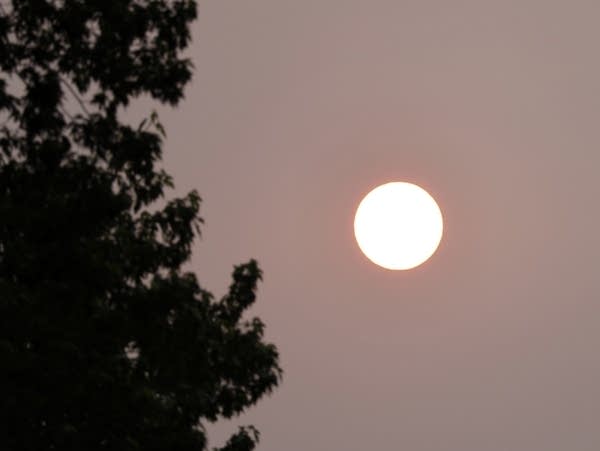
The morning sun shines through hazy skies

Air quality in the Twin Cities may reach unhealthy levels on Friday afternoon and evening.

The Minnesota Pollution Control Agency has issued an air quality alert for the Twin Cities metro area from noon to 9 p.m. Friday.

Unlike many air quality alerts in Minnesota in recent years, Friday’s alert does not stem from wildfire smoke in the air. Instead, it’s due to ground-level ozone created by a combination of weather conditions.

“Mostly sunny skies, warm temperatures and low humidity will provide a favorable environment for two types of pollutants (volatile organic compounds and nitrogen oxides) to react with sunlight in the air to produce ground-level ozone,” the MPCA reported.

Forecasters say air quality in the metro area may reach the orange category on Friday afternoon and evening — meaning unhealthy for sensitive groups. That includes people with asthma or other chronic breathing conditions, as well as children and the elderly.

“Unhealthy ozone can aggravate lung diseases like asthma, emphysema, and COPD. When the air quality is unhealthy, people with these conditions may experience symptoms like difficulty breathing deeply, shortness of breath, throat soreness, wheezing, coughing, or unusual fatigue,” the MPCA reported.

People in the Twin Cities — especially those in sensitive groups — may want to limit or postpone outdoor activities while the alert is in effect.

The air quality should improve after sunset Friday.

The MPCA offered tips on how people can help reduce the amount of pollutants in the air:

  • Reduce driving; carpool or use public transit when possible

  • If you need to fill your vehicle with gas or diesel, avoid filling up during the middle of the day

  • Avoid using gasoline-powered lawn and garden equipment until the alert has ended, or use battery or manual-powered equipment instead

  • Avoid backyard campfires


Source link

Leave a Reply

Subscribe to Our Newsletter

Get our latest articles delivered straight to your inbox. No spam, we promise.

Recent Reviews


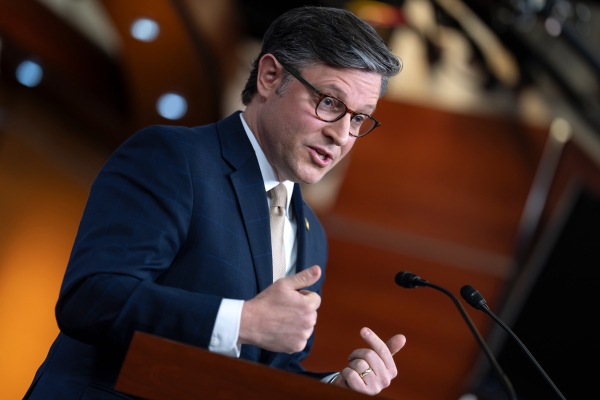
Speaker of the House Mike Johnson, R-La., takes questions at a news conference at the U.S. Capitol on April 21, 2026.

Speaker of the House Mike Johnson, R-La., takes questions at a news conference at the U.S. Capitol on April 21, 2026.
Speaker of the House Mike Johnson, R-La., takes questions at a news conference at the U.S. Capitol on April 21.
J. Scott Applewhite | AP

The House of Representatives voted Thursday to reopen most of the Department of Homeland Security, ending the longest agency shutdown in U.S. history.

The House passed a bill funding DHS, minus dollars for Immigration and Customs Enforcement and Customs and Border Protection. The measure passed by voice vote on what was the 76th day of the shutdown.

Democrats refused to back funding for many of the agency's immigration functions in an unsuccessful effort to secure reforms including body-worn cameras and broad restrictions on face coverings after federal law enforcement killed two American citizens in Minnesota earlier this year.

The Senate, led by Republican Majority Leader John Thune, R-S.D., unanimously advanced this funding legislation in March. At the time, Speaker Mike Johnson, R-La., referred to the proposal as "a joke" and refused to bring it up for a vote. Many members of the House Republican conference refused to fund the agency in a piecemeal fashion and did not want to negotiate over reforms to immigration enforcement operations.

On April 1, Johnson reversed course. He announced the funding bill would be voted on "in the coming days." More than four weeks later, he finally made good on that commitment.

In an effort to appease his hardline members, Johnson waited to bring the Senate's proposal to a vote until that chamber's Republicans started the arcane procedural process, known as reconciliation, to fund all of DHS — including Immigration and Customs Enforcement (ICE) and Customs and Border Protection (CBP) — for the remainder of Trump's term without any backing from Democrats.

The funding bill comes as Secretary of Homeland Security Markwayne Mullin warned the agency was close to running out of funds to pay staff.

"We have reached all the emergency funds we can reach into," Mullin told Fox News on Friday. "I am completely out of the slush fund, I have no place to move at the end of the month."

Mullin said the agency was relying on appropriated funds from last year's One Big Beautiful Bill, which allocated more than $150 billion to DHS on top of its regular annual appropriations funding.

President Donald Trump signed a memo this month authorizing DHS to use some of the money from that legislation to fund the department's operations — potentially infringing on the powers granted to Congress by the Constitution to direct how taxpayer money is spent.

Copyright 2026, NPR


Source link