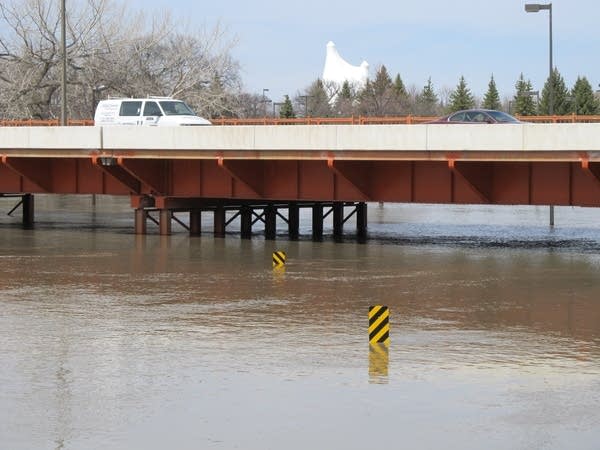

The Fargo-Moorhead area has had many major flooding events and in 2009, an especially devastating flood prompted local city officials to jumpstart infrastructure improvements.
Now, 17 years later, the Minnesota Legislature awarded $10 million to the City of Moorhead for local flood mitigation infrastructure improvements.
The Metro Flood Diversion Authority, which oversees the construction of the Fargo-Moorhead Area Diversion, a $3.2 billion project meant to divert excess water around the metro area during intense flooding events, also agreed to match the $10 million award.
Lisa Bode, governmental affairs director, said at a recent city council meeting that this means the Moorhead has finally secured enough money to complete the city’s ongoing construction and upgrades to its flood mitigation infrastructure.
“For those of you and our staff who have been around for the floods of 1997, 2009, 2010 and 2011, and others, this is cause for major celebration,” Bode said. “For those who weren’t, we have lots of stories to share.”

Moorhead’s vulnerabilities to flooding
The 2009 flood served as a lesson for engineering director Bob Zimmerman and his team. It helped them understand Moorhead’s vulnerabilities and where the city needed to invest to protect the community.
As soon as the engineering team knew there was a risk of flooding, they went to the houses on the riverfront and asked the residents to place sandbags facing the river. In about a week, 2.5 million sandbags were placed in a line to form a wall against the river.
“There were huge numbers of volunteers that came from all over, outside of the region, to help make those sandbags, and to help place those sandbags,” Zimmerman said.

The makeshift levees were only about six inches above where the river crested, Zimmerman said, but they still somehow held the water back. That experience taught Zimmerman which areas along the riverfront needed levees to protect the city from flooding.
The city later bought many of the properties across the riverfront that the owners voluntarily sold.
During the flood, Zimmerman also learned the city’s stormwater system needed an upgrade. The system was designed to pump excess water into the river. But when the river’s water levels rose to over 40 feet, the water ended up flowing back through the pipes and into the city’s streets.
“[The water] threatened properties blocks away from the riverfront,” Zimmerman said. “We didn't have gates or controls on those storm sewer pipes.”

The city has since built those controls, but they were missing upgrades to the sewer pump stations that could push water through the pipes away from the city in case of another flood.
“It's incredible,” Zimmerman said. “ People experienced what we call flood fatigue, and to keep the momentum going when [flooding] is not front page news is a challenge, but we've made it through that challenge.”
Zimmerman said the upgrades could be done by the end of next year.
Flood prediction challenges
One factor that makes it hard to predict floods in the region is melting snow, which is a major cause of flooding.
It’s hard to know how much snow has accumulated and how fast it melts. That makes it difficult to predict when floods may happen, according to Zac McEachran, a research hydrologist at the University of Minnesota Climate Adaptation Partnership
“It's really hard to represent all of these little factors in a computer model,” McEachran said.

The snow and ice that accumulate in the winter often melt rapidly in spring as the southern areas of the valley warm up before the north.
The river also flows from south to north, which means that all the snowmelt at the bottom of the river flows upward, putting northern cities at higher risk of flooding.
The Red River Valley is flat as well. So, if the river’s water levels rise by even just a foot, a whole mile of land can get covered in water, according to McEachran.
McEachran is currently working on a study about the potential impacts of projected climate warming on river flooding.

While the research is still underway, he said there is reason to expect that extreme rainfall may become a bigger factor in flooding than snowmelt has been in Minnesota in the past as the climate continues to change.
“There is a certain baseline risk of flooding in the Red River Valley; we have indications that that's going to continue. We have indications it might get worse,” McEachran said. “So, in general, investing in adaptation, investing in ways to manage our water, and in ways to better anticipate when these extreme events may strike, I think, is a good call.”