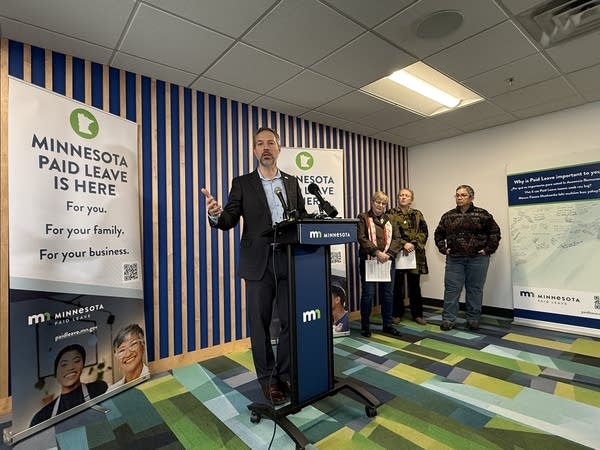
Nearly 75,000 people got approval to take paid family and medical leave under the state’s program in the first six months since it got off the ground.
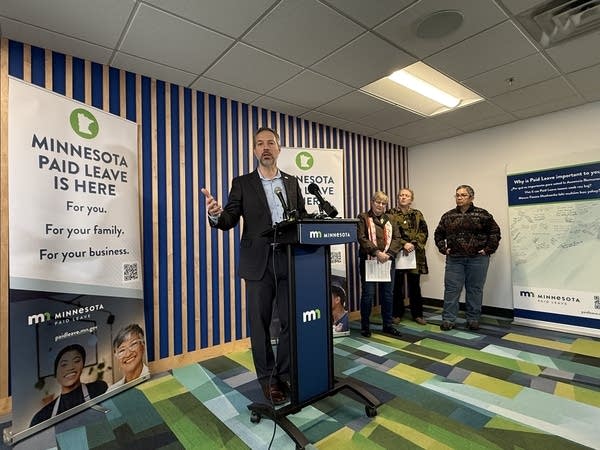
Officials in the Department of Employment and Economic Development provided an update Tuesday about who had applied for the partial pay replacement to take time to bond with a new child, heal from a sickness or injury or care for a loved one.
They reported that 126,373 applications had been submitted, with an approval rate of nearly 60 percent. An application doesn’t automatically translate into granted leave.
Almost half of the approved leave cases — 38,000 — were for family bonding. Medical leave requires applicants to include certification from a health provider and that category had a lower approval rate.
DEED Commissioner Matt Varilek said that despite some small hiccups, the rollout had gone off pretty well.
“We had predictions that we would be behind schedule in launching, we had predictions that we would be over budget in launching, we had predictions that the technology would not work properly,” Varilek said. “I'm happy to note that on those three measures: We came in under budget with implementation. We launched early. And the technology has operated smoothly.”
The program was funded through a one-time state payment of $668 million in 2023 and is topped off by payroll taxes collected from workers and employers. Leaders from the paid family leave office said there was an initial bump in applications early this year as parents applied for bonding leave.
Parents who welcomed children in 2025 were also eligible to apply within one year of that family expansion event — a birth or adoption.
But applications have since trended down, with between 3,000 and 4,000 applications for paid leave coming in each month.
“We've really leveled off,” said DEED deputy commissioner Evan Rowe. “By about the third week in January, we saw applications to new applicants declined by about a quarter, and now we're really starting to get into that more steady state of program operations as we go along.”
Rowe said the state would consult an actuarial analysis this month to determine whether the payroll tax rate for workers and employers would need to increase from the current level.
The officials noted that while the program allows people to take up to 12 weeks of paid leave — with a possible longer combination if someone takes medical and bonding or caring leave in a calendar year — the average times are lower.
Minnesotans who took time to bond with a child took 8.2 weeks on average, those taking medical leave took 6.5 weeks on average and those who took caring leave used 5.7 weeks on average.
Here’s an additional breakdown of where the program stands after six months:
-
The department reports that it has processed 126,373 unique applications from 116,617 applicants. Of those, 74,687 were approved.
-
Fifty percent of applications were for medical leave, 36 percent were for bonding leaving, 14 percent for caring leave and the remainder were for safety and military family leave.
-
On average, people taking paid leave received $1,083 a week. With the maximum someone could make from the program capped at $1,423 a week. Pay is determined based on someone’s income, with those who make less receiving a larger percent of their typical pay.
-
Fifty-eight percent of those who applied were under the age of 40 and 64 percent of applicants were women. Fifty-four percent of those who applied made less than $78,000 a year.