A data center owner is suing the city of Eagan after it adopted a one-year moratorium on new or expanded data centers in February.
The complaint was filed on behalf of Eagan Capital on June 15 and alleged the city lacks the authority to enact a temporary suspension. Eagan Capital is asking for $50,000 in damages.
Eagan Capital attorneys argue the city doesn’t have the authority to regulate electricity.
“The Minnesota Public Utilities Commission has exclusive authority to regulate electricity demand in Minnesota,” the complaint read.
The Public Utilities Commission sets the rates and terms of service for eight major investor-owned electric members, which include Xcel Energy, Minnesota Power, Otter Tail Power and Dakota Electric Association, according to its website.
In a statement to MPR, the City of Eagan said it denied an Eagan Capital Interim Use Permit after staff identified temporary trailer-mounted chiller units had been installed and placed into operation without the required permits.
“In May, the City Council denied the Interim Use Permit because the proposed use was not lawful under the property's current zoning,” the city said. “The City is confident in its position and intends to vigorously defend its moratorium through the legal process.”
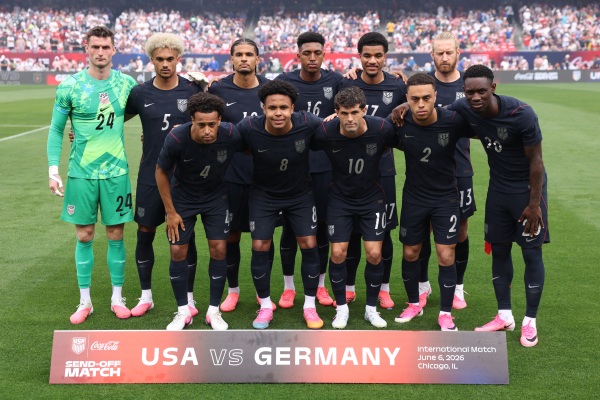
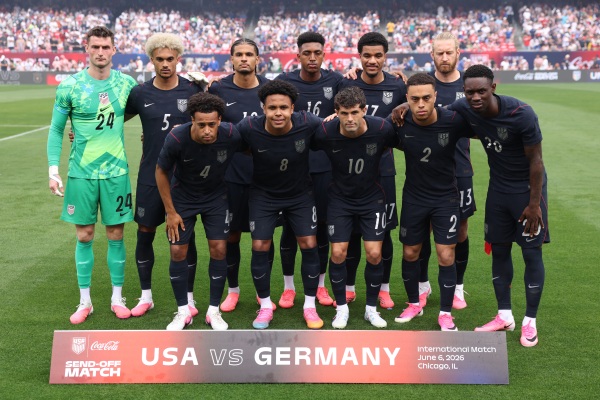
Players of the United States pose for a team photograph prior to their World Cup tune-up match against Germany at Chicago's Soldier Field on Saturday.
Jamie Squire | Getty Images
It's here, folks: The FIFA World Cup kicks off this week, and the U.S. men's national soccer team is ready for its Friday opener in Los Angeles, the players say.
A pair of international friendlies over the past two weekends has given the Americans and their fans plenty of reasons to dream big. Star forward Christian Pulisic broke his monthslong goal drought against Senegal, and defender Antonee Robinson wowed with his offensive playmaking. And above all, the U.S. showed they are unwilling to be intimidated by quality opponents with their own serious aspirations for the World Cup.
“We're really starting to hit our stride,” said midfielder Tyler Adams after Saturday's game against Germany.
Gone are the anxieties about scoring chances
In the 2022 World Cup, the Americans only managed to score three goals in their four games. That was enough for a win and two draws in the group stage, but their road ended in the Round of 16 when the Netherlands easily outscored them 3-1.
Now, any anxiety over the U.S. scoring capability feels like a distant memory. The team is flush with options on the attack, and not only Pulisic, who has scored 33 goals for the U.S. in his career. Forwards Folarin Balogun, who found the net against Senegal, and Ricardo Pepi, who was instrumental in two goals against Senegal, have looked excellent these past two weeks.
In other words, the team is consistently creating chances and converting enough to compete. “It's definitely encouraging,” said Pulisic Saturday. “We have a lot of talent on the team, a lot of guys that can create and be dangerous to score goals.”
But defense is still a liability…
Both Germany and Senegal picked up easy goals on defensive lapses. Great World Cup teams, like the kind the U.S. hopes to face in the Round of 16 and beyond, will do that.
Compared to a relatively deep bench of forwards and midfielders, the U.S. have fewer full-package defenders. On one hand, there's Tim Ream, whose soccer IQ and positioning are excellent, but who is 38 and can no longer win a footrace. Next to him is the promising 21-year-old Alex Freeman, the son of a former NFL wide receiver whose athleticism is off the charts but feel for the game is still a work in progress. Backups Miles Robinson, Mark McKenzie and Auston Trusty have their moments but are prone to mistakes.
“There's been a lot of combinations worked on in training and, there were moments when we can be better connected as a group on the defensive side,” Ream said after the game.
… so getting defender Chris Richards back from injury will be key
The U.S. badly needs the return of defender Chris Richards, who hurt his ankle in a game with his club Crystal Palace in May. He sat out both friendlies. His status for Friday's game against Paraguay is still in limbo.
“If this was the final of the World Cup, maybe he can play. But the advice of the medical [team] is not to play,” coach Mauricio Pochettino said the day before the Germany game. He added that they would assess Richards' health in the days that followed.
“He's an important piece of the group [with] his energy, his leadership on and off the field. So obviously we're just all behind him and can't wait to have him back,” midfielder Weston McKennie said Friday.
These guys aren't afraid of adversity
A meeker U.S. team might have folded when Germany scored in the second minute of Saturday's game. But this version of the USMNT righted the ship within minutes and began pressing Germany hard, producing chance after chance before finally connecting on Robinson's extraordinary goal before the halftime break.
After the game, Pochettino told reporters he came to see Germany's early goal as “lucky” for his squad. “[It was] an amazing challenge for us to see how we react, how is your character, how we show togetherness, how we start to play under pressure,” he said.
And the toughness showed up in the physicality, too. Players didn't back down from challenges. When Germany fouled hard, an American delivered a hard foul right back. The message, Adams said, was “have each other's backs.”
“We can tune up passing, final plays, finishing, all those kinds of things. But to see that mentality, I think from everyone, and it's not just the guys that started, everyone that came off the bench as well — that's what you need,” he said.
To provide the best experiences, we use technologies like cookies to store and/or access device information. Consenting to these technologies will allow us to process data such as browsing behavior or unique IDs on this site. Not consenting or withdrawing consent, may adversely affect certain features and functions.
Functional
Always active
The technical storage or access is strictly necessary for the legitimate purpose of enabling the use of a specific service explicitly requested by the subscriber or user, or for the sole purpose of carrying out the transmission of a communication over an electronic communications network.
Preferences
The technical storage or access is necessary for the legitimate purpose of storing preferences that are not requested by the subscriber or user.
Statistics
The technical storage or access that is used exclusively for statistical purposes.The technical storage or access that is used exclusively for anonymous statistical purposes. Without a subpoena, voluntary compliance on the part of your Internet Service Provider, or additional records from a third party, information stored or retrieved for this purpose alone cannot usually be used to identify you.
Marketing
The technical storage or access is required to create user profiles to send advertising, or to track the user on a website or across several websites for similar marketing purposes.