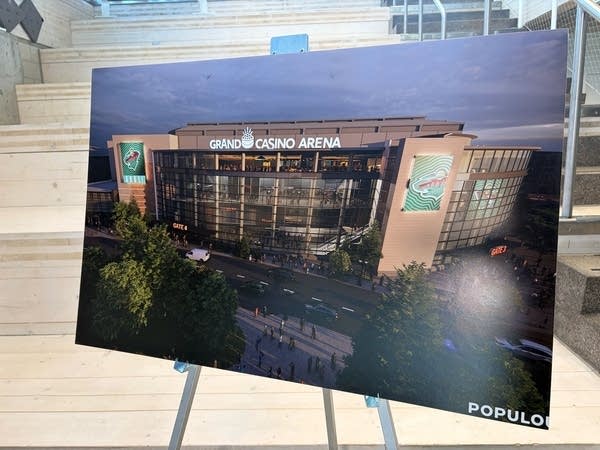
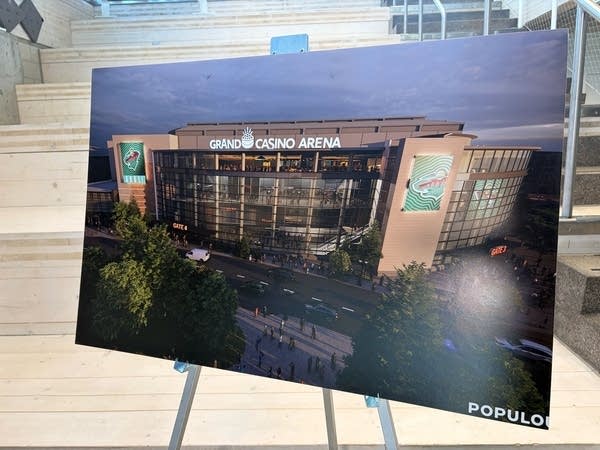
With a legislative deadline fast approaching, St. Paul Mayor Kaohly Her and the owner of the Minnesota Wild are again pressing state lawmakers for $200 million to help fund renovations at the Grand Casino Arena complex, formerly known as the Xcel Energy Center.
Previous attempts to secure state funding have failed, including a $397 million ask last session that was eventually narrowed down to $50 million — four times smaller than the current request.
Last month, the city and team announced that they reached an agreement on a $600 million plan for renovations at the arena. Most of those renovations are for security and accessibility improvements. The proposal would also pay for upgrades at the St. Paul RiverCentre and Roy Wilkins Auditorium, the latter of which is about a century old.
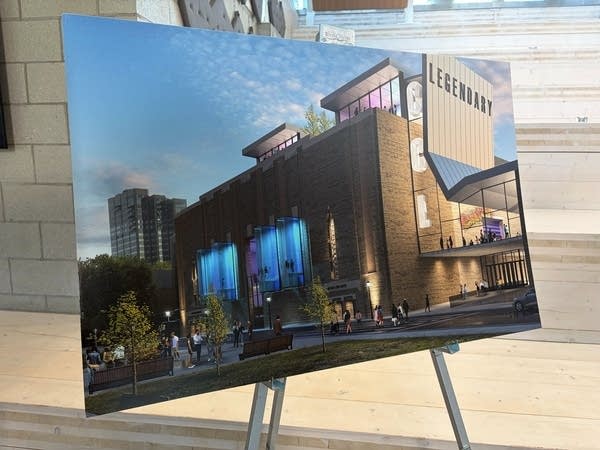
After the proposed state funding, the remaining $400 million would be financed by the city of St. Paul and the Wild. The deal would not involve raising property taxes for city residents.
Her noted that the facilities are used for more than entertainment, including high school graduations and bar exams. She said the renovations are a key part of her vision for revitalizing downtown.
“There is a large vision for what the rest of the downtown surrounding area will look like, but that can only happen if we get the investment we need in this particular complex,” she said.
If the request again stalls at the Capitol, Her said there is a “plan B,” though it is “not ideal.”
Now on his third attempt at asking the legislature for renovation funding, Minnesota Wild owner Craig Leipold said he feels there will be “progress this legislative session.”
“I am very committed to downtown St. Paul, and there is no plan B in my thought process here. This is Plan A, Plan B, Plan C,” Leipold said. “We want to stay in St Paul, but we need the support of the state legislature to guarantee that that happens.”
The renovation would create more public gathering space and an indoor and outdoor patio on the upper level of the arena. It would make usable a convention space on the lowest level of the Roy Wilkins Auditorium. Leipold said the facilities bring in more than 2.1 million people each year.