Northeast Minn. river named 3rd-most endangered in U.S.


A conservation group has listed a major river in the Boundary Waters Canoe Area as the third most endangered river in the country on its annual list of threatened waterways.

It marks the fourth time American Rivers has included the South Kawishiwi River on its list of 10 most endangered rivers — it was also selected in 2013, 2018 and 2021.

The river winds in and out of the federally protected canoe wilderness area in northeast Minnesota. Twin Metals, a subsidiary of the Chilean mining giant Antofagasta, has proposed building an underground mine for copper and nickel along the pristine river’s shoreline near Ely, just south of the Boundary Waters.

The designation from American Rivers comes as the U.S. Senate is poised to take up a resolution later this month that would reverse the 20-year long ban on mining in the area, which could open the door for Twin Metals to reapply to open a mine there.

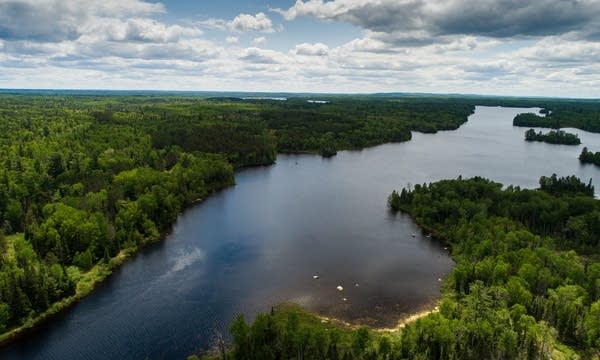
The Kawishiwi River and forests are seen in this aerial photo.
The Kawishiwi River flows June 12, 2019, near Ely, Minn. Twin Metals is proposing to build an underground copper-nickel mine near Ely and close to the Boundary Waters Canoe Area Wilderness. Much of the mining would take place on the left side of this image in the forested land.
Derek Montgomery for MPR News

Conversation groups argue that mining for metals such as copper and nickel, which carries with it the potential for more severe water pollution than iron ore mining in Minnesota, could cause irreparable harm to one of the nation’s most cherished and highly visited wilderness areas.

“Spoiling some of the purest, most pristine waters for a foreign mine and foreign corporate interests is a short-sighted move that could cause irreversible harm to the region,” said Elizabeth Riggs, Great Lakes regional director for American Rivers.

In 2023, the Biden administration imposed a 20-year mining moratorium covering about 350 square miles of federal land south of the Boundary Waters, including where the Twin Metals mine would be located.

The land is located outside the Boundary Waters but within its watershed. As a result, water pollution from mining could flow into the federally protected wilderness area.

In January, the U.S. House passed a resolution introduced by Rep. Pete Sauber, R-Hermantown, to overturn the moratorium. It would also prohibit future administrations from imposing another ban.

Stauber’s resolution utilizes a law called the Congressional Review Act that allows Congress to overturn federal agency rules with simple majority votes in both chambers. That means it couldn’t be blocked by a Senate filibuster, which, under the upper chamber’s rules, requires 60 votes to call legislation for a vote.

But the Senate is running out of time to take up the measure. Ingrid Lyons, executive director of Save the Boundary Waters, said Congress faces a deadline of April 24 or April 27 to pass the resolution and send it to President Trump for his signature.

Lyons said Senate leadership has signaled the vote could occur in the next 10 days. She said public lands advocates are lobbying furiously against the measure. That includes descendants of former President and noted land conservationist Theodore “Teddy” Roosevelt, who sent a letter to Congress urging members to reject the resolution and “seek ways to permanently protect the Boundary Waters.”

“We are having a lot of really good meetings, a lot of surprising meetings, about what overturning these protections would mean,” said Lyons, who describes it as an unprecedented effort to overturn public land management decisions. “It really kind of opens up a Pandora's box in terms of public land decisions.”
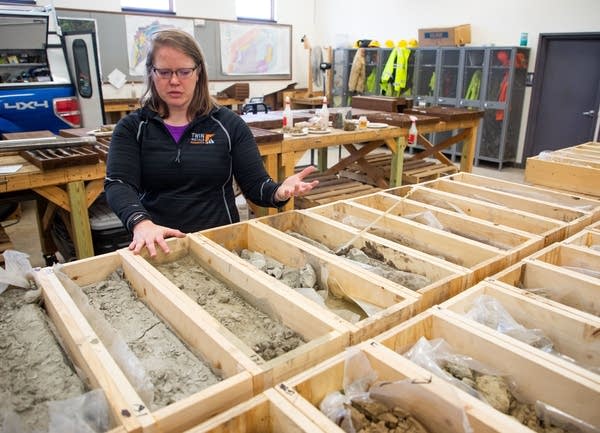
Nicole Hoffmann gestures to core samples in wooden boxes in an office.
Geologist Nicole Hoffmann talks about core samples taken June 12, 2019, at the offices for Twin Metals in Ely, Minn. The company is proposing to build an underground copper-nickel mine near Ely and close to the Boundary Waters Canoe Area Wilderness.
Derek Montgomery for MPR News

When Stauber introduced his resolution in January, he said the “dangerous and illegal mining ban was thrust upon my constituents and our way of life in Northern Minnesota and put our nation’s mineral security in jeopardy.”

Julie Lucas, executive director of the industry group Mining Minnesota, said overturning the moratorium wouldn’t mean an automatic green light for mining projects. They would still have to go through years of applying for permits and environmental impact studies.

“It's about getting us back into the conversations and back into environmental review. Because these are significant deposits there, and we should be looking at what it would mean to mine those.”

Lucas says those in the mining industry also value the preciousness of the Boundary Waters.

“We didn't go into this industry because we don't love the environment. We went into it because we want to make mining better.”

Source link

Leave a Reply

Subscribe to Our Newsletter

Get our latest articles delivered straight to your inbox. No spam, we promise.

Recent Reviews


A Republican lawmaker charged in an alcohol-related driving offense won’t have to appear in court again until after the Legislature adjourns for the year.

A June 10 arraignment hearing is set for Rep. Elliott Engen, a Lino Lakes Republican who faces three misdemeanor charges following an arrest early Friday. He was stopped for speeding and other infractions in White Bear Lake; officers detected alcohol and he later tested well above the legal limit for driving, according to a citation.

Engen has apologized for a lapse in judgment; he promised to learn from his actions and “do better.” Aside from being a second-term legislator, he is also a candidate for state auditor.

A second lawmaker, GOP Rep. Walter Hudson, was in Engen’s truck at the time of the stop and an open bottle of alcohol was found in a rear seat. Hudson, a second-term legislator from Albertville, was in possession of a permitted handgun, which could cause him legal problems if he is determined to have been intoxicated.

Police officers wrote in their report that Hudson disclosed he had the gun as the truck was being searched. The report said police took the firearm for safekeeping and said he could pick it up at a later time, which Hudson agreed to.

“I regret the poor decisions that were made during this incident, and commend the White Bear Police Department for their professional response,” Hudson said in a written statement. “I’m grateful that no harm was done to ourselves and others.”

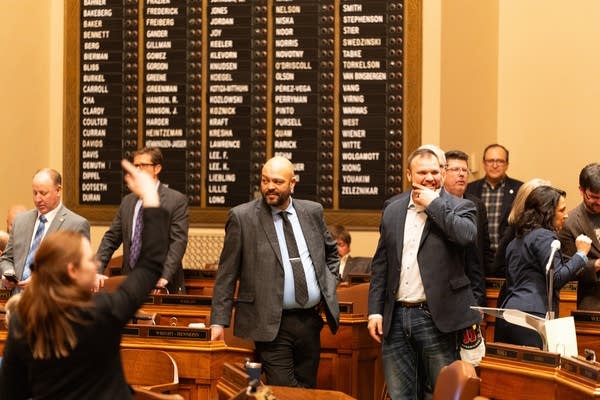
Two lawmakers stand and look around
Rep. Walter Hudson, R-Albertville, (center) and Rep. Bidal Duran, R-Bemidji, (right) join other Republican lawmakers gather in the House chambers Jan. 27, 2025.
Tim Evans for MPR News file

A third, unidentified passenger was in the truck as well, according to police. Hudson and that person were transferred to the police department until they could arrange rides.

The Minnesota lawmakers had been at the Capitol late into the evening Thursday as the House debated procedural motions on gun, immigration and social media legislation. The motions failed on 67-67 votes.

There is no indication yet that either Hudson nor Engen had been drinking on Capitol grounds, which would be a violation of a House rule against consumption of alcohol or drugs in spaces under that chamber’s control.

According to a White Bear Lake Police report, Engen initially said he had not been drinking when asked by the police officer who pulled him over — “nothing at all,” he is quoted as saying. He performed a field sobriety test, which the report says showed signs of impairment.

Engen gave a preliminary breath sample there, the report says, which estimated a 0.142 blood alcohol level. After he was taken by squad car to the police department “Engen spontaneously stated, ‘Sir, I had a drink three hours ago,’” the report says.

He told the Minnesota Star Tribune in an interview Monday that he had also consumed alcohol in the afternoon on Thursday as well.

Engen is charged with two impaired driving offenses and speeding. White Bear Lake police also said he was driving a vehicle with expired registration and an inoperable headlight.

Engen has not returned calls from MPR News. A court docket lists a “notice of appearance” on Tuesday.

He is being represented in the criminal case by Chris Madel, an Excelsior attorney who waged a brief Republican campaign for governor.


Source link