It’s difficult to claw funds back when tax dollars are lost to fraud, so a bipartisan group of legislators is determined to get creative.
The “Take It Back Act” would impose a 100 percent tax on individuals or organizations convicted of defrauding state programs. The bill also aims to collect from people who have committed fraud but haven’t been charged or convicted.
As the 2026 Legislature heads toward its finish, fraud response measures remain an area of focus. Aside from putting up new defenses to stop fraud, lawmakers are working to show the public they’re not letting past schemes go unanswered.
The tax-on-fraud bill allows the Department of Revenue to impose a penalty “equal to 100 percent of the amounts received attributable to the fraud” on a person who received money due to fraud of a public program. It would also increase cooperation between the Department of Revenue and law enforcement on fraud investigations. Any recovered money would go in a tax relief fund.
For the Republicans spearheading the legislation, the idea is to both claw back stolen funds and deter future fraudsters.
“We need to create a much stronger deterrent for the thievery of taxpayers’ money in our state,” Sen. Steve Drazkowski, R-Mazeppa, said as he promoted the bill last month. Drazkowski is the chief sponsor in the Senate.
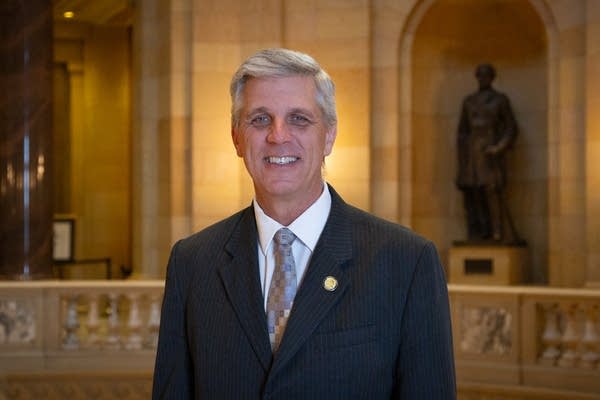
“The people in Minnesota, they want their money back, and it's our job as legislators to do everything we can to make that happen,” Rep. Patti Anderson, R-Dellwood, added. Anderson is the chief sponsor in the House.
“This is not a messaging bill. This is very serious,” Anderson said.
The bill is gaining traction in both chambers and with both parties. It was added to the Senate omnibus tax bill Thursday and the House will consider doing the same. Democrats in both chambers are signed on, though some have questioned if recovered funds should go back to the programs they were taken from instead of into a tax relief fund.
A tax on fraud is a novel idea. Anderson, a former state auditor, said she’s not aware of any other states that have tried it.
Joanna Bayers, legislative director of the Minnesota Department of Revenue, told the House Taxes Committee last week that the bill would provide “another tool in our toolbox” to help identify fraud.
However, in a report prepared for the committee, the department wasn’t able to estimate the impact of the tax and penalty.
“The amount of future program fraud is unknown,” the report reads. Those convicted of fraud may have “large restitution or penalty amounts that would be paid before the tax, making collection of the imposed tax even more difficult.”
Another complicating factor is that collection of the tax revenues “may be further slowed down as court cases, legal challenges, or appeals can take several years to be completed.”

Rep. Steve Elkins, DFL-Bloomington, serves with Anderson on the House Fraud Prevention and State Agency Oversight Policy Committee. He was one of the first Democrats to sign on to the bill.
“Who knows if it'll ever get enforced, but it can't hurt anything. And I thought it was a really clever idea,” Elkins said.
New taxes are nonstarters for many Minnesota Republicans, but for Drazkowski, this is one he can get behind.
“In 19 years I’ve never put my name on a tax increase bill,” Drazkowski said. “This is the first one.”