Renowned artist brings public mural to Minneapolis


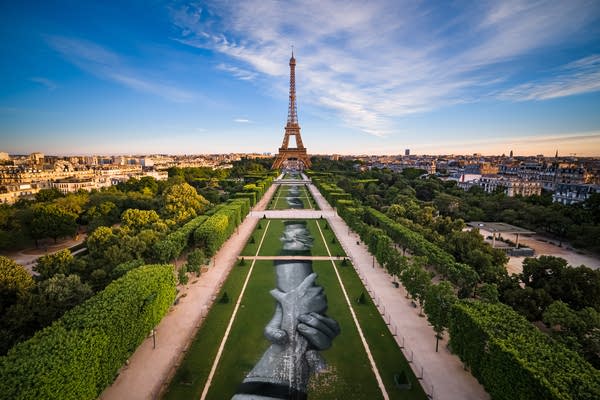
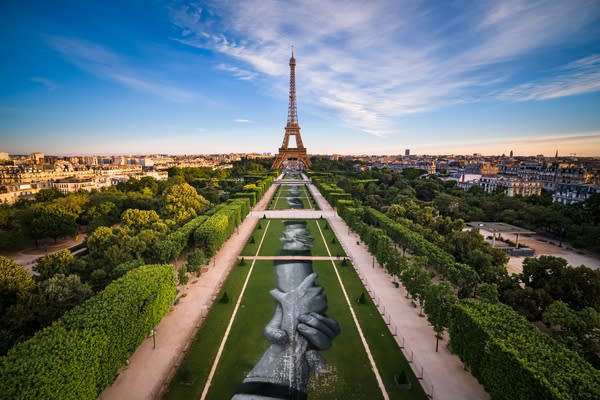
A painting of hands clasp together.

Minneapolis’ Boom Island Park is getting ready to host a new temporary art exhibit: a massive mural of linked hands, painted directly onto the grass.

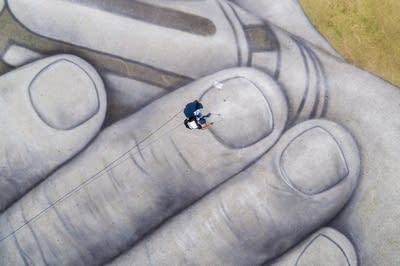
Mural artist Saype is bringing his “Beyond Walls” project to Minneapolis. The Franco-Swiss artist, known for his giant outdoor frescoes, has painted the murals in 22 places since he started the project in 2019. Each one depicts detailed black-and-white hands clasping across a natural landscape — usually sand or grass.

Saype picked Minneapolis for this project a few months ago during the federal immigration enforcement surge, after seeing stories of neighbors helping each other.

“Beyond Walls speaks to the invisible connections that unite people beyond borders, cultures, and differences,” Saype said in a statement. “Minneapolis is a city where questions of community, resilience, and living together carry a particular meaning and strength.”

Minneapolis is the mural’s first home in the U.S. Saype has picked several past host sites for their historical and cultural significance: he painted one in Berlin to commemorate the 30th anniversary of the fall of the Berlin Wall, one in Benin at a former slave trade hub and one in the rubble of an earthquake-stricken city in Turkey.

Saype will start painting the Minneapolis mural Monday. He uses a biodegradable paint mix he designed for the project, meant to fade naturally over time with wind and rain.

Kristin Anderson is the recreation supervisor for downtown parks with Minneapolis Parks and Recreation. She said the parks team spent months coordinating the project and vetting the materials to make sure they were safe to use on the banks of the Mississippi river.
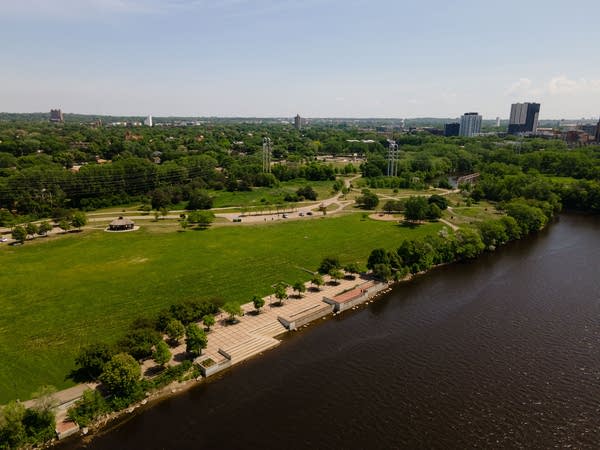
A view of Boom Island Park from an areal view.
Boom Island Park along the Mississippi River will serve as the canvas for the next Beyond Walls mural.
Courtesy of City of Minneapolis

“It's all natural materials, so anything from ash and bone meal and natural lime materials,” Anderson said. “It’s ephemeral art, so it will absorb back into the grass, and we expect maybe a couple of weeks, maybe a month at most, that it'll last.”

The city will host a community celebration on June 6 for the opening of the mural, with a food truck, music and drone photography capturing the art.

Anderson said she’s looking forward to seeing people get together to view the art.

“This art is all about community, and it's really significant because Saype chose Minneapolis specifically,” Anderson said.

People can also come watch Saype paint it during the week. The area around the mural will be roped off, but viewers can walk the perimeter. Anderson said visitors can also get a good view from the park’s pavilion area, where staff will have an information tent.

Source link

Leave a Reply

Subscribe to Our Newsletter

Get our latest articles delivered straight to your inbox. No spam, we promise.

Recent Reviews


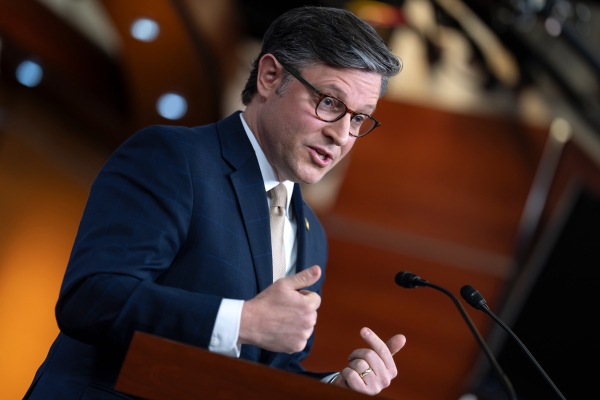
Speaker of the House Mike Johnson, R-La., takes questions at a news conference at the U.S. Capitol on April 21, 2026.

Speaker of the House Mike Johnson, R-La., takes questions at a news conference at the U.S. Capitol on April 21, 2026.
Speaker of the House Mike Johnson, R-La., takes questions at a news conference at the U.S. Capitol on April 21.
J. Scott Applewhite | AP

The House of Representatives voted Thursday to reopen most of the Department of Homeland Security, ending the longest agency shutdown in U.S. history.

The House passed a bill funding DHS, minus dollars for Immigration and Customs Enforcement and Customs and Border Protection. The measure passed by voice vote on what was the 76th day of the shutdown.

Democrats refused to back funding for many of the agency's immigration functions in an unsuccessful effort to secure reforms including body-worn cameras and broad restrictions on face coverings after federal law enforcement killed two American citizens in Minnesota earlier this year.

The Senate, led by Republican Majority Leader John Thune, R-S.D., unanimously advanced this funding legislation in March. At the time, Speaker Mike Johnson, R-La., referred to the proposal as "a joke" and refused to bring it up for a vote. Many members of the House Republican conference refused to fund the agency in a piecemeal fashion and did not want to negotiate over reforms to immigration enforcement operations.

On April 1, Johnson reversed course. He announced the funding bill would be voted on "in the coming days." More than four weeks later, he finally made good on that commitment.

In an effort to appease his hardline members, Johnson waited to bring the Senate's proposal to a vote until that chamber's Republicans started the arcane procedural process, known as reconciliation, to fund all of DHS — including Immigration and Customs Enforcement (ICE) and Customs and Border Protection (CBP) — for the remainder of Trump's term without any backing from Democrats.

The funding bill comes as Secretary of Homeland Security Markwayne Mullin warned the agency was close to running out of funds to pay staff.

"We have reached all the emergency funds we can reach into," Mullin told Fox News on Friday. "I am completely out of the slush fund, I have no place to move at the end of the month."

Mullin said the agency was relying on appropriated funds from last year's One Big Beautiful Bill, which allocated more than $150 billion to DHS on top of its regular annual appropriations funding.

President Donald Trump signed a memo this month authorizing DHS to use some of the money from that legislation to fund the department's operations — potentially infringing on the powers granted to Congress by the Constitution to direct how taxpayer money is spent.

Copyright 2026, NPR


Source link