

Fergus Falls’ Chris Tungseth fails to reach top three on ‘American Idol’


A man in a black t-shirt holds a guitar and a microphone.

Minnesota’s Chris Tungseth reached the final five — but he will not be this season’s “American Idol.”

Tungseth, a construction worker from Fergus Falls, was one of two singers eliminated from the reality TV show on Monday night.

The episode was themed “Class of 2006: Reunion,” and brought back original judges Randy Jackson and Paula Abdul. In the lead-up to their big night under the spotlight, Jackson mentored the contestants, while Abdul sat in as a guest judge on the live show. Monday also featured “American Idol” contestants from years past dueting with this season’s participants.

Tungseth sang two songs in the lead up to the final tally: Noah Kahan’s “Northern Attitude,” followed by a duet of Garth Brooks’ “The Thunder Rolls,” with 2006 “American Idol” contestant Bucky Covington.

“Bucky is the perfect person for me to sing with just because he has such a sweet rock vibe, and I want to lean into that this week,” Tungseth said in a video montage before his performance. “I want this to be big and he knows how to make it big.”

After Tungseth’s duet with Covington, “American Idol” judge Carrie Underwood said Tungseth had looked the most comfortable on stage that she’d seen all season.

“That was awesome,” she said.

Judge Luke Bryan followed up by calling Tungseth’s rendition of the country song “great,” and “one of the best vocals” he’d heard him perform. But, for the “American Idol” voters, it wasn’t enough, with Tungseth and fellow contender Braden Rumfelt being sent home.

Tungseth gained popularity among viewers this season with his down-to-earth demeanor and Chris Stapleton-like vocal sound. He also shared personal challenges he’s faced, including his father’s passing from leukemia in 2023, and his mother’s multiple sclerosis diagnosis, which led to her living in a nursing home.

Although Tungseth did not advance Monday, the city of Fergus Falls will hold a celebration for him in the coming weeks. The live “American Idol” season finale airs May 11.



Source link

Leave a Reply

Subscribe to Our Newsletter

Get our latest articles delivered straight to your inbox. No spam, we promise.

Recent Reviews


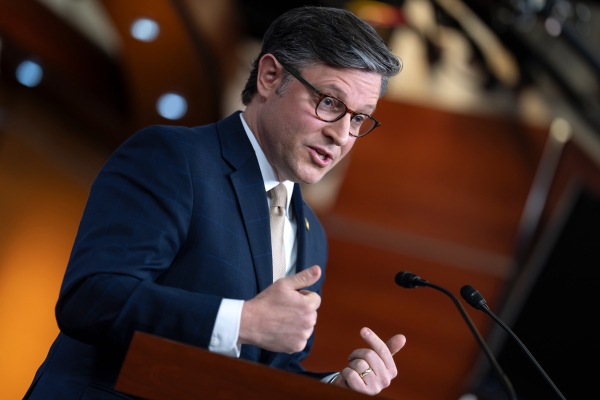
Speaker of the House Mike Johnson, R-La., takes questions at a news conference at the U.S. Capitol on April 21, 2026.

Speaker of the House Mike Johnson, R-La., takes questions at a news conference at the U.S. Capitol on April 21, 2026.
Speaker of the House Mike Johnson, R-La., takes questions at a news conference at the U.S. Capitol on April 21.
J. Scott Applewhite | AP

The House of Representatives voted Thursday to reopen most of the Department of Homeland Security, ending the longest agency shutdown in U.S. history.

The House passed a bill funding DHS, minus dollars for Immigration and Customs Enforcement and Customs and Border Protection. The measure passed by voice vote on what was the 76th day of the shutdown.

Democrats refused to back funding for many of the agency's immigration functions in an unsuccessful effort to secure reforms including body-worn cameras and broad restrictions on face coverings after federal law enforcement killed two American citizens in Minnesota earlier this year.

The Senate, led by Republican Majority Leader John Thune, R-S.D., unanimously advanced this funding legislation in March. At the time, Speaker Mike Johnson, R-La., referred to the proposal as "a joke" and refused to bring it up for a vote. Many members of the House Republican conference refused to fund the agency in a piecemeal fashion and did not want to negotiate over reforms to immigration enforcement operations.

On April 1, Johnson reversed course. He announced the funding bill would be voted on "in the coming days." More than four weeks later, he finally made good on that commitment.

In an effort to appease his hardline members, Johnson waited to bring the Senate's proposal to a vote until that chamber's Republicans started the arcane procedural process, known as reconciliation, to fund all of DHS — including Immigration and Customs Enforcement (ICE) and Customs and Border Protection (CBP) — for the remainder of Trump's term without any backing from Democrats.

The funding bill comes as Secretary of Homeland Security Markwayne Mullin warned the agency was close to running out of funds to pay staff.

"We have reached all the emergency funds we can reach into," Mullin told Fox News on Friday. "I am completely out of the slush fund, I have no place to move at the end of the month."

Mullin said the agency was relying on appropriated funds from last year's One Big Beautiful Bill, which allocated more than $150 billion to DHS on top of its regular annual appropriations funding.

President Donald Trump signed a memo this month authorizing DHS to use some of the money from that legislation to fund the department's operations — potentially infringing on the powers granted to Congress by the Constitution to direct how taxpayer money is spent.

Copyright 2026, NPR


Source link