Feds seeks to revoke citizenship of Minnesota man


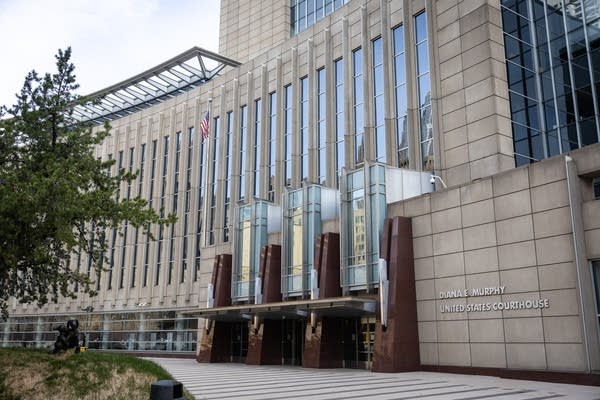
The facade of a U.S. courthouse

The federal government is seeking to revoke the citizenship of a Minnesota man who became a U.S. citizen nearly two decades ago, marking one of a small number of denaturalization cases pursued in federal court.

Last week, the Department of Justice filed a civil complaint in federal court against Salah Osman Ahmed, one of 12 foreign-born individuals currently targeted in similar proceedings.

According to court documents, Ahmed was naturalized as a U.S. citizen in August 2007. In 2009, he pleaded guilty to providing material support to a foreign terrorist organization, specifically the Somali militant group al-Shabab, which is designated by the U.S. government as a terrorist organization. At the time, his defense attorney stated that Ahmed had traveled to Somalia in late 2007 to fight Ethiopian forces operating there.

The government argues that Ahmed’s actions shortly after becoming a citizen raise questions about whether he had a genuine commitment to U.S. constitutional principles at the time of naturalization.

In its filing, officials wrote that he “lacked the requisite attachment to the principles of the Constitution and dedication to the good order and happiness of the United States,” suggesting he may not have met the legal standard required for citizenship.

Denaturalization cases are uncommon and typically require the government to prove in federal court that citizenship was obtained illegally or through intentional misrepresentation.

Under U.S. immigration law, authorities must meet a high evidentiary threshold, showing “clear, unequivocal and convincing evidence” that an individual either lied during the naturalization process or was not eligible for citizenship at the time it was granted.

Officials say such cases are part of a broader effort to review past naturalizations where serious criminal activity or alleged fraud may be involved. Immigration enforcement has also expanded in other areas, including increased Immigration and Customs Enforcement operations, broader use of expedited removal procedures and heightened scrutiny of individuals with existing legal status, including refugees.

Advocates and immigration attorneys have raised concerns that recent policy changes are contributing to longer processing times, increased documentation requirements and greater uncertainty for immigrants navigating the system. They argue that these shifts may discourage people from seeking legal protections or cooperating with authorities.

The case against Ahmed will now proceed in federal court, where a judge will determine whether the government has met the legal standard required to revoke his citizenship.




Source link

Leave a Reply

Subscribe to Our Newsletter

Get our latest articles delivered straight to your inbox. No spam, we promise.

Recent Reviews


Speaker of the House Mike Johnson, R-La., takes questions at a news conference at the U.S. Capitol on April 21, 2026.

Speaker of the House Mike Johnson, R-La., takes questions at a news conference at the U.S. Capitol on April 21, 2026.
Speaker of the House Mike Johnson, R-La., takes questions at a news conference at the U.S. Capitol on April 21.
J. Scott Applewhite | AP

The House of Representatives voted Thursday to reopen most of the Department of Homeland Security, ending the longest agency shutdown in U.S. history.

The House passed a bill funding DHS, minus dollars for Immigration and Customs Enforcement and Customs and Border Protection. The measure passed by voice vote on what was the 76th day of the shutdown.

Democrats refused to back funding for many of the agency's immigration functions in an unsuccessful effort to secure reforms including body-worn cameras and broad restrictions on face coverings after federal law enforcement killed two American citizens in Minnesota earlier this year.

The Senate, led by Republican Majority Leader John Thune, R-S.D., unanimously advanced this funding legislation in March. At the time, Speaker Mike Johnson, R-La., referred to the proposal as "a joke" and refused to bring it up for a vote. Many members of the House Republican conference refused to fund the agency in a piecemeal fashion and did not want to negotiate over reforms to immigration enforcement operations.

On April 1, Johnson reversed course. He announced the funding bill would be voted on "in the coming days." More than four weeks later, he finally made good on that commitment.

In an effort to appease his hardline members, Johnson waited to bring the Senate's proposal to a vote until that chamber's Republicans started the arcane procedural process, known as reconciliation, to fund all of DHS — including Immigration and Customs Enforcement (ICE) and Customs and Border Protection (CBP) — for the remainder of Trump's term without any backing from Democrats.

The funding bill comes as Secretary of Homeland Security Markwayne Mullin warned the agency was close to running out of funds to pay staff.

"We have reached all the emergency funds we can reach into," Mullin told Fox News on Friday. "I am completely out of the slush fund, I have no place to move at the end of the month."

Mullin said the agency was relying on appropriated funds from last year's One Big Beautiful Bill, which allocated more than $150 billion to DHS on top of its regular annual appropriations funding.

President Donald Trump signed a memo this month authorizing DHS to use some of the money from that legislation to fund the department's operations — potentially infringing on the powers granted to Congress by the Constitution to direct how taxpayer money is spent.

Copyright 2026, NPR


Source link