
Canvas, a system used by thousands of schools and universities — including the University of Minnesota — went offline Thursday during a cyberattack. It created chaos as students tried to study for finals. The situation underscored education’s dependence on technology.
A hacking group named ShinyHunters claimed responsibility for the breach at Canvas, said Luke Connolly, a threat analyst at the cybersecurity firm Emisoft. Instructure, the company behind Canvas, didn’t immediately respond to a request for comment or questions about whether the system was taken down as a precaution or because the hackers knocked it offline.
In an update posted to its website late Thursday, Instructure said Canvas “is now available for most users” — though some parts of the system were still undergoing maintenance.
Canvas is used to manage grades, course notes, assignments, lecture videos and more. The hacking group posted online that nearly 9,000 schools worldwide were affected, with billions of private messages and other records accessed, Connolly said.
Students quickly took to social media to ask if others were unable to access Canvas, with many panicking that they could no longer view course materials housed within the platform to study for their final exams.
Effects at the U of M
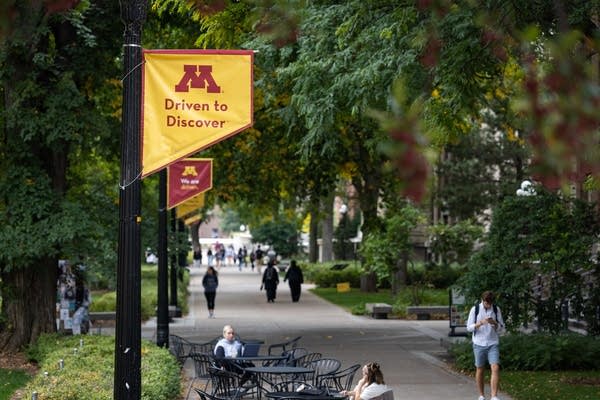
The Canvas outage happened on the first day of final exams at the University of Minnesota Twin Cities campus.
In a statement Thursday — before Instructure reported that Canvas was again available to most users — the University of Minnesota said it had been notified of the cybersecurity incident by the company.
“University administrators are awaiting updates from the vendor and taking additional measures to protect university information,” the U of M said. “The university’s focus is the protection of our students, faculty, and staff information and we are closely monitoring the situation.”
In a message sent to students, faculty and staff, university officials urged them to “exercise caution — avoid interacting with or clicking on suspicious links, messages, or unexpected content that may appear during this event.”
The U instructed students to watch for guidance from instructors for any potential changes to classes and exams. And the university told instructors that it was “exploring additional secure technology options for testing and coursework continuity, including alternative methods for submitting assignments and managing assessments.”
Threats to leak data
Screen shots Connolly provided showed that the group began threatening Sunday to leak the trove of data, giving deadlines of Thursday and May 12. Connolly said the later date indicates that discussions regarding extortion payments may be ongoing.
Rich in digitized data, the nation’s schools are prime targets for far-flung criminal hackers, who are assiduously locating and scooping up sensitive files that not long ago were committed to paper in locked cabinets. Past attacks have hit Minneapolis Public Schools and the Los Angeles Unified School District.
Connolly said the Canvas attack is strikingly similar to a breach at PowerSchool, which also offers learning management tools. In that case a Massachusetts college student was charged.
Connolly described ShinyHunters as a loose affiliation of teenagers and young adults based in the U.S. and the United Kingdom. The group also has been tied to a other attacks, including one aimed at Live Nation’s Ticketmaster subsidiary.
Universities and school districts quickly began notifying students and parents.
“This is being reported as a national-level cyber-security incident,” the director of information technology at the University of Iowa’s College of Public Health wrote in announcing that the school's online system was down. “Hopefully we will have a resolution soon.”
Virginia Tech acknowledged in a notice to students that the administration was aware of the effect on final exams and other end-of-semester activities. The University of New Mexico sent a similar message to the campus community, and the University of Florida urged students to stay alert for any phishing messages that appear to be from Canvas.
Teachers said they had to find workarounds to help students study for exams and submit final assignments.
Damon Linker, a senior lecturer in the political science department at the University of Pennsylvania, said in a post on the social media platform X that his students had been relying on Canvas to access every reading from the semester and all of his lecture slides before their Monday final exams. The outage leaves students and faculty “dead in the water here in academia right now,” he said.
The student newspaper at Harvard reported that the system there was down as well. Students at Johns Hopkins University simply got an error message when trying to view their final grades on the platform Thursday. And public school districts also sought to reassure parents, with officials in Spokane, Washington, writing that they aren't “aware of any sensitive data contained in this breach.”
Some schools, such as the University of Texas at San Antonio, announced they were pushing back finals scheduled for Friday in response to the outage.