Tab fee cuts, property tax aid in legislative deal


MN State Capitol

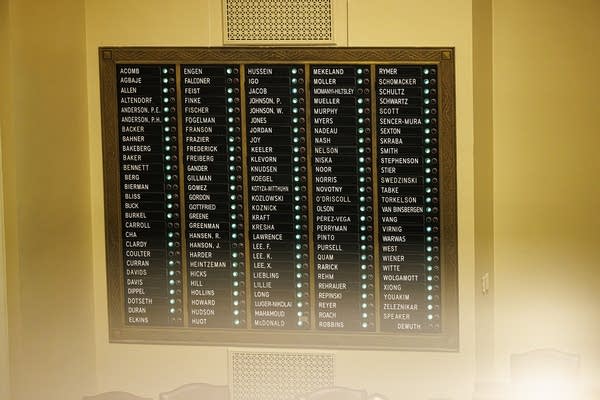
An agreement that paves the way to the Minnesota Legislature’s session finish includes help for a key Minneapolis hospital, cuts to vehicle registration fees and property tax relief for homeowners, according to terms released late Wednesday.

The pact between Gov. Tim Walz and top lawmakers will still need some massaging before bills are ready for final votes. Those must come by midnight on Sunday.

The outline calls for additional spending on education, debt service for infrastructure, technology upgrades for counties, a safety and security package and additional fraud investigators. It would leave available money from a projected surplus partly unspent to avoid budget problems later.

There will also be a rescue package for HCMC, a vital safety-net hospital in Minneapolis that is on shaky financial ground.

“This agreement reflects the disciplined, fiscally responsible approach Minnesotans expect,” Walz said in a written statement. “We are keeping a balanced budget, making targeted reductions, and focusing every dollar on core priorities: fiscal sustainability, critical infrastructure, and the health and wellbeing of our communities.”

GOP House Speaker Lisa Demuth, a candidate for governor, said the budget deal delivers cuts to vehicle registration fees and property tax aid.

“With this budget, we’re delivering on affordability for communities across the state,” she said in a written statement. “This will help Minnesotans statewide afford their lives for years to come.”

DFL Senate Majority Leader Erin Murphy and House DFL Leader Zack Stephenson also issued statements of support, with Murphy calling it a “hard-fought negotiation.”

Stephenson focused on the HCMC element as a key component.

“Providing certainty and stability for HCMC was a necessity, and I’m glad we were able to find bipartisan support,” he said. “DFLers are ready to pass this agreement and complete this work for the people of Minnesota."

Missing from the joint statement and a signed offer sheet was Republican Senate Minority Leader Mark Johnson, whose caucus is essential for passing a construction projects bill given a higher vote threshold.

But Johnson issued a separate announcement heralding the cut to vehicle tab fees, which he said amounts to $250 million for a single year. He also said enough Republicans would vote for the bonding bill to pass it.

“When we put Minnesotans first and listen to their concerns, we can get things done for the better of everyone in our great state,” Johnson said.

Source link

Leave a Reply

Subscribe to Our Newsletter

Get our latest articles delivered straight to your inbox. No spam, we promise.

Recent Reviews


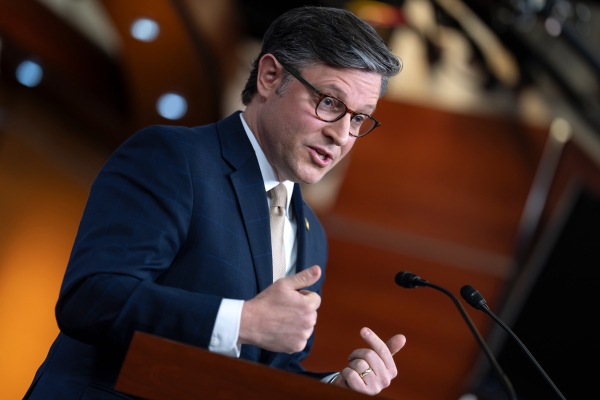
Speaker of the House Mike Johnson, R-La., takes questions at a news conference at the U.S. Capitol on April 21, 2026.

Speaker of the House Mike Johnson, R-La., takes questions at a news conference at the U.S. Capitol on April 21, 2026.
Speaker of the House Mike Johnson, R-La., takes questions at a news conference at the U.S. Capitol on April 21.
J. Scott Applewhite | AP

The House of Representatives voted Thursday to reopen most of the Department of Homeland Security, ending the longest agency shutdown in U.S. history.

The House passed a bill funding DHS, minus dollars for Immigration and Customs Enforcement and Customs and Border Protection. The measure passed by voice vote on what was the 76th day of the shutdown.

Democrats refused to back funding for many of the agency's immigration functions in an unsuccessful effort to secure reforms including body-worn cameras and broad restrictions on face coverings after federal law enforcement killed two American citizens in Minnesota earlier this year.

The Senate, led by Republican Majority Leader John Thune, R-S.D., unanimously advanced this funding legislation in March. At the time, Speaker Mike Johnson, R-La., referred to the proposal as "a joke" and refused to bring it up for a vote. Many members of the House Republican conference refused to fund the agency in a piecemeal fashion and did not want to negotiate over reforms to immigration enforcement operations.

On April 1, Johnson reversed course. He announced the funding bill would be voted on "in the coming days." More than four weeks later, he finally made good on that commitment.

In an effort to appease his hardline members, Johnson waited to bring the Senate's proposal to a vote until that chamber's Republicans started the arcane procedural process, known as reconciliation, to fund all of DHS — including Immigration and Customs Enforcement (ICE) and Customs and Border Protection (CBP) — for the remainder of Trump's term without any backing from Democrats.

The funding bill comes as Secretary of Homeland Security Markwayne Mullin warned the agency was close to running out of funds to pay staff.

"We have reached all the emergency funds we can reach into," Mullin told Fox News on Friday. "I am completely out of the slush fund, I have no place to move at the end of the month."

Mullin said the agency was relying on appropriated funds from last year's One Big Beautiful Bill, which allocated more than $150 billion to DHS on top of its regular annual appropriations funding.

President Donald Trump signed a memo this month authorizing DHS to use some of the money from that legislation to fund the department's operations — potentially infringing on the powers granted to Congress by the Constitution to direct how taxpayer money is spent.

Copyright 2026, NPR


Source link