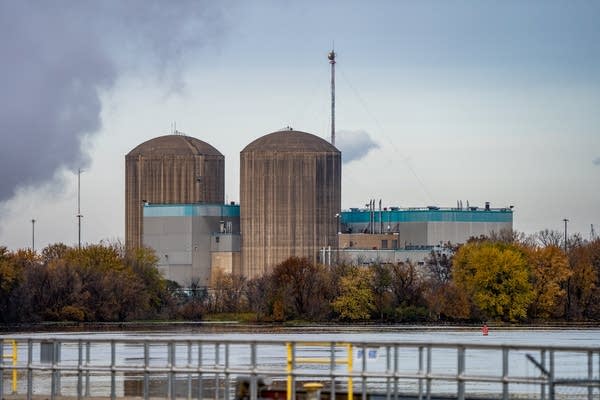

Advocates for nuclear energy achieved a victory at the end of the legislative session when state lawmakers approved funding to study the possibility of building new nuclear plants in Minnesota.
A coalition of utilities, counties, clean energy groups and labor unions pushed the Legislature to fund the study, hoping it will be the first step toward lifting the state's 32-year-old moratorium on new nuclear plants in the state.
They say Minnesota needs nuclear energy to provide reliable power amid growing demand and to meet a state goal of carbon-free electricity by 2040.
“We are operating in an environment where we want to have electricity available all the time under all conditions,” said Darrick Moe, CEO of the Minnesota Rural Electric Association. “And we want to be responsible stewards of doing that in a way that doesn't use carbon.”
The Legislature authorized $500,000 for the Minnesota Department of Commerce to contract with the nonprofit Great Plains Institute for the study. It must be completed by Jan. 30.
The study will examine costs, federal regulations, financial risks and environmental impacts of nuclear energy, including the issue of how to store or reprocess radioactive waste.
It also will look at technological advances for both conventional nuclear power plants as well as smaller, modular reactors that are in development across the U.S. And it will look at the impacts of new nuclear plants on the workforce and communities that might host them.
‘Catalyst for conversation’
Rep. Spencer Igo, R-Wabana Township, sponsored the bill in the House. He said he hopes the study can be a “trusted document” to address people’s questions and concerns about nuclear energy.
Igo noted that a study isn’t a guarantee that a nuclear plant will be built in Minnesota anytime soon. Even if the moratorium was lifted, it would take years or even decades for a new facility to get permitted and built.
But having a nuclear moratorium in 2026 “just feels incredibly antiquated” and puts Minnesota behind other states, Igo said.
“I’m hoping this study can be a catalyst for further conversation that leads us to lifting a moratorium next year, so that we can start investigating,” he said.
Utilities and industries might not decide to go down the path of nuclear, but they should have the opportunity to investigate, Igo said. But right now, “that’s illegal under state law,” he said.
Xcel Energy operates two nuclear plants in Minnesota, at Prairie Island and Monticello, both built in the 1970s. It plans to continue operating them for the next several decades.
The Legislature enacted a moratorium on new nuclear plants in 1994, as part of a compromise to allow Xcel Energy to store nuclear waste at its Prairie Island plant near Red Wing.
Growing interest
As utilities retire coal-fired power plants and shift toward more renewable energy sources such as wind and solar, interest in nuclear has been surging in recent years. Its supporters see it as a constant, low-carbon energy source that could help meet the anticipated surge in demand for electricity for data centers, EVs and manufacturing.
Several U.S. states have recently eased their bans on new nuclear plants. And the Trump administration has been pushing the development of new, experimental reactors around the U.S.
But nuclear energy comes with its own challenges, including high construction costs, safety concerns and the problem of storing radioactive nuclear waste.
Currently, there is no permanent storage site for spent nuclear fuel in the U.S., so it is stored on site at nuclear plants, including Prairie Island and Monticello.
This year’s bill had the support of the Prairie Island Indian Community, which lawmakers from both parties saw as essential.
Prairie Island’s reservation is just 700 yards from a nuclear plant owned by Xcel Energy. Xcel built the plant in the early 1970s without consent from the tribe, which has long objected to the storage of spent nuclear fuel at the site.
Igo said he worked extensively with Prairie Island to craft the bill, and the tribal council supported the final version.