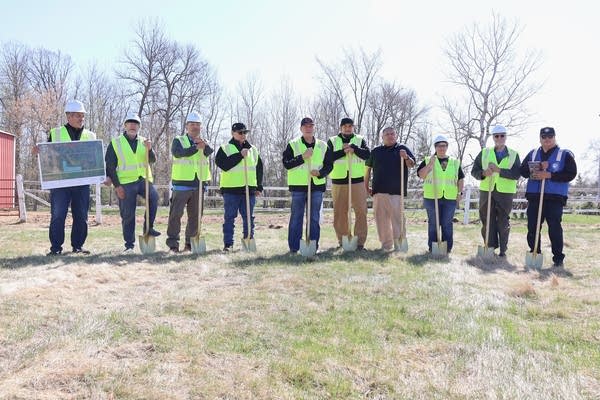
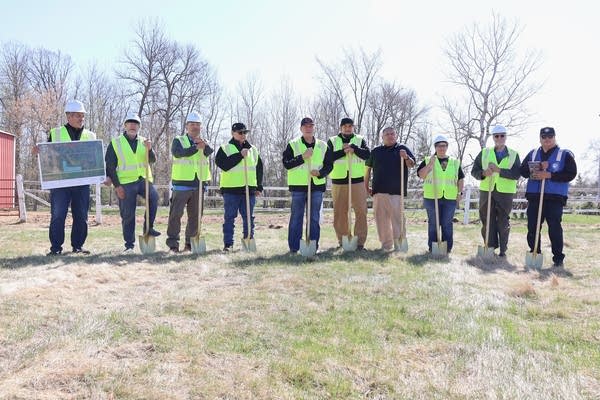
On a windy day just east of the Red Lake Nation's boundaries, tribal and energy leaders gathered to break ground on a new solar array. The project, named Makwa Solar Array, is being built on land the tribe owns near Blackduck.
Red Lake Nation chair Darrel Seki Sr., said the idea for the array was first introduced 11 years ago. He said he’s happy to see it come to fruition.
“It will benefit our members that have homes to cut the rate on their electric bill,” he said. “That's the purpose of this.”
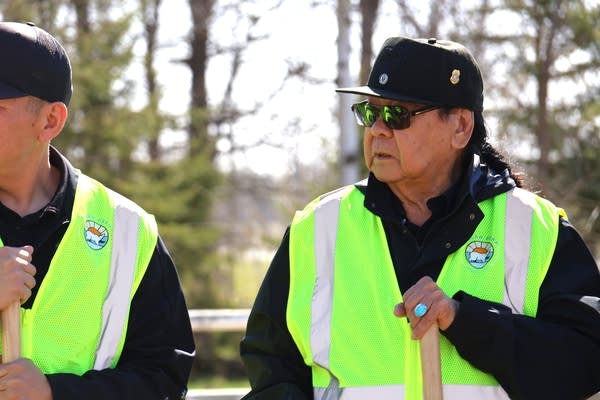
Once complete, the array will generate three megawatts of renewable energy. According to the Minnesota Rural Electric Association, that’s capable of powering approximately 500 homes. Makwa Solar Array was funded through grants and by the Red Lake Nation. The project was developed by the Indigenous led Solar Bear.
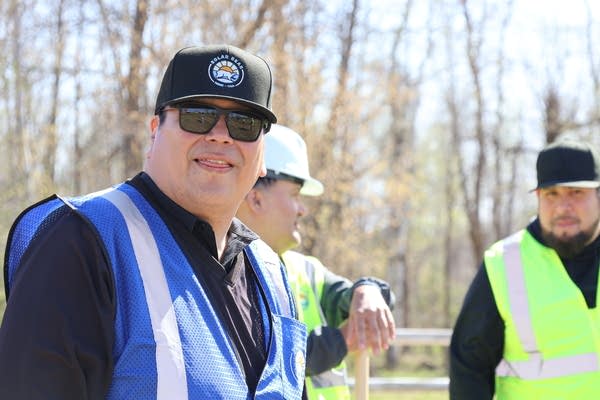
“I'm a tribal member of the Red Lake Nation, so being able to be a part of this and to be able to help make this dream a reality, I'm just so ecstatic,” Solar Bear owner Robert Blake said. “This is just an incredible moment right now.”
Blake is also executive director of the nonprofit Native Sun Community Power Development. It’s involved with workforce development for the project, as well as some of the planning and preparation. He said the Makwa Solar Array will benefit the community in more ways than one.
“The proceeds from the sale of this power is going to go back into community programming,” he said. “So, that's what's really going to be exciting about this.”
Red Lake Nation’s project hasn’t started construction yet, but once finished the 3-megawatt solar array will be one of the largest on tribal lands. And it will be wholly owned by the Red Lake Nation.
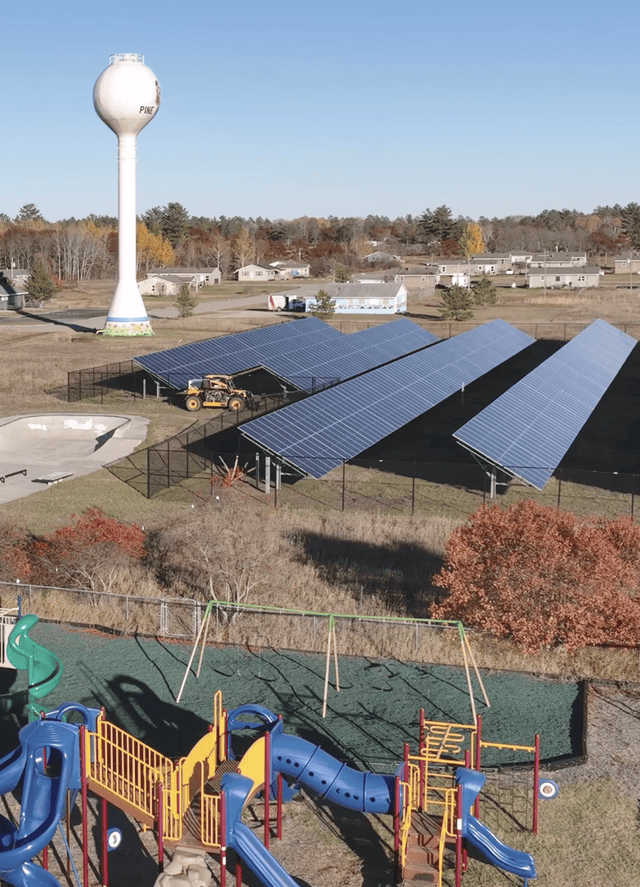
The launch near Blackduck follows a big solar array project from White Earth Nation called the Pine Point Resilience Hub. It’s a 500-kilowatt solar array paired with a planned 2.76 megawatt-hour battery. Both projects reached key development milestones for funding before the Trump administration dialed back tax credits for solar.
“I'm really glad to see many of Minnesota tribal nations still moving forward with all of those projects that they have planned,” said Lissa Pawlisch, assistant commissioner of federal and state initiatives for the Minnesota Department of Commerce, Division of Energy Resources.
She noted that the One Big Beautiful Bill terminated a 30 percent tax credit for solar projects, which could make it harder for other tribes to fund projects in the future.
“The fact that the tax credits have sunset is really going to make a dent in how those tribal nations are able to move forward, and what they have to pay for at the end of the day,” Pawlisch said. “Thirty percent tax credit means 30 percent of the funds that would have been covered elsewhere, now has to be made up by local investors, local funding resources, and that's going to certainly inhibit things going forward.“
Against that backdrop, she’s excited to see the White Earth and Red Lake projects launch.
“These tribal communities are responding to the needs of their community, saying, ‘This is the kind of stuff we want to see happen,' and then getting it done,” Pawlisch said.
Energy sovereignty
Corrie Grosse, a sociologist and environmental studies professor at the College of St. Benedict and St. John’s University, has been tracking tribes’ efforts to gain energy independence or sovereignty.
“First and foremost, sovereignty is the right, the ability to self-determine, to control your own economy, to care for your people and for the environment,” Grosse said. “Energy is an area where tribes can really assert their sovereignty or can increasingly so.”
As the author of the book “Working Across Lines: Resisting Extreme Energy Extraction,” Grosse said she’s researched resistance to fossil fuels, and is now focusing on solutions, including “Native leadership and renewable energy in particular.”
That falls in line with work the Red Lake Nation and White Earth Nation are doing for their own solar arrays.
Grosse said utilities often charge customers more on a reservation than off reservation.
“It's something that I don't know the exact answer to, but it's just really stark,” Grosse said. “There's not a lot of support for sovereignty from local and rural utilities sometimes.”
Grosse said conflicts also exist between utility companies and tribes that try to exert control over their own energy needs.
She pointed to the Minnesota Valley Cooperative Light and Power Association threatening to cut off power to the Upper Sioux Community’s casino, after they revealed plans to activate a solar array to power it, as an example.
Grosse said more education about what sovereignty is as well as how to support it could help.
Backup energy
The White Earth Nation’s Pine Point Resilience Hub is based at a K-8 school and gathering center for elders. The hub was designed to provide backup energy capable of powering the building in times of emergencies. It could power medical devices or act as a warming center in winter.
The Pine Point Resilience Hub was made possible through a partnership between developer 10Power, the White Earth Nation, Pine Point School, 8th Fire Solar and Ziegler Energy Solutions.
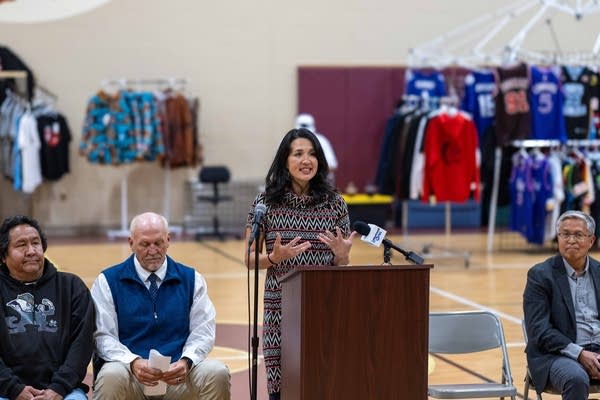
Sandra Kwak is the CEO and founder of 10Power, a social impact enterprise that works with communities and tribal nations to build, own, and operate renewable energy projects for climate justice and energy sovereignty.
“This project is really a signature piece of what we do, in that it's providing resilience for the community,” Kwak said. “The school and the tribe are going to own the assets, and we were able to raise capital so that it was zero out of pocket for the community.”
Kwak said the resilience hub is going to produce more than 100 percent net of the school’s annual energy usage. She added while the solar part of the project is active, the battery portion won’t be finished until the coming months.
“We're hoping that we'll see more participation programs for the battery to be able to increase resilience for the grid as a whole in the region,” Kwak said.