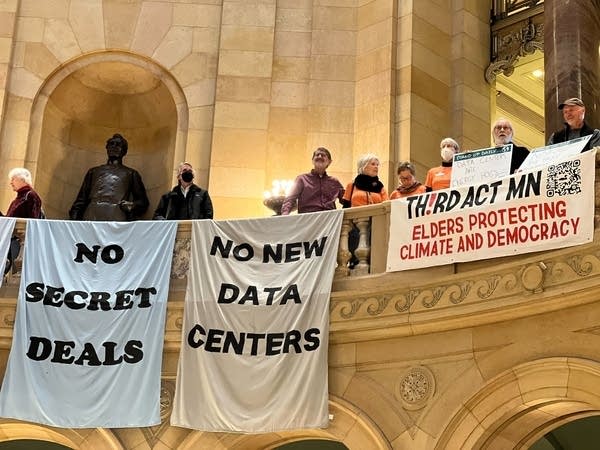
A crowd of people gathered in the Minnesota Capitol rotunda in February, calling on lawmakers to slow the state’s building boom of hyperscale data centers, which are huge warehouses filled with computer servers that power cloud computing and artificial intelligence.
State Sen. Jen McEwen, DFL-Duluth, told the crowd about her proposal to pause new data center development for two years.
"That moratorium would be in place while a thorough analysis is done on their impacts on our communities, on our utilities, on our infrastructure and our environment,” McEwen said.
Opponents hoped the Minnesota Legislature would approve new oversight of large data centers this year, but those bills never gained momentum. Lawmakers adjourned last month without passing any new restrictions.
This week, McEwen expressed frustration.
"I think that this is a great example of just how out of touch the powers that be at the Minnesota state Capitol can be with what the demands are and what the asks are coming overwhelmingly from the people of our state,” she said.
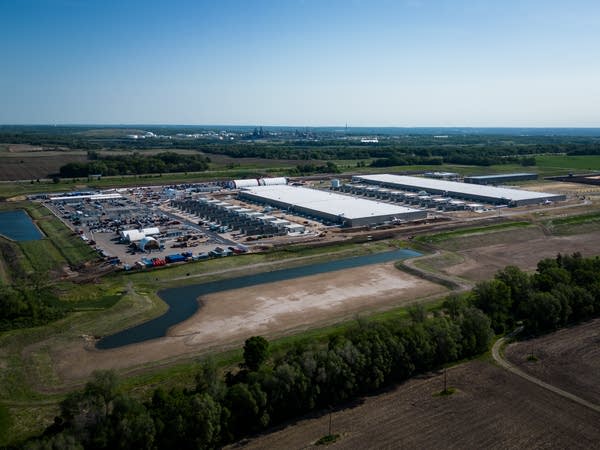
Tech companies are eyeing Minnesota for data centers because of its relatively cool climate and available land, water and electricity.
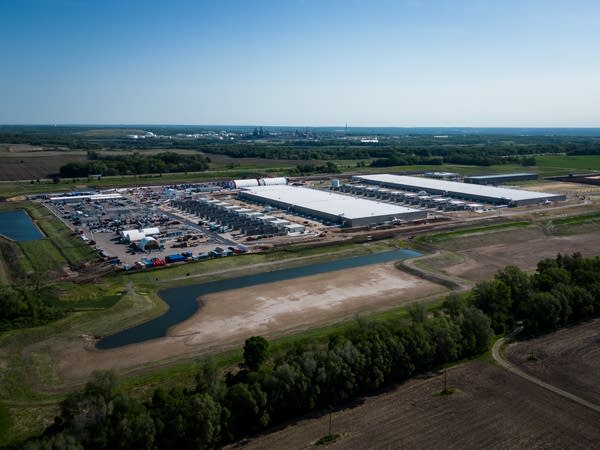
Meta is already building a facility in Rosemount. More than a dozen other projects have been proposed around the state.
Supporters see those developments as economic opportunities that could generate property tax revenue, help pay for infrastructure improvements and create well-paying construction jobs.
Workers on the Meta project in Rosemount have raved about the good treatment and working conditions, said Tom Dicklich, executive director of the Minnesota State Building and Construction Trades Council.
“They're going to build them somewhere,” he said. “If we can do them in Minnesota, where we have labor standards and we can build these more efficiently than anywhere else in the country, we should be bringing them here."
But critics say the state should more carefully weigh the economic benefits of data centers with the potential downsides, including water and energy demands and potential noise and light pollution.
Sarah Mooradian, government relations and policy director with the advocacy group CURE, supported the data center moratorium and other restrictions. She said Minnesota should adopt some statewide guidelines for data centers so the decisions aren't left entirely to local officials.
"If there's no sort of guideline at all, we've seen that it encourages and pits local governments against each other to offer the best deal,” Mooradian said. “And it's not the best deal for the community."
There was one proposal that did have bipartisan support this past legislative session. It would have prohibited local government officials from signing non-disclosure agreements that prevent them from sharing details about proposed projects.
"The NDA ban is the most basic that everybody on both sides of the aisle seems to agree on, and yet, even that they couldn’t come to an agreement on,” said Cathy Johnson, who lives near a planned hyperscale data center in Farmington and leads the Coalition for Responsible Data Center Development.
“I think that’s really sad,” Johnson said. “That’s definitely not leadership.”

But the bill faced strong opposition at the Capitol from business and industry groups. They argued that non-disclosure agreements are a standard tool during early project negotiations.
Other proposals would have required hyperscale data centers and other large industries to apply for a separate permit to use water, rather than piggybacking on a city’s water permit.
What passed last year
Some supporters of data centers say before legislators pass any additional restrictions, they should give recently adopted regulations time to work.
Legislators passed a compromise measure in 2025 that extended a lucrative sales tax credit for data centers, and added some new requirements.
Among them: Large data centers must pay the full cost of the electricity they use to protect other customers from higher electric rates. They’re also required to pay into an account to help low-income Minnesotans conserve energy.
“There was a lot of effort that went into that, and that really hasn't even kicked in,” Dicklich said. “So we want to see where that takes us and how it works out, and how it makes Minnesota attractive or less attractive to these developers.”
At the time, supporters called the regulations “nation leading,” but opponents say the changes didn't go far enough.
For example, large data centers must consider using water-saving technology to cool their equipment, such as closed-loop systems that recycle water for cooling. But those measures are not required, Mooradian said.
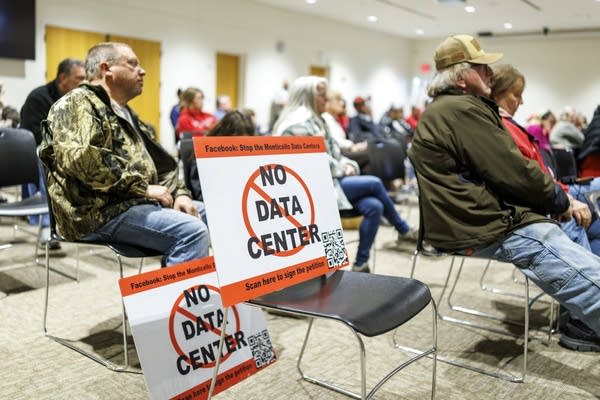
Opponents say they'll be back at the state Capitol again next year, pushing for tougher rules for the supersized projects.
In the meantime, proposals for several hyperscale data centers in Minnesota continue to move forward. Others have been stalled by legal challenges.
McEwen said she plans to bring back the proposed data center moratorium next year.
“There's just so much to think about in terms of the potential pros and cons of these centers for our communities,” she said. “I think that we need to do our due diligence before we let these companies come into these small communities in Minnesota and run roughshod.”