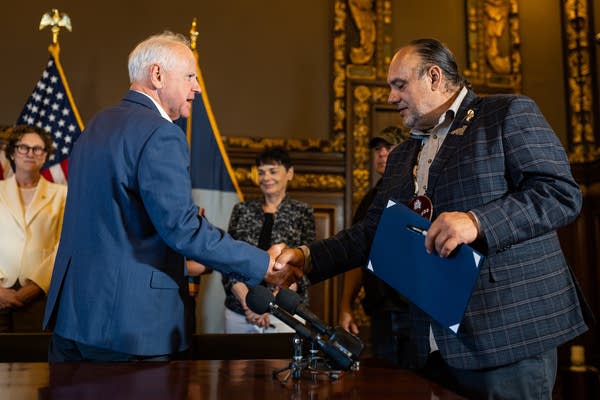
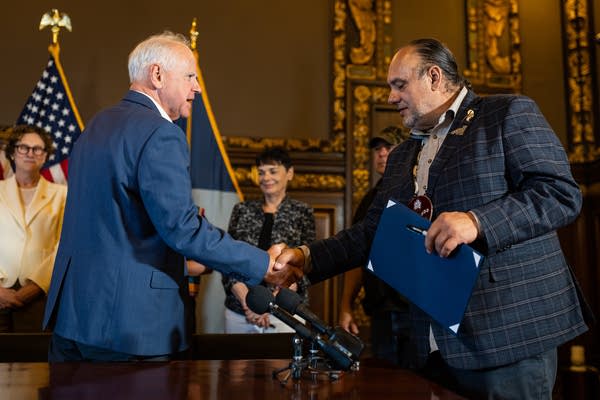
Gov. Tim Walz, joined by Lt. Gov. Peggy Flanagan, signed legislation on Wednesday that clears the way for the return of approximately 3,400 acres of land to the Fond du Lac Band of Lake Superior Chippewa — land that sits entirely within the band's reservation. The land been held by the University of Minnesota for more than a century.
“It’s never too late to do the right thing,” Walz said in an interview with MPR News at the Capitol. “This land belonged to the people of Fond du Lac. We can manage it jointly, together in a way that makes sense, and it allows them to see themselves as part of who we are.”
The legislation transfers several state-owned parcels at the Cloquet Forestry Center to the University of Minnesota Board of Regents and appropriates $1.3 million from the general fund to defease outstanding bonds tied to improvements at the center. Releasing the bonds removes the land's status as state bond-financed property, clearing the final legal hurdle for the university to return the land to the band.
The $1.3 million provision was included in a $1.2 billion bonding bill passed by the Legislature on the final day of the session.
The parcels set to be restored are part of the land guaranteed to the Fond du Lac Band in an 1854 treaty. The Cloquet Forestry Center sits just west of Cloquet within the boundaries of the Fond du Lac reservation. Pine and hardwood stands have served as the University of Minnesota's primary research forest since 1909.
Under federal allotment laws passed in the 1880s, the U.S. government divided the reservation into individual plots and transferred what it deemed "unallotted" land to lumber companies. After the land was logged, the federal government conveyed roughly 2,000 acres of it to the university in 1909 and still more were acquired in the intervening years.
Fond du Lac Band chair Bruce Savage attended the signing alongside other tribal officials. He said the moment has been long awaited by community members.
"Community members of Fond du Lac are delighted that this day happened," Savage said. "Just to know that they're welcome there again on our own lands is huge."
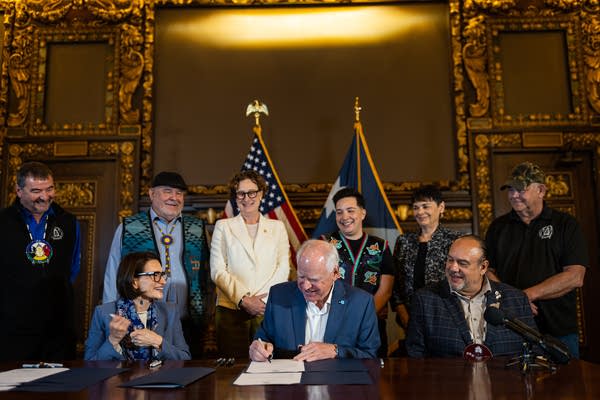
University of Minnesota President Rebecca Cunningham spoke at the signing on behalf of the university.
"The university is proud to be part of this moment," Cunningham said. "We have committed to being the best possible partner with tribes. It's the right thing to do."
A bumpy path forward
The path to Wednesday's signing took several years. Former U of M President Joan Gabel first recommended returning the land in February 2023. Legislation to facilitate the transfer stalled in the 2024 session when a broader capital investment bill failed to pass. A second attempt in 2025 also fell short. The effort succeeded this session under the leadership of DFL lawmakers Sen. Sandy Pappas and Rep. Liish Kozlowski, both of whom were present at the signing.
"Everybody said, in an off year, needing a bipartisan path to a bonding bill was impossible," Kozlowski said.
Kozlowski, a descendant of Fond du Lac Band, has carried the legislation for several years.
"When we restore the land, we restore the people,” Kozlowski said.
Under agreements being negotiated between the band and the university, activities at the Cloquet Forestry Center will continue after the land is returned. The university will lease back the land and facilities from the band for an initial term of 30 years and will remain responsible for operating and maintaining the center.
"It really should be lauded as a celebration, not just for the band and for our future generations," Kozlowski said. “But because it's actually going to strengthen the research and the economic development work that is being done at the Cloquet Forestry Center."
The return of the 3,400 acres was among the recommendations made in the TRUTH Report — Towards Recognition and University-Tribal Healing — a 500-page document released in 2023 by Indigenous researchers and tribally appointed fellows at the University of Minnesota. The report documented the university's history of expropriating Native lands and mistreating Native people dating back to its 1851 founding and called on the university to make reparations in perpetuity.
No word yet on when the final transfer of land from the university to the Fond du Lac Band will take place.
‘It’s a reunion’
Wayne Dupuis, the band's secretary-treasurer, said the return is the culmination of generations of waiting.
"I was about nine years old, my dad was telling me that this is the land they stole from us, and I'm 72 years old right now," Dupuis said. "It's taken that long for us to get it back."
Dupuis has been among the many tribal leaders who have worked on the issue for the past several years. He described the moment in celebratory terms.
"It's a reunion," he said. "There's trees and swamps and streams that we've related with, and we're happy to be back in relation with them."