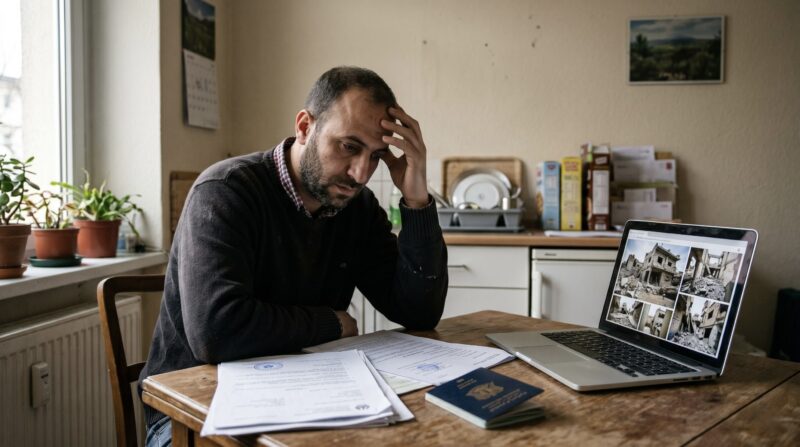
This article argues that Syria’s recovery will depend less on the speed of refugee return than on whether return can be gradual, voluntary, circular, and connected to functioning systems. A model of circular mobility — allowing Syrians to visit, invest, repair property, transfer skills, explore enterprise opportunities, and return again to host countries without losing legal status — may offer a more realistic path than mass repatriation.
The reality in Syria
For refugees like Ahmad Alhamada, who spoke with Euronews, Assad’s fall reopened the possibility of return for the first time in years. Alhamada fled Idlib in 2012 and rebuilt his life in Belgium after a difficult journey through seven countries. He hopes to help rebuild Syria, but uncertainty over long-term stability makes immediate, permanent return difficult.
Syria’s current economic reality is severe. The economy has contracted by roughly 50% over the course of the conflict, gross national income per capita is estimated at just $830, and more than 90% of the population lives below the poverty line. Infrastructure failure remains acute in many regions. Some residents receive only two hours of electricity per day from the national grid, more than a third of hospitals are not functioning, and more than 2 million children are out of school.
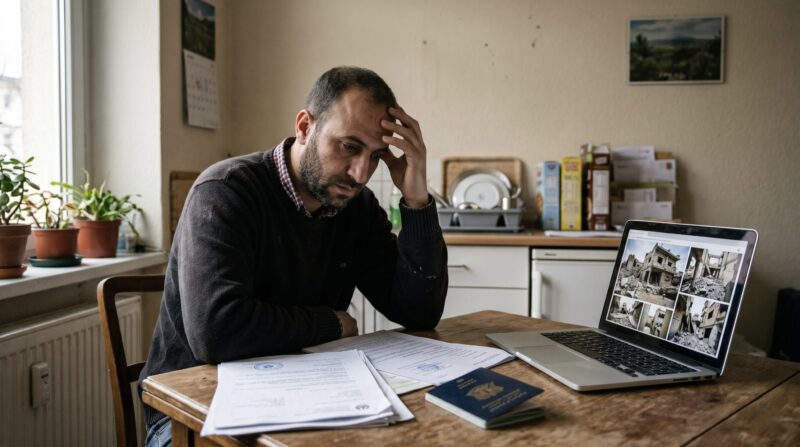
Circular mobility recognizes that displaced people may need to inspect property, support family, transfer skills, or explore business opportunities without losing the stability they have built abroad.
Housing is one of the most significant barriers to return. Some returnees leave organized camps only to pitch tents on top of demolished former homes. Although 69% of Syrians still technically own property, many lack civil documentation destroyed or lost during the war, making it difficult to access legal property rights or public services. Others discover that their properties have been expropriated, damaged, or occupied during their absence. These conditions push some refugees into high-risk, temporary trips to Syria to resolve legal matters or inspect family property without knowing whether return will be viable.
The question is not only whether Syrians want to return, but whether the systems they would return to can support them.
Alhamada experienced this firsthand during a recent visit to his homeland. Upon reaching Idlib, he found his family home reduced to ruins. He wants to rebuild, but the scale of destruction — and the absence of stable systems around housing, finance, public services, and employment — makes permanent resettlement a much more complicated decision than the language of “return” often suggests.
The risks of premature return
Alhamada is now a Belgian citizen working in the IT department of a public administration office. His story reflects a wider reality: many Syrians abroad are not temporarily suspended outside the economy; they are already integrated into host-country labor markets, public services, and communities.
In Germany alone, approximately 1 million Syrians now live and work within the economy. The Syrian workforce includes roughly 6,000 doctors, more than 4,000 mechatronic technicians, and more than 2,000 childcare workers. Between 2021 and 2023, 143,000 Syrians received German citizenship, signaling a long-term shift in legal status, identity, and economic contribution.
Economic research suggests that refugee integration is a long-term investment that typically begins to “pay off” after many years. In Germany, the employment rate of refugees has been shown to rise from 14% in the year of arrival to 74% after fifteen years. With around 80,000 Syrians employed in sectors facing labor shortages, countries hosting large Syrian populations also stand to lose capacity if return becomes abrupt or politically forced.
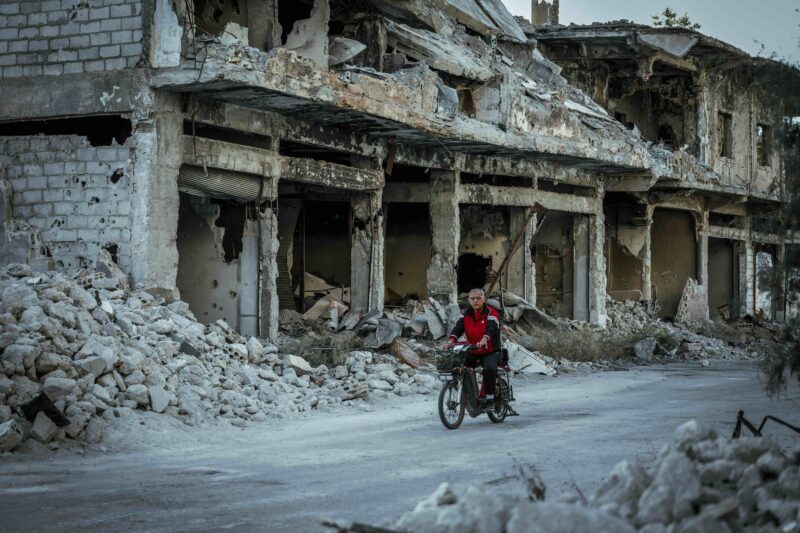
Syria’s physical destruction is only one part of the return dilemma; livelihoods, property rights, legal status, and institutional capacity will determine whether return can become recovery; Image by Mahmoud Sulaiman
The Syrian diaspora is also a critical economic lifeline for those who remain inside Syria. Remittances help families pay for food, rent, medicine, fuel, and education in the absence of reliable public services. In many areas, these transfers function as an informal welfare system buffering supply shortages and public-sector failure. According to the World Bank, 37% of Syrian households received international remittances in 2022, and those transfers represented more than one-third of recipient households’ total income.
Premature or pressured return therefore risks creating a double-loss scenario: reducing the external income, skills, and social capital that Syrians abroad provide, while increasing pressure on a domestic system that cannot yet absorb large-scale return. Poorly planned or coerced returns can lead to instability, depleted savings, and renewed displacement. To avoid that outcome, return policy should be designed around the conditions of recovery, not the politics of return numbers.
The case for circular mobility
Rather than promoting rapid and permanent repatriation, policymakers should treat return as a gradual and circular process. Under current conditions, many Syrians abroad are willing to contribute to reconstruction but are unwilling to give up the legal stability, employment, education, healthcare, and safety they have secured in host countries.
The Syrian diaspora is not a temporary burden to be removed, but part of Syria’s long-term recovery infrastructure.
At the same time, Syrians may need to travel home for reasons that cannot be addressed from abroad: to inspect property, repair family homes, resolve documentation issues, visit relatives, assess safety, explore business opportunities, or seek services unavailable in host countries. Research on circular refugee migration between Syria and Lebanon shows that cross-border movement is often not a one-time event but a repeated, purpose-driven strategy shaped by medical, legal, family, and livelihood needs.
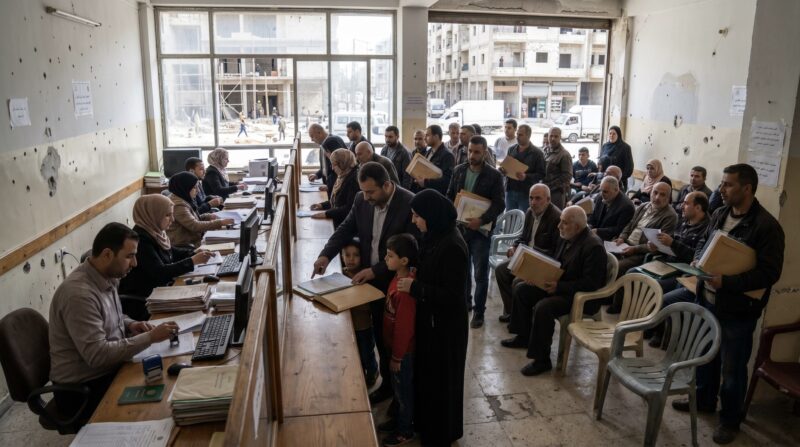
Return depends not only on movement across borders, but on the systems people encounter when they arrive: documentation, property rights, services, safety, and access to livelihoods.
The traditional binary between “refugee in exile” and “returnee at home” obscures how displaced people actually navigate protracted crises. Planned returns may become unplanned circular migration when conditions in Syria prove unviable. Temporary assessment trips may become involuntary returns when people run out of resources or lose the right to re-enter host countries. Syrian communities have therefore advocated for legal exemptions allowing short visits home without risking the loss of protection status.
Allowing Syrians abroad to travel temporarily between host countries and Syria without losing residency rights could support investment, property repair, skills transfer, enterprise development, and family stability. This approach recognizes the Syrian diaspora not as a temporary burden to be removed, but as part of Syria’s long-term recovery infrastructure — and as an increasingly integrated part of host-country economies.
Alhamada already imagines his future in these terms. Through his association, the Democratic Centre for Human Rights, he hopes to promote democracy inside Syria while acting as an intermediary to help European companies identify investment opportunities. That kind of bridging role is precisely what circular mobility can make possible: not an all-or-nothing choice between staying and returning, but an economic and civic relationship across borders.
Implications for recovery
Circular mobility is not easy to implement. It depends on legal status, re-entry rights, documentation, security conditions, property systems, host-country policy, and trust that temporary return will not be punished. But those complications are precisely why the model matters. If refugees are forced to choose between stability abroad and uncertainty at home, many will delay return, return under duress, or lose the capacity to contribute meaningfully to reconstruction.
Syria’s recovery hinges not on the speed of refugee return, but on the strength of the systems people return to.
For policymakers, the priority should be to protect voluntary, informed, and reversible movement. For reconstruction funders and impact practitioners, the task is to build tools that allow diaspora members to invest, advise, visit, repair property, start enterprises, transfer skills, and support local institutions without being forced into a permanent return before Syria can absorb them. Diaspora finance, enterprise-support vehicles, legal-aid systems, property documentation support, and skills-transfer programs should all be designed around mobility rather than finality.
Syria’s recovery hinges not on the speed of refugee return, but on the strength of the systems people return to. Without economic capacity, institutional stability, and functioning infrastructure, large-scale repatriation risks deepening existing crises rather than resolving them. A balanced approach — one that preserves diaspora contributions and enables gradual, circular return — offers a more viable pathway toward sustainable recovery.
—
This article is part of Impact Entrepreneur’s collaboration with A4R Media Hub to support emerging journalistic voices exploring how the Impact Economy is being built — and tested — in communities affected by conflict, displacement, and economic fragility.