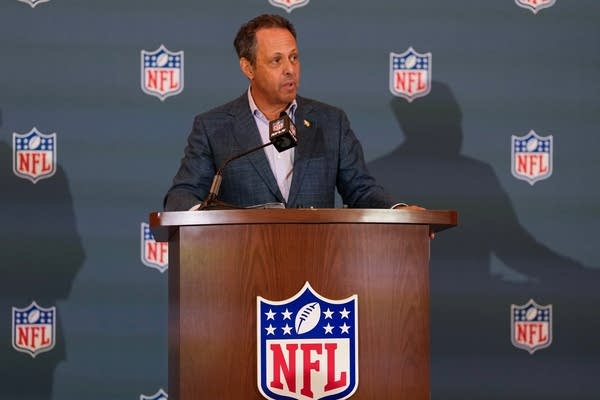
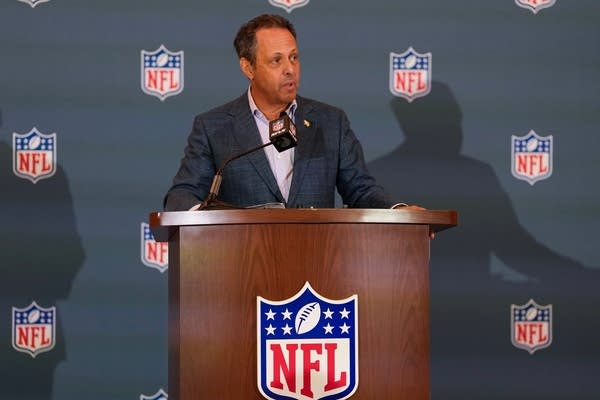
The Minnesota Vikings agreed to terms Saturday on a contract with Seattle Seahawks assistant Nolan Teasley to be their general manager, a person with direct knowledge of the decision told The Associated Press.
The person spoke to the AP on condition of anonymity because the deal had not yet been finalized with Teasley, who has spent his entire 13-year NFL career with Seattle. During that span, the Seahawks made the playoffs nine times, reached three Super Bowls, and won two of them including the most recent one in February.
Teasley was promoted in 2023 to assistant GM by president of football operations and general manager John Schneider, who was the architect of both of those championship teams. After the Vikings decided not to re-sign quarterback Sam Darnold last year, he joined the Seahawks and helped them become champions.
Teasley will replace Kwesi Adofo-Mensah, who was fired in January after four years in the role. Adofo-Mensah was an outside-of-the-box hire, bringing economics degrees and Wall Street experience to the world of pro football. Vikings owners Mark Wilf and Zygi Wilf were first seeking more of a collaborator with this hire, a leader who could better bridge between the personnel department and the coaching staff, but all of their external candidates had traditional scouting backgrounds.
Watching Darnold lead the Seahawks to the Super Bowl, after he won 14 games in 2024 in his lone season with the Vikings, also undoubtedly played some part for the Wilf family in the dismissal of Adofo-Mensah.
Teasley was among five finalists who met in person this week with Vikings leadership during the second round of interviews, beating out current Vikings executive vice president of football operations Rob Brzezinski, Denver Broncos assistant general manager Reed Burckhardt, Buffalo Bills assistant general manager Terrance Gray, and Los Angeles Rams assistant general manager John McKay.
Brzezinski, who directed the draft last month while serving as interim general manager, has been with the Vikings since 1999 and rose to the top through his expertise in salary cap management and player contract negotiation. Brzezinski, who is widely respected in the organization and throughout the league, will remain in his role alongside Teasley and coach Kevin O'Connell, a trio the Wilfs will entrust to bring the Vikings their first championship.
Teasley was the only finalist without ties to the Vikings. Burckhardt and Gray both previously worked as scouts for the Vikings. O'Connell previously worked for the Rams. Gray, McKay and Teasley took part in the NFL’s accelerator program that was revamped with a rollout at the league meetings earlier this month.
Teasley is a Washington native who graduated from Central Washington University in 2007 with a degree in public relations, working in marketing before making the jump to the NFL and joining the Seahawks as an intern in the scouting department in 2013. He became director of pro personnel in 2018.
Adofo-Mensah and Ryan Poles were the only two finalists who had in-person interviews for the vacancy in 2022 after the firing of Rick Spielman. Poles was hired by the Chicago Bears instead and remains in that job for the defending NFC North champions.