Iron Range's Soudan underground mine tours to resume


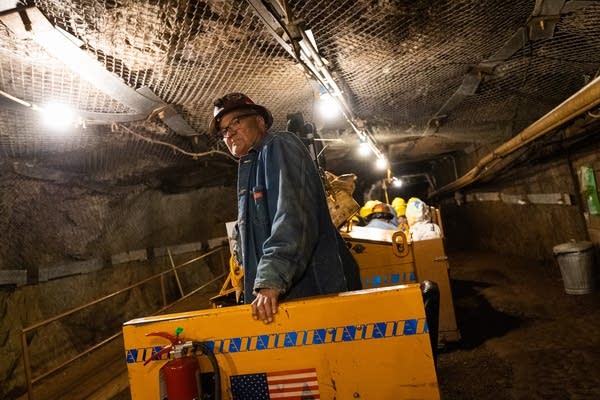
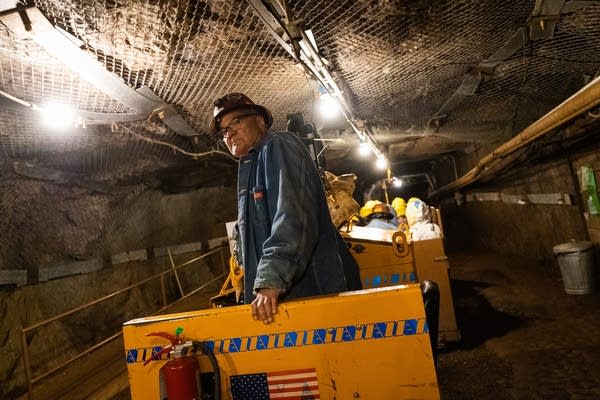
A man wearing a hardhat drives a mining train

For the first time in two years, visitors to a state park in northern Minnesota can once again travel nearly a half mile underground into the dark bowels of a historic iron ore mine.

Underground tours at the Lake Vermillion-Soudan Underground Mine State Park near Tower, resume May 23, two years after they were shut down in 2024 after severe flooding damaged the mine following a massive rainstorm.

Prior to the flooding, the tours were also closed for two years beginning in 2022 for a $9 million project to reconstruct the mine shaft.

The mine opened in 1882, supplying iron ore that was shipped to blast furnaces around the Great Lakes to forge the steel that was vital to the nation’s rapid industrial growth.

Students ride a train through a mining tunnel
Students in Jean Brascugli-Clusiau’s 5th grade class ride an electric train into the deepest sections the Soudan Underground Mine.
Ben Hovland | MPR News 2024

Tours were offered starting just three years after the mine closed in 1962. Every year, about 35,000 visitors from around the world travel 2,341 feet underground in the mine’s vintage equipment.

Park staff were ecstatic when tours resumed for a few weeks in 2024 after the long construction project, said Andrea Doerr, interpretive supervisor for the Minnesota Department of Natural Resources, which manages the park.

Then, in June, seven and a half inches of rain fell in less than 24 hours. At the same time, the mine was hit with a power outage.

“It was essentially the perfect storm,” said Doerr. Without the electric pumps used to keep the mine dry, rainwater and silt flooded into the mine. At Level 27, the deepest section of the mine where tourists ride an electric train into a giant cavern where the iron ore was dug out of the earth, tunnels were flooded with nine feet of water and dirty sludge.

Students walk past mining equipment underground
Students in Jean Brascugli-Clusiau’s 5th grade class walk through the lobby on the 27th level of the Soudan Underground Mine.
Ben Hovland | MPR News 2024

"Everything that's electrical down there was essentially ruined, destroyed,” said Doerr. “Our locomotives, all of the lighting, all of that needed to get rebuilt and replaced.”

It was a big blow to staff who had worked so hard to reopen the mine following the shaft restoration project, Doerr said. They’ve worked every day since the flooding to get the mine ready to reopen.

“To be able to travel a half mile underground, experience brief total darkness, to imagine what it would have been like to work in an underground iron mine, it’s a really unique experience,” Doerr added.

If you go

Tours lasting 90 minutes are offered through the third week of October. The temperature in the mine is a constant 51 degrees year-round. Visitors are encouraged to wear a jacket and sturdy boots or shoes.

Tours cost $15 for adults, $10 for children 5-12, and are free for children under five. Reservations are recommended. Officials expect pent-up demand.

No purses, backpacks, or strollers are allowed underground. The three-minute cage ride down to the mine is in a dimly lit, closed, confined space.


Source link

Leave a Reply

Subscribe to Our Newsletter

Get our latest articles delivered straight to your inbox. No spam, we promise.

Recent Reviews


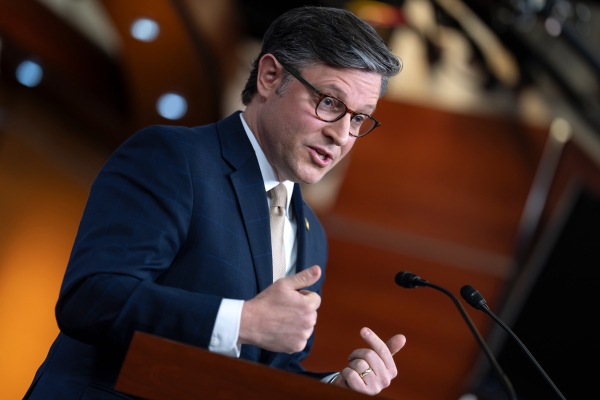
Speaker of the House Mike Johnson, R-La., takes questions at a news conference at the U.S. Capitol on April 21, 2026.

Speaker of the House Mike Johnson, R-La., takes questions at a news conference at the U.S. Capitol on April 21, 2026.
Speaker of the House Mike Johnson, R-La., takes questions at a news conference at the U.S. Capitol on April 21.
J. Scott Applewhite | AP

The House of Representatives voted Thursday to reopen most of the Department of Homeland Security, ending the longest agency shutdown in U.S. history.

The House passed a bill funding DHS, minus dollars for Immigration and Customs Enforcement and Customs and Border Protection. The measure passed by voice vote on what was the 76th day of the shutdown.

Democrats refused to back funding for many of the agency's immigration functions in an unsuccessful effort to secure reforms including body-worn cameras and broad restrictions on face coverings after federal law enforcement killed two American citizens in Minnesota earlier this year.

The Senate, led by Republican Majority Leader John Thune, R-S.D., unanimously advanced this funding legislation in March. At the time, Speaker Mike Johnson, R-La., referred to the proposal as "a joke" and refused to bring it up for a vote. Many members of the House Republican conference refused to fund the agency in a piecemeal fashion and did not want to negotiate over reforms to immigration enforcement operations.

On April 1, Johnson reversed course. He announced the funding bill would be voted on "in the coming days." More than four weeks later, he finally made good on that commitment.

In an effort to appease his hardline members, Johnson waited to bring the Senate's proposal to a vote until that chamber's Republicans started the arcane procedural process, known as reconciliation, to fund all of DHS — including Immigration and Customs Enforcement (ICE) and Customs and Border Protection (CBP) — for the remainder of Trump's term without any backing from Democrats.

The funding bill comes as Secretary of Homeland Security Markwayne Mullin warned the agency was close to running out of funds to pay staff.

"We have reached all the emergency funds we can reach into," Mullin told Fox News on Friday. "I am completely out of the slush fund, I have no place to move at the end of the month."

Mullin said the agency was relying on appropriated funds from last year's One Big Beautiful Bill, which allocated more than $150 billion to DHS on top of its regular annual appropriations funding.

President Donald Trump signed a memo this month authorizing DHS to use some of the money from that legislation to fund the department's operations — potentially infringing on the powers granted to Congress by the Constitution to direct how taxpayer money is spent.

Copyright 2026, NPR


Source link