Surrounded by farmland, a quarry and miles of southwestern Minnesota’s windswept prairie, Jeffers Petroglyphs can be easy to miss. Thousands of years ago, though, this place was a destination.
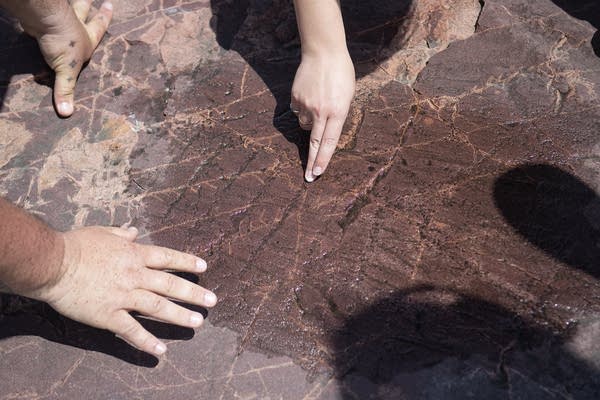
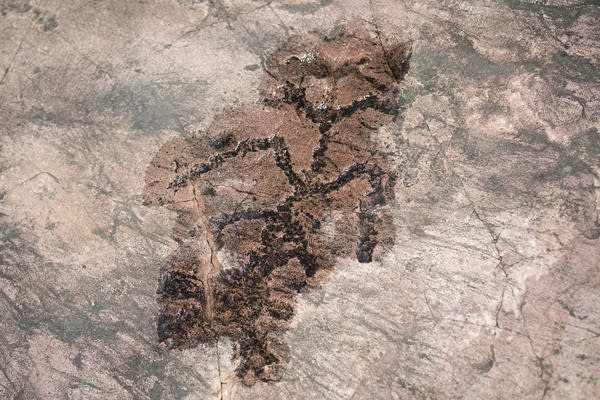
Ancient people traveling here carved their stories into the pinkish-red quartzite that rose 50 feet above the grasslands and stretched for miles. Some images cut into the rock date back 7,000 years, long before the Druids raised Stonehenge or the pharaohs built the pyramids.
In that respect, the Minnesota Historical Society is a relatively short-timer to the site, managing the Jeffers Petroglyphs for 60 years. Today, though, with a newly updated visitor center and contemporary Native exhibits, the society hopes to draw a new generation to the sacred site.
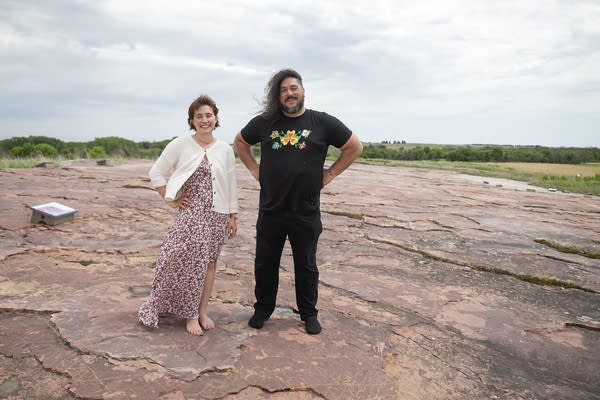
“This was calling people,” David Briese, the Minnesota Historical Society’s director of historical sites, said as he showed a reporter around the petroglyphs during a recent visit.
The thousand of petroglyphs include images of corn, bison, thunderbirds and turtles.
Some of the carvings align with the solstices. Others repeat images found at sites as far away in areas now known as Ontario, Georgia and Washington state.
“You don't find this kind of diversity of rock carving styles anywhere else in North America,” Briese added. “There was a concerted effort here to build a vault of knowledge, an encyclopedia. This was all done very purposefully.”
‘High point of the world’
The geology at Jeffers is crucial to its story. After the bare rockface was scraped smooth by glaciers, it became a site of major geographical and cultural significance that drew people from across the continent to the ridge of rose-colored quartzite jutting from the grass-covered plain.
The earliest carvings at Jeffers Petroglyphs were made somewhere close to 7,000 years ago and the most recent were made some 250 years ago. It’s considered one of the world’s oldest continuously used sacred sites.
Weeks ago, the historical society unveiled its new exhibit at the visitor center. It features a mural created by Dakota artist Holly Young, a giant buffalo hide artwork by Sisseton Wahpeton Oyate artist Fern Cloud as well as dozens of artifacts retrieved from the Minnesota historical society’s archives.
The decision to highlight the work of more than 20 contemporary artists was intentional, said Rita Walaszek Arndt, the historical society’s curator of Native American collections.
“(It’s) so that people have a better understanding of the through-line of some of these traditional arts,” said Walaszek Arndt, who helped design the exhibit. “The symbols, the stories, the teachings are still relevant today.”
The new exhibit also includes a seven-minute video featuring interviews from Native American community members including Lance M. Foster, historic preservation officer for the Iowa Tribe of Kansas and Nebraska, which helps interpret some of the thousands of rock carvings at the Minnesota site.
“It was a sacred place. It was like the high point of the world that you could see the wheel of the earth around you all the way to the horizon,” Foster shared in an interview excerpt that now plays in the visitor center.
Walaszek Arndt hopes the exhibit updates will encourage people to visit the site.
“To have those different understandings of the teachings — how it reflects what people were thinking and how they were functioning — is just so fascinating,” Walaszek Arndt said.
Jeffers Petroglyphs is open Thursday through Sunday during the summer. It also will have a summer solstice event and several sunrise tours.
It’s worth visiting the site at different times of day and in different seasons, said Briese.
“You’re going to pick up something new every time you come,” he added. “It is very subtle and that subtlety is a part of it that draws you in and has you returning because you’re looking for those small details in the prairie, in the rock, in your conversations with people.”