By Josiah Bates for The Trace
[This story was originally published by The Trace, a nonprofit newsroom covering gun violence in America. Sign up for its newsletters here.]
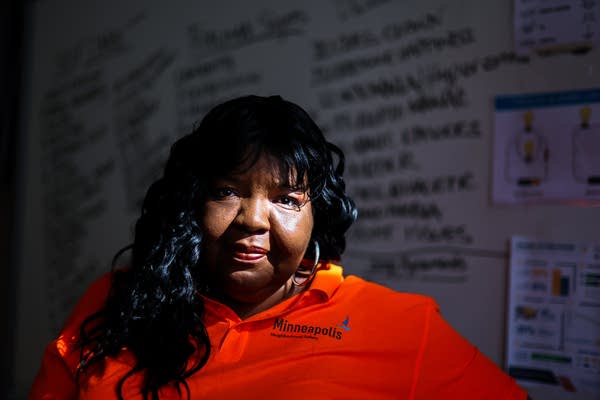
The call came in on a cold January night. Someone had been shot in North Minneapolis. As they often do after shootings in their area, Connie Rhodes and her team of violence interrupters went to the scene to calm tensions, connect with residents, and prevent retaliation.
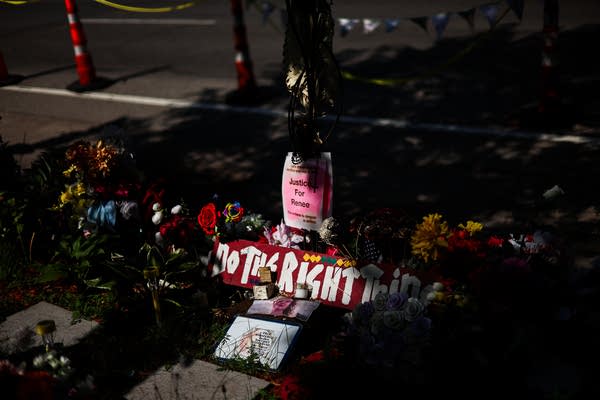
As she drove with one of her colleagues to the scene on the Northside, Rhodes began getting messages that federal agents might be involved; the city was in the midst of a large-scale deployment of federal immigration agents that had already led to the shooting death of Renee Good seven days earlier. Alex Pretti would be killed by federal agents within the month. As they got closer, Rhodes could hear residents’ whistles of warning. They parked about a block from the scene, where a crowd had started to gather, and waited for the rest of their violence interruption team.
Then, boom.
Explosions erupted in the distance. Rhodes saw flashes of light out of the window of her car, debris, flames, and smoke in the air. “It looked like a war zone,” she later told The Trace. Rhodes and her Restoration Inc. colleague, Lenise Holliman, climbed out of the car and moved toward the sidewalk. They noticed a federal agent standing nearby, holding a tear gas canister. He wore military fatigues and boots.
“Please don’t hurt us,” Rhodes said to him. They said the agent then pulled the pin on the canister and threw it at them. They dropped to the ground and as tear gas filled the air, Holliman was hit by debris and Rhodes struggled to breathe.
“We stayed down there, and I just prayed, looked at her face-to-face, and said ‘We’re gonna make it,’” Rhodes recalled. They were trapped in place for several minutes, as flash bangs continued around them. Eventually, community members wearing gas masks helped them escape the area, and Rhodes later went to the hospital to have her breathing checked.
Rhodes and Holliman would later learn that they had originally been responding to the January 14 shooting of Julio Sosa-Celis, a Venezuelan man who was shot by an Immigration and Customs Enforcement (ICE) agent who had been chasing a different man. ICE officials initially said Sosa-Celis assaulted the agents, but surveillance video contradicted the claim. Late last month, the agent was arrested and charged with assault and falsely reporting a crime.
In the days right after the incident, Rhodes recorded elevated blood pressure, took time off, and sought therapy. Months later, she still carries her fear. “I was scared,” she said, “and I’m not a person that gets scared easily. I work with gangs and people pulling guns.”
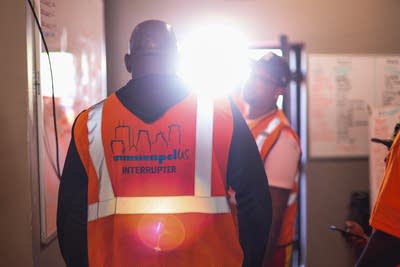
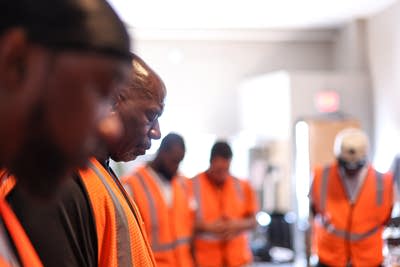
The Sosa-Celis shooting and the federal action leading to it quickly became a defining moment for violence interrupters working in that area. Word of what had happened to Rhodes and Holliman got passed around within the city’s violence intervention networks, and soon a chilling effect took hold, as outreach workers wrestled with what the deployment meant for their role in the same neighborhoods where they work to prevent shootings and build trust.
King, a violence interrupter with the group who has survived multiple shooting incidents, called the deployment “the most terrifying thing I've ever seen in my life.” King requested partial anonymity to protect his sources in violence interruption.
Rashad Ahmed is the executive director of Metro Youth Diversion, a violence intervention group based on the South Side of Minneapolis. His team primarily works in the Cedar-Riverside area, where much of the local Somali community lives. “It definitely created a setback for the CVI work we were doing, especially with some of the youth that we were working with that were showing a lot of progress,” he said, referring to the presence of ICE agents in their neighborhood.
While the large-scale enforcement has concluded, agents are still present throughout the city, and some residents remain on edge. “Some of the community members still feel like we’re still in the surge,” Ahmed said. “It’s just not as broadcast as it was before.”
When federal agents flooded the Twin Cities, Ahmed said fear spread quickly throughout the community. Residents were scared to leave their homes, while others stopped seeking services. The young people they spent years cultivating relationships with were becoming harder to reach because his group couldn’t be in certain areas while agents swarmed the streets. Some of his staff were tear-gassed the night Sosa-Celis was shot.
On most days, violence interrupters respond to shootings, check on victims and families, intervene in disputes, and maintain relationships in neighborhoods where trust can take years to build. Their work often depends on being a consistent presence — showing up regularly before a crisis happens and remaining there long after the police and emergency responders have left. But for months, the federal action disrupted those efforts, and outreach workers describe how they’re still trying to regain their footing months later. Some described becoming more cautious about where they go and how they respond to calls.
Across Minneapolis through the first week of June, homicides are down 14 percent compared to the same period last year, while the number of nonfatal shootings is down 18 percent, according to police data. But as Minneapolis heads into the heat of summer, which Ahmed refers to as “trauma season,” frontline workers expect shootings to rise. That’s when violence interruption teams would normally start ramping up their outreach. This year, however, they’re scrambling to regain their momentum after Operation Metro Surge.
“We changed the way we did everything,” Rhodes said, pointing to their reluctance to approach perimeters that ICE set up. Fearing further confrontations with federal agents, some members of her Restoration Inc. team took time away from the job altogether. “I told my team if [ICE is] there, we’re not going.”
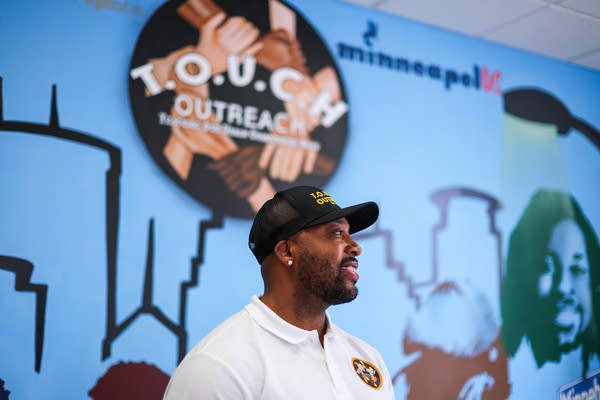
Muhammad Abdul-Ahad, who runs TOUCH Outreach, said two interruptors left his organization out of fear that they too would be targeted by ICE agents. The group has also become more focused on community fears and questions surrounding the law enforcement presence, he said, as some residents were hesitant to engage with his team after the federal action because they associated any organized public safety presence with federal enforcement. “People were afraid to even address us at some point because they thought we were ICE,” he said. “That’s something that stays with us.”
Even as the activists continue to deal with residual fear from the operation, many say the relationship with the local government is stronger than it was a year ago. Last summer, tensions between violence intervention groups and the city’s Neighborhood Safety Department spilled into public view as some of the groups delayed signing contracts and raised concerns about funding, communication, and oversight. Since then, “The work is being done. We have made a lot of improvements,” Abdul-Ahad said.
Amanda Harrington, who took over as the director of the Neighborhood Safety Department last year, said she’s been focused on building better trust with the CVI groups with city contracts. “We’ve been listening to their concerns and tried to be more collaborative in our efforts,” she said, pointing out that they initially put a full-time requirement into the contracts but have now allowed groups to hire part-time workers. “We also learned that the geographic areas we had them working in were too restrictive, so we increased the areas, and we’ve clarified that they can go outside these areas if there’s spillage.”
But concerns about sustainability, and whether the city is committed to investing in the CVI groups long-term, remain. Currently, they are funded on a year-to-year basis, making planning difficult, and the groups are bracing for the possibility of a less collaborative relationship with law enforcement as a new police chief takes the helm.
At George Floyd Square, on the South Side, Bridgette Stewart is preparing for summer. Stewart is a spokesperson for Agape, a violence prevention group that has operated without city funding for years, relying instead on private support and volunteers. It doesn’t matter who leads the Police Department, Steward said, or how much funding is available, or what public safety strategy the city or the federal government embraces next. “We’re going to be out there regardless,” Stewart said. “We have to keep showing up.”