DEET for dinner? Study finds mosquitoes could learn to love bug spray


Bug spray on a shelf

In Minnesota, there is one thing for certain during summer: mosquitoes.

You can smell the DEET and citronella in the air when you're around the bonfire or out camping. But new research has found that mosquitoes could learn to associate DEET with dinner.

Published in the Journal of Experimental Biology, the researchers from University of Tours in France and Virginia Tech conducted an experiment where they used a form of Pavlovian conditioning to see if mosquitoes could learn to associate DEET with a food reward.

In the experiment, mosquitoes would feed on warm blood through an artificial membrane. Then 20 seconds into their meal, the researchers released DEET into the enclosure with the mosquitoes. After three times, the mosquitoes learned to associate DEET with food.

“They are actually very excited about it, and they try to bite the smell of DEET to the point there they're very angry about that,” researcher Clément Vinauger told Minnesota Now host Nina Moini.

The study found when the trained mosquitos caught a whiff of DEET alone, more than 60 percent tried to feed again. That’s compared to 20 percent of untrained mosquitoes.

Vinaguer emphasizes that this scenario is not happening in nature. But, he said that if you have DEET bug spray that has worn off and isn’t strong enough to repel mosquitoes, they could learn an association between low concentrations of DEET and a blood meal, “their ability to adjust their behavior is more extensive than we thought of.”

That’s why Vinaguer said the study highlights the importance of continuing to wear bug spray with DEET and reapply as recommended by the manufacture.

“Following the specificities for the product that you bought is really critical to make sure it's effective.”

While the study can help prevent bug bites, it’s also important research because of the deadly diseases mosquitoes carry. Public health officials often consider the mosquito the “world’s deadliest animal.”

According to the CDC, the mosquito-borne disease malaria caused 597,000 deaths across 83 countries in 2023, “so that level of plasticity or adaptability in the mosquito is really critical,” Vinaguer said.

His future research will look into what is happening in the mosquito’s brain that makes them adaptable and whether those genes can be targeted to prevent mosquitoes from outsmarting humans.


Source link

Leave a Reply

Subscribe to Our Newsletter

Get our latest articles delivered straight to your inbox. No spam, we promise.

Recent Reviews


Victor Wembanyama

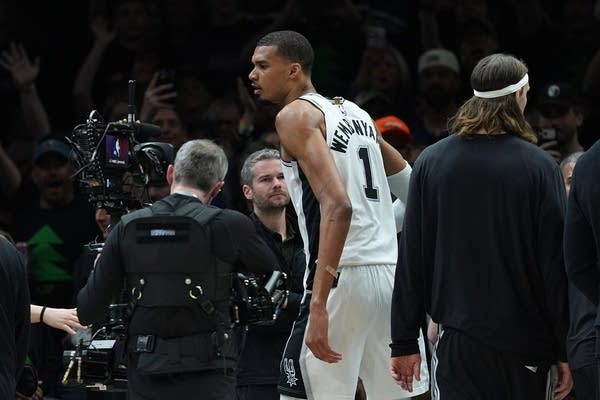
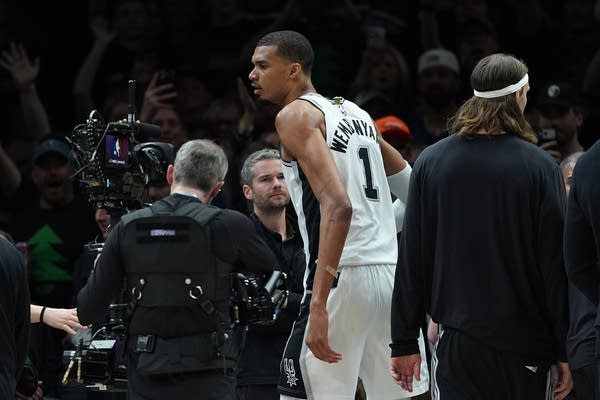
San Antonio's Victor Wembanyama is playing in Game 5 of the Spurs' Western Conference semifinal series against the Minnesota Timberwolves, after getting ejected early in Game 4 for throwing an elbow.

The Spurs are obviously relieved about that. And if Wembanyama is angry about missing most of Game 4, then even better, Spurs guard Devin Vassell said Tuesday at shootaround.

“I know he was upset not being able to play that game," Vassell said at a shootaround attended by Spurs President Gregg Popovich, Spurs legend Manu Ginobili and former Spurs assistant Brett Brown, among others. "So, I know that he’s going to be ready to go. That’s what we need. We need that upset Vic who’s ready to attack the game for sure.”

It could be easily argued that Tuesday's game — Game 5, playoff series, tied 2-2, with the winner moving one win from a trip to the Western Conference finals — is the biggest of Wembanyama's NBA career.

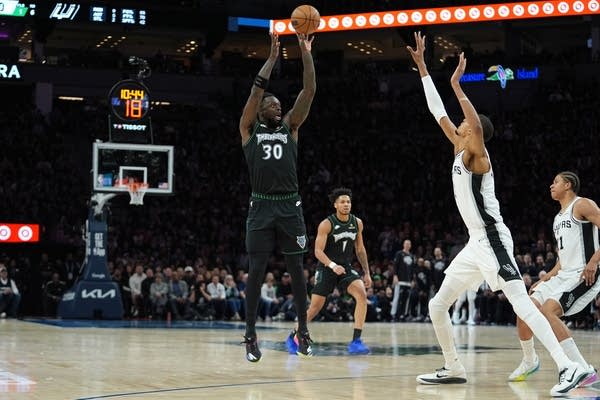
Julius Randle,Victor Wembanyama
Minnesota Timberwolves forward Julius Randle (30) shoots over San Antonio Spurs forward Victor Wembanyama, second from right, during the first half of Game 4 of an NBA basketball second-round playoffs series in Minneapolis.
Abbie Parr | AP

Vassell wants to see a fiery Wembanyama — within reason, of course.

“We’ve seen it before. We’ve seen when Vic gets upset," Vassell said. "I mean, we just need him to calm his emotions, make sure that he doesn’t let his emotions take over because at the end of the day like I said, he can’t get any flagrants, he can’t get anything like that. So, Vic knows what he's got to do and he’ll be ready.”

Wembanyama was ejected from the Spurs-Timberwolves game on Sunday night because of the elbow, which he threw early in the second quarter after getting tangled with Minnesota's Naz Reid and Jaden McDaniels while grabbing a rebound. Wembanyama swung his arms and his elbow struck Reid in the face.

Officials looked at the play and upgraded the foul to a Flagrant 2, which comes with an automatic ejection. The NBA, as it always does in those situations, further reviewed the play after the game and decided Monday that the ejection was sufficient. It could have fined or even suspended Wembanyama for Game 5 and beyond if it felt that was warranted.

“I don’t think we even thought about it much at all," Timberwolves guard Mike Conley Jr. told reporters at Minnesota's shootaround session Tuesday. "I think once the ruling came down, it was just like, we expected that and just moved forward. It's one of those things. We don’t want guys to miss games. We want to play against the best. We don't want to have guys missing games like that."

Wembanyama's elbow isn't the Spurs' biggest issue right now. The ankles and knees of two of his teammates are potentially problematic, however.

The Spurs added Dylan Harper to their injury list a few hours before Game 5 on Thursday with left knee soreness. He's listed as questionable, as is point guard De'Aaron Fox — who is dealing with what the Spurs described as right ankle soreness.


Source link