Adolescent sexual health continues to improve in MN


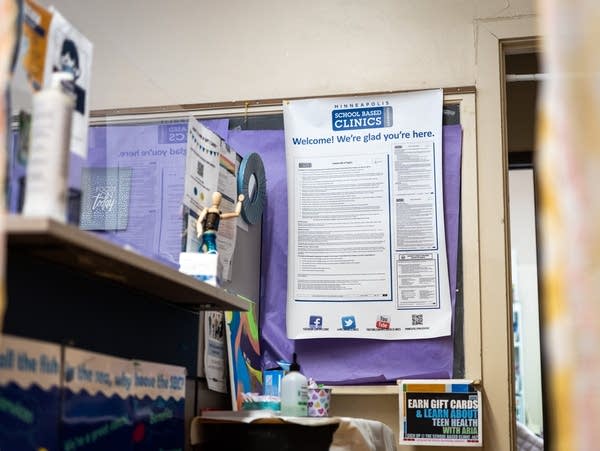
A welcome sign hangs on the wall of a clinic

Pregnancy, birth rates, and sexually transmitted infections among Minnesota teenagers dropped significantly in 2024, continuing a decades-long downward trajectory, according to a new report by researchers at the University of Minnesota. But the study finds that there also continues to be sharp racial, ethnic, and geographic disparities in these rates here that are among the most stark in the country.

The 2026 Minnesota Adolescent Sexual Health Report, published by the University of Minnesota Medical School’s Center for Healthy Youth Development, found that:

From 2023 to 2024, the rate at which 15 to 19 year olds in the state gave birth decreased by 6 percent and the rate of the same aged teens getting pregnant decreased by 15 percent. Since their peak in 1990, teen pregnancy and birth rates in Minnesota have declined by more than 80 percent for adolescents under 20 years. Sexually transmitted infections declined between 2023 and 2024 with a 1.85 percent decrease in chlamydia rates and noticeably large 25 percent decrease in gonorrhea rates.

“We are seeing some pretty amazing and remarkable gains and wins here,” said Jill Farris, training and education director with the Center for Healthy Youth Development. “What we are seeing is some pretty big societal shifts in terms of how young people are making decisions about their sexual health and about sexual behaviors.”

Sexual activity amongst young people has reached historic lows. For example, in 1992, about a third of ninth graders reported having sex. More than 30 years later in 2025, only 7 percent of that age group reported having sex.

While sexual activity and being sexual is a normal and typical part of adolescence, Farris said the trend of teens having less sex is a positive development, as young people today may be seeking other ways of engaging in sexual intimacy. She said that more young people are defining relationships differently and increasingly identifying in more diverse ways than their parents or grandparents had.

“I think young people's definition of sex is way more broad than a lot of adults,” Farris said. “I think that young people are actually thinking a lot more broadly and creatively about their gender, about their orientation, and about all kinds of behaviors that work for them in their lives that I think are quite honestly maybe not even on the radar screen of the adults that are endeavoring to help.”

Minnesota’s teen pregnancy, birth and sexually transmitted infection rates are some of the lowest in the country, but Farris said the state also has some of the widest racial and geographic disparities in teen pregnancy, birth and STI rates.

For example, teen pregnancy and birth rates are higher in greater Minnesota and the state’s rural counties, where youth often don’t have adolescent-friendly reproductive and clinical health services easily within reach. And, of the reproductive health options that do exist, not all are confidential or accessible outside of school hours.

“Young people in a lot of rural counties have to go a pretty long distance to be able to get to a sexual health clinic, and a lot of counties don't even have a sexual health clinic in the county,” Farris said.

There are also large racial and ethnic disparities, especially in regard to sexually transmitted infections. Gonorrhea rates are 18 times higher among Black youth and seven times higher among American Indian youth.

“We should feel grateful and proud of these strides that young people have made, yet not every young person in Minnesota gets access to the same level of information and services and care,” Farris said.

The state is working to change that. During the 2024 legislative session, lawmakers passed a law to develop statewide health education education standards so there’s more consistency in how sexual education is taught and administered across the state. Farris said the standards are currently being reviewed by a judge, and they expect to learn more by the end of this month.

Minnesota is one of just a few states that doesn’t yet have these statewide standards. Sexual education in schools is often left up to the teacher’s discretion.

“If your teacher wants to teach this, isn't really put off by the topic, and knows how important it is, you might get some sex ed information,” Farris said. “You might also have a teacher that would really rather not touch this with a 40 foot pole.”

Sexual education alone can’t prevent pregnancies and STIs, but Farris said it’s far and away the best strategy to provide young people with the most accurate information about their changing bodies and their sexual health.

Moving forward, Farris said now is not the time to take the foot of the gas pedal. Increasing numbers of youth identify as LGBTQ+ and gender diverse, underscore the need for inclusive, affirming sexual health education and youth-centered health services at schools. And she hopes families and caregivers see this report as a call to action – a reminder of how important their role is as sexuality educators at home.

“That is something that reaches across [the] political divide, right?” Farris said. “It's not a controversial opinion to say that parents and kids should talk more.”


Source link

Leave a Reply

Subscribe to Our Newsletter

Get our latest articles delivered straight to your inbox. No spam, we promise.

Recent Reviews


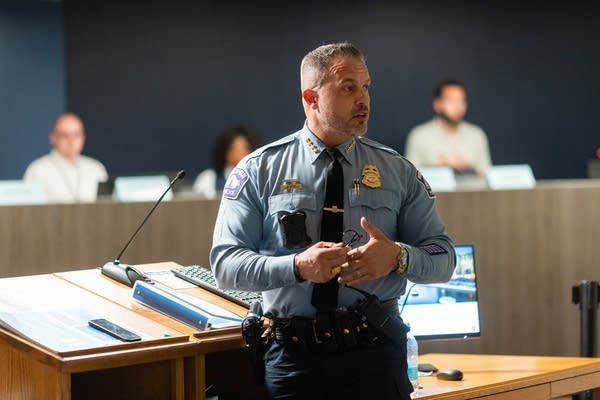
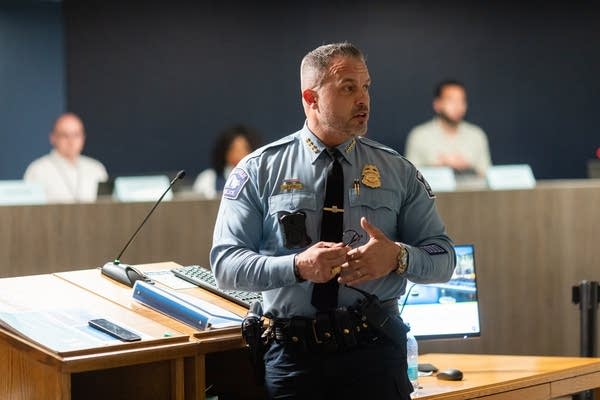
Chief O'Hara speaks during a hearing

The resignation of Minneapolis Police Chief Brian O’Hara last week comes at a time when the city is deep into a yearslong effort to reform the Minneapolis Police Department.

People closely following Minneapolis’ settlement agreement on policing with the state say the chief’s departure could be an opportunity for the city to push forward.

But the multiple investigations into the former chief’s conduct may also highlight areas where the police department and city officials continue to fall short in providing accountability.

Since 2023, the city of Minneapolis has been under the court-enforceable agreement, also known as a consent decree, which requires a significant overhaul of police department policies, training and systems.

Rebecca Lucero
Rebecca Lucero
Submitted image

Minnesota Department of Human Rights Commissioner Rebecca Lucero said there’s been some progress by the city. But some of the same issues her agency outlined when their findings were announced four years ago continue to be a problem, especially regarding leadership.

“We still have an accountability system that is absolutely not working. The internal affairs department needs a lot of work and focus,” Lucero said. “To a certain extent, we have findings that show a long pattern of problems around accountability.”

An MDHR investigation following the police killing of George Floyd uncovered a longstanding culture of racism and misogyny, as well as a department that used force disproportionately against people of color.

Lucero said the value of the state agreement is that it’s enforced by the courts and will remain in place until the judge is satisfied the city has met its obligations.

Lucero said O’Hara’s departure could be an opportunity to do a “reset” and then move forward in reforming the department.

“Any change in leadership can really be a tone shift and can really result in real transformational change,” Lucero said. “I’ll also say that this consent decree is not tied to one person, one mayor, one chief — it is so much bigger than that.”

Minneapolis isn’t moving any slower than other cities that have been under consent decrees, a process which often takes many years to complete.

David Douglass leads Effective Law Enforcement For All (ELEFA), which is the independent monitor for the court-enforceable agreement. He’s optimistic that a new chief would be an improvement.

“I think it's a tremendous opportunity for the city to select a chief who recognizes that constitutional and procedurally just policing does not exist in tension with crime fighting and public safety — rather, the two are mutually reinforcing,” Douglass said.

Douglass doesn’t think the core tenets of the agreement will fall by the wayside due to a new chief or community safety commissioner. He said the sort of community involvement he sees in Minneapolis is really key to the agreement’s success.

‘It's been a long journey for the city, and there have been many starts and stops, so we really appreciate the impatience and maybe frustration that many parts of the city are experiencing,” Douglass said. “We'll continue to push to work with the city and the department to implement the agreement's requirements as quickly as possible — but in no circumstances is this a fast process.”

Mayor Jacob Frey notified O’Hara that he was subject to discipline last week after outside investigators found that the chief likely deleted a contact from his phone and told another employee his phone had been seized as part of an investigation last year. Investigators failed to substantiate the underlying earlier accusations, which are that O’Hara engaged in sexual relationships with city employees.

Christy Lopez, a professor at Georgetown Law who has worked extensively on consent decrees, said the chief obstructing an investigation could send a corrosive message throughout the department. But she also said the underlying conduct O’Hara was accused of might provide more insight for how he ran the department than just whether he deleted the contact from his phone.

“I'm not saying they should release the whole files and let the public decide, but they should tell the public what they found,” Lopez said. “Was this a situation where they were able to rule out that the chief conducted himself in this way or not?”

Lopez said she’s seen cities under consent decrees experience both setbacks and progress when a chief has departed. Much of the outcome depends on the dynamics involved and the person ultimately in charge. She said people don’t “hold mayors responsible enough for how the police department is being run.”

“If you had problems with O'Hara, you might also have problems with the mayor,” Lopez said. “If the mayor supported O'Hara and supports the way things are going, then you should expect more of the same, because whoever is hired is going to be responsive to the person that hired them.”

Mayor Frey was not available for an interview. His spokesperson said he made clear during his announcement of the chief’s resignation last week that the department’s commitment to constitutional policing, accountability and public safety remains unchanged.

“The work to do substantial reform is not up to one single chief or any single mayor,’ Frey said at a press conference last Tuesday. “I’ve issued an executive order, and we have a settlement order that is signed. Our department is committed to it.”

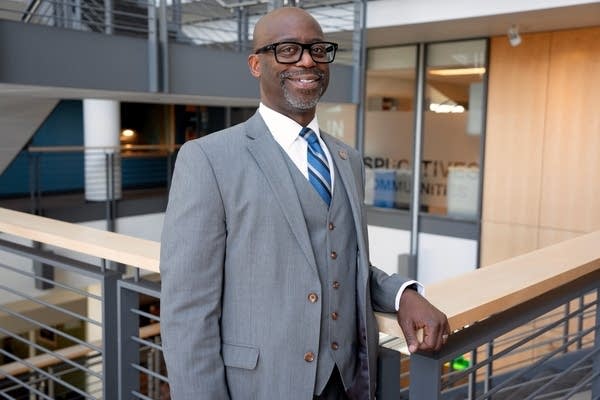
a man poses for a portrait
Todd Barnette, community safety commissioner for the city of Minneapolis, poses for a portrait at Minnesota Public Radio headquarters in Saint Paul on Feb. 3.
Nikhil Kumaran | MPR News

Community Safety Commissioner Todd Barnette has also struggled to gain support at the City Council. Frey last week also addressed the possibility that the city might be left without permanent hires for both chief and commissioner at the same time.

“This kind of progress, it's fragile,” Frey said. “If you remove our safety leadership at this moment, you don't just you don't accelerate reform, you unravel it.”

Lopez said she’d hate to see the Office of Community Safety’s approach, which includes alternatives to traditional policing like the city’s 24-7 Behavioral Crisis Response teams, be undermined by the chief’s departure.

“We need to get to the point where we understand that a diversified approach to public safety is as essential as the police component of that approach,” Lopez said, “and not think that we can or should go back to just over-relying on the law enforcement part of public safety.”

Minneapolis City Council President Elliott Payne said the way O’Hara’s departure played out points to known issues about accountability in the department and the city enterprise.

“Now we're learning that there was an investigation into interventions in internal affairs that might have disrupted the chief's own investigation,” Payne said. “We have to look at that really critically as we're moving forward.”

Even though Frey has ultimate power over the police department, some council members have urged the mayor to work closely with the council as he scouts out a new candidate for chief, which Frey has said he’s willing to do.

ELEFA, the independent monitors, will release their semi-annual report on the Minneapolis Police Department’s progress on the state agreement later this month.


Source link