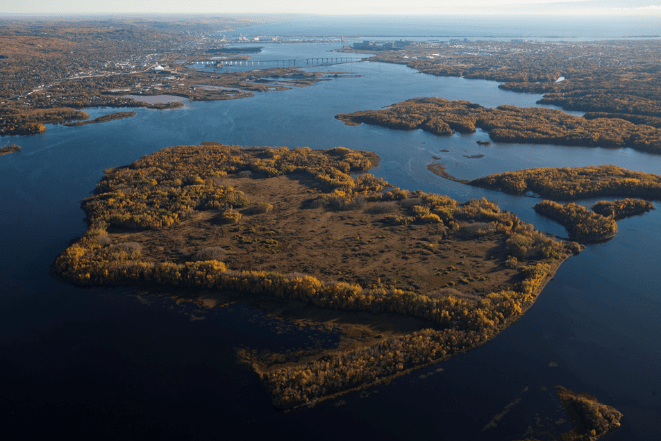

Minnesota is a major step closer to finishing a decades-long effort to clean up the St. Louis River estuary in northeastern Minnesota, the headwaters of Lake Superior, from a long legacy of industrial pollution.
Federal, state, tribal and community partners gathered Wednesday to celebrate the culmination of a two-year effort to clean contaminated sediment in the Thomson Reservoir in Carlton, Minn., 15 miles upstream of Duluth.
The $30.5 million project to address 225,000 cubic yards of contaminated sediment– enough to cover a football field more than 100 feet deep– marks the completion of the eighth and final sediment cleanup project on the Minnesota side of the St. Louis River Area of Concern, which is one of 43 sites around the Great Lakes prioritized for environmental cleanup in 1987.
The eight areas included several commercial shipping slips in the Duluth-Superior harbor that were contaminated with heavy metals and other pollutants, along with other areas along the river polluted by pulp and paper mills and historic industry.
Those sites have all been cleaned up in the past eight years due to “a lot of coordination… blood, sweat, tears, and a lot of money,” said Anne Vogel, Region 5 Administrator and Great Lakes National Program Manager for the U.S. Environmental Protection Agency.
Crews have dredged out contaminated sediment in some places. In other areas they’ve placed remedial caps on the sediment to prevent pollutants from being taken up by tiny bugs that work their way up the food chain into fish and wildlife.
At Thomson Reservoir, 20,000 tons of activated carbon was spread over the water. It sinks to the bottom and binds to the contaminants so they’re no longer available to the food web, explained Larae Lehto, a Superfund supervisor at the Minnesota Pollution Control Agency.
“So while the contamination is still there, it's no longer hazardous to the ecosystem," Lehto said.
The contaminants in the reservoir are dioxins and furans left behind from pulp and paper manufacturing prior to the enactment of the Clean Water Act in the 1970s. Lehto said the use of activated carbon had never been used on such a scale. “To our knowledge, this is the largest project of its kind” in North America, she said.
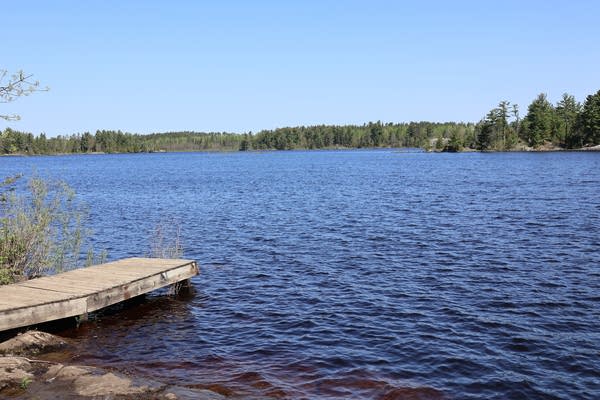
Today this stretch of the St. Louis River looks like a slice of the Boundary Waters, with sunlight sparkling off clean water, and majestic white pines rising from the rocky shoreline.
But Lehto said people who grew up in the Cloquet area decades ago used to call the river “Stinktown.” They told her, “You don't go to the river, you don't swim in the river, you don't eat the fish out of the river.”
The river began to come back to life in the late 1970s, when a major wastewater treatment plant came on line, preventing untreated sewage from being dumped into the water.
More recently, in addition to the contaminated sediment that’s been cleaned up, agencies have also restored more than 1,000 acres of habitat across 27 different project areas. One project along the Duluth shoreline completed in 2021 excavated nearly 20,000 dump trucks full of old timber waste that had been dumped in the river and suffocated aquatic life at the base of the food chain.
The federal government spearheaded the work with $250 million provided through the Great Lakes Restoration Initiative. That funding has helped leverage an additional $208 million from state, local and industrial partners.
There’s one more major project that still needs to be completed on the Minnesota side of the St. Louis River. A $23 million project to remove sediment and invasive cattails and restore coastal marsh and wetland habitats in an area of the river known as Mud Lake is expected to be completed next year.
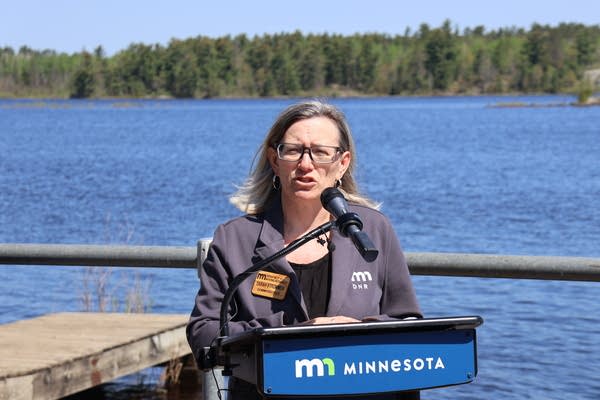
“When it's complete, we will be significantly closer to removing the St. Louis River estuary from the Great Lakes Area of Concern,” said Minnesota Department of Natural Resources commissioner Sarah Strommen.
Lehto expects the overall cleanup to wrap up in 2030 or 2031, after projects are completed on the Wisconsin side of the river.
But the payoff from the decades of remediation work is already visible in the increasing number of people who fish, paddle and even swim in the river– a sight that would have been unheard of a few decades ago.
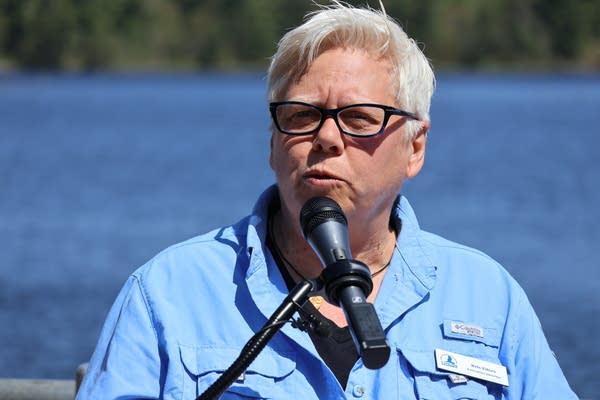
As the river has transformed, the narrative surrounding it has changed, said Kris Eilers, executive director of the St. Louis River Alliance, “From talking about pollution all the time to talking about the beauty that is here now.”