

Fargo selects new chief of police


Travis Stefonowicz

The City Commission of Fargo has unanimously approved a new chief of police.

Travis Stefonowicz has worked at the department for over 25 years and has served as interim chief for a little over a month, replacing Dave Zibolski following his retirement.

City leaders were initially going to wait to appoint a permanent chief until new commissioners are elected in June. But Stefonowicz himself asked them to speed up the process, according to Mayor Tim Mahoney.

"Stefonowicz came around and talked to different commissioners,” he said. “He expressed that he would like to do some things, but he's handicapped a little bit if he made changes … in assignments, if he changed command structure, that maybe the new chief would change that."

A letter signed by members of the police department endorsed Stefanowicz for the permanent role last month. Three finalists were chosen by the city, but two withdrew from consideration, leaving Stefonowicz the lone finalist to be interviewed by the city’s selection committee last week.

He’s inheriting a scandal that grabbed national headlines earlier this year. The department used artificial intelligence to identify and arrest Angela Lipps in connection with a case of bank fraud. She said she’d never been to North Dakota. After spending five months in jail, her lawyer obtained bank records that put her in Tennessee at the time of the crime. Her charges were then dropped.

In an interview with MPR News last month, then-Interim Chief Stefonowicz said there’s a learning curve to using AI, and the department has to embrace it or risk falling behind.

The department introduced new guardrails to using AI last month when Zibolski apologized to the community for errors made during the investigation.

The case is still active, and Mayor Tim Mahoney said Monday that he thinks it will be resolved in the “next couple of weeks.”

“We'll figure out what truly happened, and (if an) apology is necessary, we'll make that apology,” he said.



Source link

Leave a Reply

Subscribe to Our Newsletter

Get our latest articles delivered straight to your inbox. No spam, we promise.

Recent Reviews


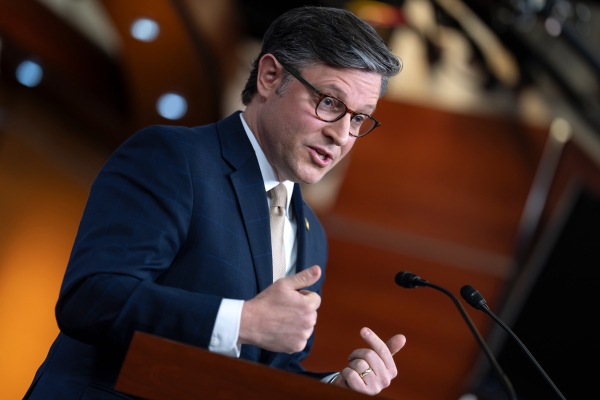
Speaker of the House Mike Johnson, R-La., takes questions at a news conference at the U.S. Capitol on April 21, 2026.

Speaker of the House Mike Johnson, R-La., takes questions at a news conference at the U.S. Capitol on April 21, 2026.
Speaker of the House Mike Johnson, R-La., takes questions at a news conference at the U.S. Capitol on April 21.
J. Scott Applewhite | AP

The House of Representatives voted Thursday to reopen most of the Department of Homeland Security, ending the longest agency shutdown in U.S. history.

The House passed a bill funding DHS, minus dollars for Immigration and Customs Enforcement and Customs and Border Protection. The measure passed by voice vote on what was the 76th day of the shutdown.

Democrats refused to back funding for many of the agency's immigration functions in an unsuccessful effort to secure reforms including body-worn cameras and broad restrictions on face coverings after federal law enforcement killed two American citizens in Minnesota earlier this year.

The Senate, led by Republican Majority Leader John Thune, R-S.D., unanimously advanced this funding legislation in March. At the time, Speaker Mike Johnson, R-La., referred to the proposal as "a joke" and refused to bring it up for a vote. Many members of the House Republican conference refused to fund the agency in a piecemeal fashion and did not want to negotiate over reforms to immigration enforcement operations.

On April 1, Johnson reversed course. He announced the funding bill would be voted on "in the coming days." More than four weeks later, he finally made good on that commitment.

In an effort to appease his hardline members, Johnson waited to bring the Senate's proposal to a vote until that chamber's Republicans started the arcane procedural process, known as reconciliation, to fund all of DHS — including Immigration and Customs Enforcement (ICE) and Customs and Border Protection (CBP) — for the remainder of Trump's term without any backing from Democrats.

The funding bill comes as Secretary of Homeland Security Markwayne Mullin warned the agency was close to running out of funds to pay staff.

"We have reached all the emergency funds we can reach into," Mullin told Fox News on Friday. "I am completely out of the slush fund, I have no place to move at the end of the month."

Mullin said the agency was relying on appropriated funds from last year's One Big Beautiful Bill, which allocated more than $150 billion to DHS on top of its regular annual appropriations funding.

President Donald Trump signed a memo this month authorizing DHS to use some of the money from that legislation to fund the department's operations — potentially infringing on the powers granted to Congress by the Constitution to direct how taxpayer money is spent.

Copyright 2026, NPR


Source link