GIIN CEO and Co-Founder Amit Bouri named that tension in his opening remarks, challenging investors to focus not only on deploying capital, but on whether capital is actually producing real outcomes for people and the planet.
One useful framework emerged during a conversation with John Michael Sobrato, Board Chair of The Sobrato Organization. Speaking about the organization’s approach to affordable housing, Sobrato described a strategy organized around production, preservation, and policy — or, more broadly, the public sector. While he was speaking specifically about housing, the framework offers a useful way to think about impact investing across issue areas as investors navigate long-term planning in a rapidly changing landscape.
Balancing production and preservation
In affordable housing, investors are feeling the tension between financing new buildings to increase the supply of affordable units and preserving existing homes and neighborhoods. Both choices carry implications for climate, affordability, displacement, neighborhood cohesion, and the role of the public sector. Many investors are also looking for deeper ways to collaborate with communities to understand their priorities and concerns when new projects are proposed.
The Sobrato Organization aims to pull on both levers. Sobrato shared that the organization’s housing preservation strategy uses both philanthropic and investment capital to help underserved neighborhoods at risk of gentrification retain and improve existing homes. That work is paired with investments in production, including affordable housing bonds and gap financing through the Bay Area Housing Innovation Fund to help more projects reach the finish line.
But if the goal is to connect capital to impact that communities and people can feel, what happens when production and preservation are at odds — even within a single community?

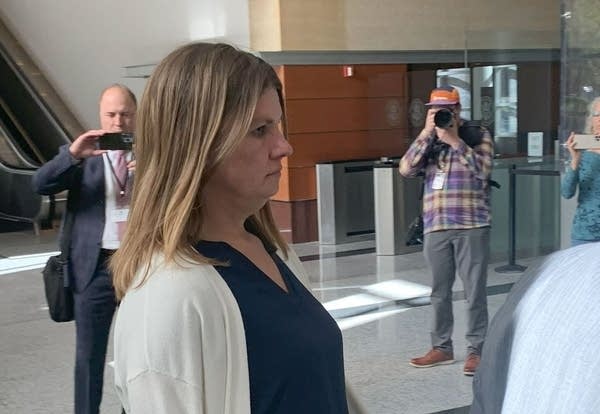
GIIN CEO and co-founder Amit Bouri with guest at the 2026 GIIN West Coast Impact Forum
During a panel on making housing affordable, Cécile Chalifour, Managing Director and Head of West Region at JPMorgan Chase, discussed rebuilding efforts following the 2025 Los Angeles-area wildfires. Affordable housing developers found that some of the hardest-hit communities were divided over how to approach rebuilding. Some residents were adamant about preserving the cultural and residential fabric of their neighborhoods. Others, facing urgent financial pressure, were more willing to sell and move on.
Finding the balance between preserving existing communities, helping residents build or retain wealth, and increasing housing access requires flexible investment strategies that do not assume a single answer for every place.
“There’s no one-size-fits-all because when you’re working with the community, I think there’s not a monolithic response,” Chalifour said. “It’s a long-term gain because people are living in community, and their lives and needs are going to change over time as well.”
Capital deployment is not the same as impact. The work is to ensure capital moves in ways that build, preserve, transition, and govern systems for real people.
That insight is central to impact investing. Communities are not abstractions. They are made up of people with different histories, risks, assets, constraints, and time horizons. Impact capital that is meant to serve communities has to be capable of seeing that complexity.
Repair, replace, or reinvent
Climate investors face a similar question: when should capital preserve what exists, when should it replace failing infrastructure, and when should it help build entirely new systems?
The clean energy transition often attracts attention to cutting-edge technology, but much of the investment need lies in existing systems that will have to be repaired, upgraded, replaced, or reinvented in the coming decades. In this context, preservation does not mean maintaining systems exactly as they are. It means understanding what infrastructure exists, what still has value, what is reaching the end of its useful life, and how to make sure the capital is available when replacement or transition becomes necessary.

In a panel on improving energy systems for a resilient future, Jennifer Layke, Executive Director of ACEEE, pointed to the aging U.S. electrical grid as a case in point. More than 70% of the U.S. grid is more than 25 years old, and the question is not whether portions of that infrastructure will fail, but when and how prepared investors, utilities, regulators, and communities will be when replacement opportunities arise.
“The question is the timing and being able to forecast and build the market such that when a piece of equipment fails, because they have 15, 20, 30-year lives, depending on what you’re talking about, when that equipment fails, that the capital is available to do the replacement to capture that value,” Layke said.
But, as with housing, climate resilience also requires production. Peter Fox-Penner, Principal at The Brattle Group and Impact Chair at Energy Impact Partners, emphasized that catalytic capital is essential to the clean energy transition, and that capital is not yet keeping up with demand. To prepare for transition opportunities, investment capital is needed now to scale products, technologies, and business models that can help sustain and decarbonize critical systems.
Climate investors can also use capital to engage the public sector more strategically. The Sobrato Organization, for example, has paired decarbonization with policy support by donating appreciated carbon-intensive holdings to a 501(c)(4) organization working on climate change. In that case, portfolio transition becomes not only a decarbonization strategy, but also a way to support public policy advocacy.
Policy and the public sector will dramatically shape climate outcomes. For investors, that means impact cannot be understood only as what happens inside a portfolio company or project. It also depends on whether capital helps build the enabling conditions for systems change.
Preparing for the AI transition
Artificial intelligence was never far from the conversation. Like housing and climate, AI raises questions about production, preservation, transition, and public governance. It is not simply another investable technology category. It is a general-purpose technology likely to reshape portfolios, labor markets, energy demand, data systems, and the tools investors use to measure impact.
Communities are not abstractions. They are made up of people with different histories, risks, assets, constraints, and time horizons.
Michael Kubzansky, CEO of Omidyar Group, pointed to a startup working to reduce the energy toll of AI data centers through upcycling, part replacement, and other efficiency strategies. The example suggests that investing in AI does not always mean financing new models or applications. It can also mean investing in the infrastructure, energy systems, and mitigation strategies that make the AI transition less extractive and less resource-intensive.
The social implications are equally important. Investors committed to balancing financial returns with responsible impact will need to engage with communities affected by AI infrastructure, including those facing land use, energy, water, and displacement pressures related to data centers. Regardless of an investor’s strategy, AI is likely to affect the broader portfolio.
“AI is going to be a general purpose technology that’s going to affect everything else you’re investing in as well,” Kubzansky said.

That makes AI both an investment opportunity and a portfolio-wide risk lens. Kubzansky urged investors to look carefully at cross-portfolio risks and opportunities through both financial and impact lenses, and to take a long-term view of AI investment while prioritizing preparation and public sector engagement.
AI is also beginning to change how investors evaluate and report impact. During a session on impact results, measurement fatigue, and rebuilding confidence in impact data, panelists discussed how AI is already reshaping impact measurement and management. Investors will have to navigate new technological capabilities while addressing concerns about privacy, reliability, and the interpretation of increasingly complex data.
“IMM is in a transition,” said Nelli Garten, CEO and Co-founder of Tablecloth.io, an impact reporting platform. “I think that for a long time, the skills that were necessary in IMM were number crunching, project management, and gathering the data. Well, that has all become a lot easier. In the time of AI, taking unstructured data and making sense of it is where the value is going to be moving forward. And so I really think that we need to move from being those number crunchers that sit in a corner and actually be out in our organizations being influencers.”
For Kubzansky, one of the most important roles investors can play now is to advocate for and help build robust AI infrastructure and a regulatory environment that supports trust. He compared the evolution of AI governance to the evolution of automobile safety.
“We built things [for cars] like taillights, which if you think about weren’t a thing when we first invented cars, but made them much safer, not perfect,” Kubzansky said. “So think about the AI stack in the same way. What’s going to make it trustworthy to drive adoption and to engage with in a way that you can have confidence?”
Making impact real
Across housing, climate, AI, and impact measurement, the same pattern kept reappearing. Impact investors are not only deciding which solutions to finance. They are deciding what should be built, what should be preserved, what should be transitioned, and how capital can work alongside public systems to produce outcomes that people actually experience.
Production, preservation, and policy are not separate strategies. They are interdependent tools for connecting capital to community benefit. Production without preservation can accelerate displacement or waste. Preservation without transition can protect systems that are no longer equitable, resilient, or sustainable. Policy without capital can remain aspirational. Capital without public-sector engagement can fail to shift the conditions that determine whether impact lasts.
Production without preservation can accelerate displacement or waste. Preservation without transition can protect systems that are no longer equitable, resilient, or sustainable.
In his closing remarks, Bouri emphasized that financial solutions with real impact increase access to capital in ways that meaningfully improve the lives of people and communities.
“Building wealth and financial security requires more than capital alone. It requires intentional strategies that expand participation. Value is everywhere, but access to capital is not,” Bouri said. But access to capital alone is not enough. “What matters is whether financial products actually work for people and whether they contribute to long-term financial health.”
For impact investors, that may be the essential test. Capital deployment is not the same as impact. The work is to ensure that capital moves in ways that build, preserve, transition, and govern systems so that positive change becomes visible in the lives of real people.