Gun trigger device ruling stands on court appeal


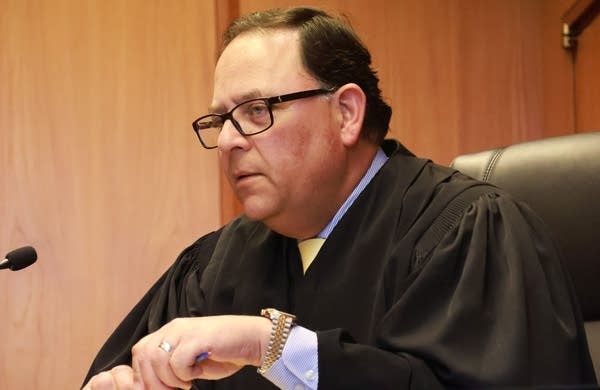
judge listens to lawyers in court

The Minnesota Court of Appeals ruled Tuesday that it won't reinstate a law to ban certain gun trigger mechanisms nor will it take down the rest of the measures it was tacked onto when the restriction passed.

Two years ago, the Minnesota Legislature passed a 1,400-page bill covering a broad swath of topics. The Minnesota Gun Owners Caucus sued over a provision that banned binary triggers – devices that can fire a round on the pull of a trigger and another on the release. The group argued the law violated Minnesota's single-subject rule.

A Ramsey County District Court Judge Leonardo Castro ruled that the Legislature overstepped its bounds by lumping so many topics together and put the gun restriction on hold.

Both parties appealed portions of that ruling, but the Court of Appeals didn't depart from it. Notably, appeals judges allowed the remainder of the massive bill to stand. They cited a prior single-subject decision from the state Supreme Court.

It's possible this case heads next to the Minnesota Supreme Court.

Neither party to the case immediately responded to requests for comment.

An attempt by Democrats in the Legislature to reinstate the binary trigger ban this year fell short.

Meanwhile, a federal Court of Appeals ruled Tuesday on a separate gun case.

The 8th Circuit Court of Appeals turned back a challenge to Minnesota’s permit-to-carry law filed by a Georgia man. The long-haul truck driver sued because he wanted Minnesota to recognize the permit laws of his home state as well as Florida, where he also has permission to carry a gun in public.

The man, Jeffrey Johnson, Sr., said the federal courts should rule that Minnesota’s reciprocity law is unconstitutional on Second Amendment grounds because it requires out-of-state permits to have similar standards to those issued by county sheriffs in Minnesota.

The three-judge appeals panel upheld a lower court’s ruling that Minnesota had a legitimate process for evaluating other state permits.

“Minnesota’s refusal to exempt Johnson from a concededly constitutional permitting requirement does not impose any additional burden on arms-bearing conduct, so the convenience afforded by reciprocal permitting between states depends on interstate comity, not the Second Amendment,” Judge L. Steven Grasz wrote in Tuesday’s decision.


Source link

Leave a Reply

Subscribe to Our Newsletter

Get our latest articles delivered straight to your inbox. No spam, we promise.

Recent Reviews


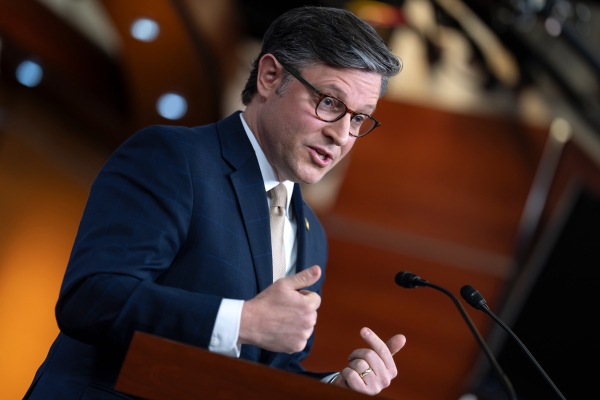
Speaker of the House Mike Johnson, R-La., takes questions at a news conference at the U.S. Capitol on April 21, 2026.

Speaker of the House Mike Johnson, R-La., takes questions at a news conference at the U.S. Capitol on April 21, 2026.
Speaker of the House Mike Johnson, R-La., takes questions at a news conference at the U.S. Capitol on April 21.
J. Scott Applewhite | AP

The House of Representatives voted Thursday to reopen most of the Department of Homeland Security, ending the longest agency shutdown in U.S. history.

The House passed a bill funding DHS, minus dollars for Immigration and Customs Enforcement and Customs and Border Protection. The measure passed by voice vote on what was the 76th day of the shutdown.

Democrats refused to back funding for many of the agency's immigration functions in an unsuccessful effort to secure reforms including body-worn cameras and broad restrictions on face coverings after federal law enforcement killed two American citizens in Minnesota earlier this year.

The Senate, led by Republican Majority Leader John Thune, R-S.D., unanimously advanced this funding legislation in March. At the time, Speaker Mike Johnson, R-La., referred to the proposal as "a joke" and refused to bring it up for a vote. Many members of the House Republican conference refused to fund the agency in a piecemeal fashion and did not want to negotiate over reforms to immigration enforcement operations.

On April 1, Johnson reversed course. He announced the funding bill would be voted on "in the coming days." More than four weeks later, he finally made good on that commitment.

In an effort to appease his hardline members, Johnson waited to bring the Senate's proposal to a vote until that chamber's Republicans started the arcane procedural process, known as reconciliation, to fund all of DHS — including Immigration and Customs Enforcement (ICE) and Customs and Border Protection (CBP) — for the remainder of Trump's term without any backing from Democrats.

The funding bill comes as Secretary of Homeland Security Markwayne Mullin warned the agency was close to running out of funds to pay staff.

"We have reached all the emergency funds we can reach into," Mullin told Fox News on Friday. "I am completely out of the slush fund, I have no place to move at the end of the month."

Mullin said the agency was relying on appropriated funds from last year's One Big Beautiful Bill, which allocated more than $150 billion to DHS on top of its regular annual appropriations funding.

President Donald Trump signed a memo this month authorizing DHS to use some of the money from that legislation to fund the department's operations — potentially infringing on the powers granted to Congress by the Constitution to direct how taxpayer money is spent.

Copyright 2026, NPR


Source link