How rising jet fuel prices are driving up the cost of fighting wildfires


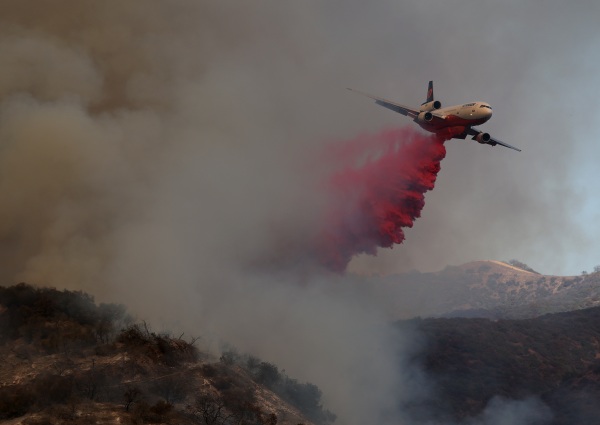
A firefighting aircraft drops a red cloud of retardant ahead of the Palisades Fire on January 11, 2025, in Los Angeles. White smoke fills most of the sky, and the terrain is hilly and scrubby.

A firefighting aircraft drops a red cloud of retardant ahead of the Palisades Fire on January 11, 2025, in Los Angeles. White smoke fills most of the sky, and the terrain is hilly and scrubby.
A firefighting aircraft drops retardant ahead of the Palisades Fire on Jan. 11, 2025, in Los Angeles.
Justin Sullivan/Getty Images

In the summer of 2021, five "Fire Boss" airplanes skimmed the surface of a lake. They belonged to aerial firefighting company Dauntless Air, and they were helping fight a wildfire in Washington state.

CEO Brett L'Esperance described the planes this way: "So if you've ever seen Planes 2, this is Dusty Crophopper."

In a video of the maneuver shared by Dauntless Air, the single-engine aircraft roar across the water one by one, filling their twin pontoons with water.

While the U.S. government is in charge of fighting most big wildfires, nearly all the 500 or so aircraft they use are privately owned by contractors like Dauntless.

Last year, those planes burned through about $50 million worth of jet fuel. Every fire season is different, but if this year is the same as last season, that fuel bill would almost double to nearly $100 million. That's because the price of jet fuel has skyrocketed since the war in Iran began in late February. Ultimately, taxpayers will be the ones to shell out tens of millions of dollars more to fight summer wildfires this year.

Willis Curdy, a retired firefighting-aircraft pilot, said planes are often pushed to their limits.

"This is not like getting in a 737 and going to 33,000 feet," Curdy said.

Curdy, who spent nearly 40 years fighting wildfires, said the advanced maneuvers that pilots use come at a high cost.

"You're asking for a lot of power, a lot of [additional] fuel consumption than you would if you're high, just gliding through the air," he said.

Most aerial firefighting companies have contracts that allow them to pass along higher fuel prices to U.S. taxpayers.
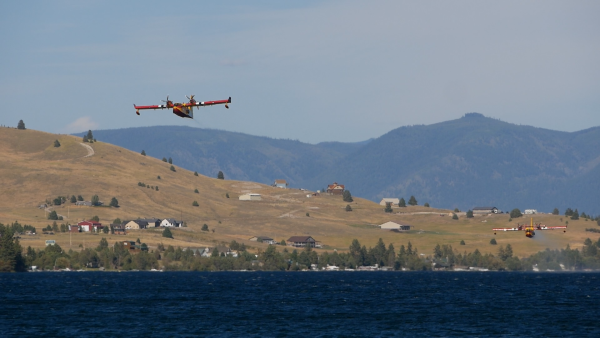
Two "Super Scooper" planes fly low above Montana's Flathead Lake on August 4, 2022. Mountains are visible in the background.
"Super Scooper" planes fill up on water from Montana's Flathead Lake on Aug. 4, 2022. The planes were dropping water on the Elmo Fire burning in northwest Montana.
Josh Burnham/Montana Public Radio

The U.S. Forest Service, the federal agency in charge of fighting most big wildfires in the United States, declined NPR's request for an interview for this story.

In emailed statements, officials said the Forest Service has budgeted $45 million for fire aviation fuel this year. That's $7 million less than it spent last year.

"Yeah, I think that budget's going to change," Curdy said with a laugh.

Last year's fuel bill was slightly above the six-year average. This year, several Western states had very dry to record-dry winters, setting them up for a potentially catastrophic wildfire season.

L'Esperance, Dauntless Air, said he's less worried about fuel prices than the potential for shortages of jet fuel.

"That's what's keeping me up at night," he said.

L'Esperance has his eye on oil imports heading into California, where most of the jet fuel used across the West is refined. The California Energy Commission is reporting the lowest stock of jet fuel at refineries in more than two years.

The American Petroleum Institute says the state is more reliant on imported oil than the rest of the country — imports that have stalled due to the war in Iran.

"When things get really, really busy and scary in that late June, July, August and September time frame, if we don't have the fuel to respond, we just can't respond," L'Esperance said.

The Forest Service has not responded to NPR's questions about whether it expects a shortage this year of fuel for firefighting aircraft. But the agency told NPR it has the flexibility to spend more if it needs to.

It very well might — federal forecasters are predicting an active fire season in much of the West.

Copyright 2026, NPR


Source link

Leave a Reply

Subscribe to Our Newsletter

Get our latest articles delivered straight to your inbox. No spam, we promise.

Recent Reviews


A Republican lawmaker charged in an alcohol-related driving offense won’t have to appear in court again until after the Legislature adjourns for the year.

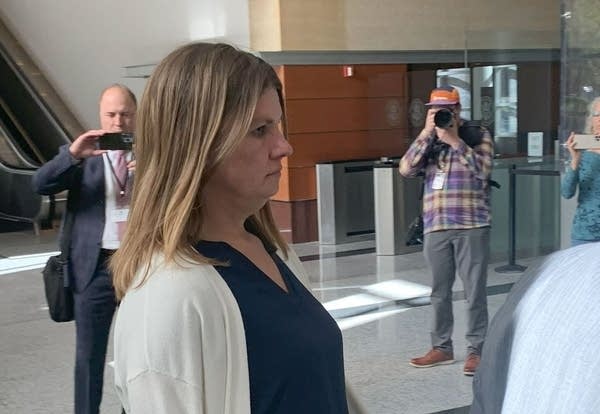
A June 10 arraignment hearing is set for Rep. Elliott Engen, a Lino Lakes Republican who faces three misdemeanor charges following an arrest early Friday. He was stopped for speeding and other infractions in White Bear Lake; officers detected alcohol and he later tested well above the legal limit for driving, according to a citation.

Engen has apologized for a lapse in judgment; he promised to learn from his actions and “do better.” Aside from being a second-term legislator, he is also a candidate for state auditor.

A second lawmaker, GOP Rep. Walter Hudson, was in Engen’s truck at the time of the stop and an open bottle of alcohol was found in a rear seat. Hudson, a second-term legislator from Albertville, was in possession of a permitted handgun, which could cause him legal problems if he is determined to have been intoxicated.

Police officers wrote in their report that Hudson disclosed he had the gun as the truck was being searched. The report said police took the firearm for safekeeping and said he could pick it up at a later time, which Hudson agreed to.

“I regret the poor decisions that were made during this incident, and commend the White Bear Police Department for their professional response,” Hudson said in a written statement. “I’m grateful that no harm was done to ourselves and others.”

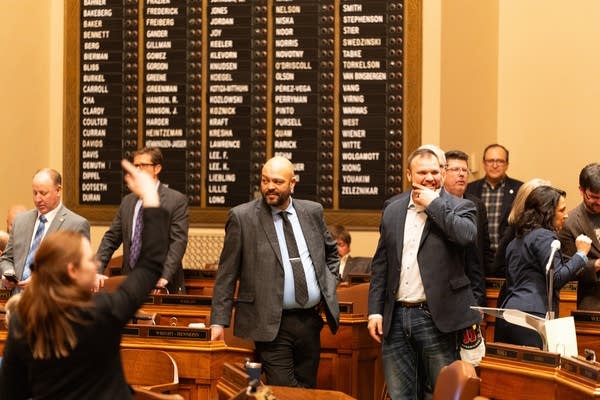
Two lawmakers stand and look around
Rep. Walter Hudson, R-Albertville, (center) and Rep. Bidal Duran, R-Bemidji, (right) join other Republican lawmakers gather in the House chambers Jan. 27, 2025.
Tim Evans for MPR News file

A third, unidentified passenger was in the truck as well, according to police. Hudson and that person were transferred to the police department until they could arrange rides.

The Minnesota lawmakers had been at the Capitol late into the evening Thursday as the House debated procedural motions on gun, immigration and social media legislation. The motions failed on 67-67 votes.

There is no indication yet that either Hudson nor Engen had been drinking on Capitol grounds, which would be a violation of a House rule against consumption of alcohol or drugs in spaces under that chamber’s control.

According to a White Bear Lake Police report, Engen initially said he had not been drinking when asked by the police officer who pulled him over — “nothing at all,” he is quoted as saying. He performed a field sobriety test, which the report says showed signs of impairment.

Engen gave a preliminary breath sample there, the report says, which estimated a 0.142 blood alcohol level. After he was taken by squad car to the police department “Engen spontaneously stated, ‘Sir, I had a drink three hours ago,’” the report says.

He told the Minnesota Star Tribune in an interview Monday that he had also consumed alcohol in the afternoon on Thursday as well.

Engen is charged with two impaired driving offenses and speeding. White Bear Lake police also said he was driving a vehicle with expired registration and an inoperable headlight.

Engen has not returned calls from MPR News. A court docket lists a “notice of appearance” on Tuesday.

He is being represented in the criminal case by Chris Madel, an Excelsior attorney who waged a brief Republican campaign for governor.


Source link