
Three Minneapolis activists are recovering from an 11-day hunger strike, calling on the Hennepin County Board of Commissioners to close a trash incinerator in the city.
The strike came to an end Tuesday. Activists involved say they met with state legislators and Minneapolis city officials, and they’re now looking for new ways to push the county board to close the incinerator.
Nazir Khan, the director of the Minnesota Environmental Justice Table, stopped eating on April 10 alongside the two other hunger strikers. He said the strike was a way to push the county for more transparency on its plans for the incinerator.
“It has been putting all this pollution into an already overburdened community,” Khan said. “That community should be at the table to know what happens next.”
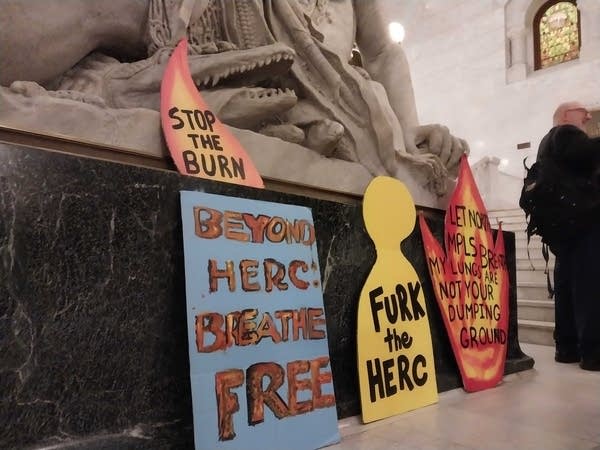
The strike was the latest chapter in an ongoing movement pushing for the closure of the Hennepin Energy Recovery Center, or the HERC. Some local residents and environmental activists have criticized the facility since it was built in 1989, citing air pollution from burning trash. The HERC is near areas that already have higher-than-average rates of asthma and other health conditions that can be worsened by air pollution.
The HERC operates below permitted levels of air pollution, but it’s still a major source of particulate matter, nitrogen oxide and other pollutants. Closure advocates and county commissioners agree that they don’t want that pollution source in a populated neighborhood. The county board approved a plan in 2023 to close the HERC sometime between 2028 and 2040, but that plan does not specify a specific shutdown date.
Khan, along with fellow hunger strikers Natasha Villanueva and Joshua Lewis, demanded that the Hennepin County Board of Commissioners take a vote to shut down the HERC by the end of 2027.
The board did not take that vote. But Khan said the strike brought attention to the issue. He said the coalition activists were able to meet with state legislators and officials in the City of Minneapolis to talk about steps toward closing the facility.
“We feel like we were pretty successful, and that the strike worked in getting the message out to the community, bringing other levels of government to the table,” Khan said.
But Khan said the coalition did not get much response from the Hennepin County commissioners. The strikers went to the county board’s offices nearly every weekday to request a meeting; no commissioners sat down with them, Khan said.
Hennepin County Commissioner Irene Fernando said in a statement that she wants to close the site, but that it’s not feasible to do so immediately. About half the county’s trash goes to the HERC; she said the county would need to cut back drastically on waste before the facility can close. The county’s plan says that would take policy changes at the state level and from the City of Minneapolis, not just at the county level.
“[Fernando] respects the deep commitment that residents have expressed toward environmental justice and shares the goal of concluding waste incineration at the HERC on the fastest responsible timeline,” the statement from Fernando’s office said.
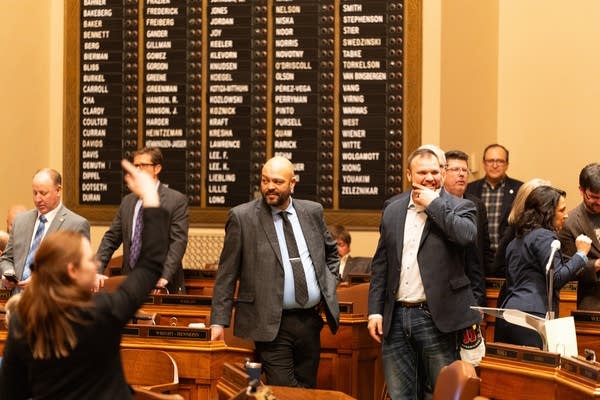
Strikers and supporters called on commissioners to address the issue during a public comment period at a board meeting Monday. Two of the strikers were pushed in wheelchairs to the lectern, as they struggled through low energy levels 10 days into the hunger strike.
“I cannot understand why, when we are taking the steps to raise the seriousness of this harm in our community, they cannot even set a meeting with us,” striker Joshua Lewis said.
The board did not address the strike or plans for the HERC during its meeting.
Khan says he’s recovering in the days after the hunger strike. A medical team is monitoring his energy and blood sugar levels.
Now, strikers are looking ahead to new ways to put pressure on the board of commissioners. Khan said the coalition plans to hold town hall meetings in various commissioners’ districts, aimed at calling more attention to the issue.