A federal judge ruled Friday that military lawyers may continue to work as special prosecutors in the Minnesota U.S. Attorney’s Office.
A Minneapolis man accused of assaulting Border Patrol agents argued the government’s use of Army lawyers violates the Posse Comitatus Act, an 1878 law that banned the use of the military in civilian law enforcement.
The Minnesota U.S. Attorney’s office is relying heavily on military lawyers to handle its caseload after a wave of experienced federal prosecutors resigned in protest over the Justice Department’s response to the killings by immigration agents of Renee Good and Alex Pretti.
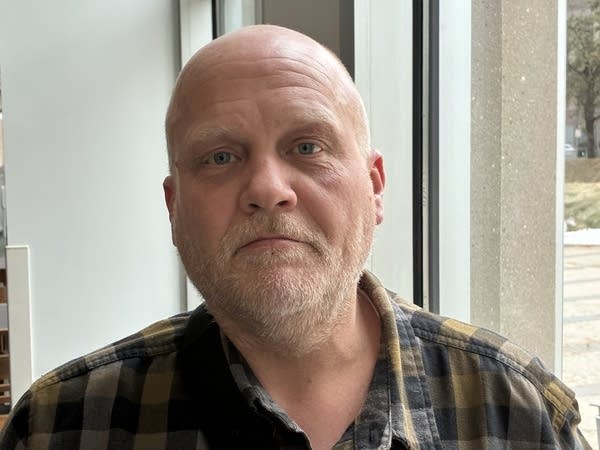
Over the winter, Paul Johnson was among the many people who organized to document and protest the immigration enforcement operation that the Trump Administration dubbed “Operation Metro Surge.”
Johnson, 47, spotted a group of federal agents on Jan. 27 in his north Minneapolis neighborhood and pulled into a parking lot to observe them. In a February interview with MPR News, Johnson said the masked men boxed in his vehicle and yanked him outside.
“The last thing I remember was, like, two or three guys inside the cab of my vehicle pounding on my head and face,” Johnson said. “I was all black and blue behind my ears.”
Johnson said the agents beat him unconscious and tore his rotator cuff. He said he spent five days shackled to a hospital bed at HCMC and had to sneak a phone call to his wife when the agent guarding him stepped out.
After Johnson left the hospital, then-Attorney General Pam Bondi posted his name and photo to social media, calling him and others charged alongside him “rioters.”
Federal prosecutors charged Johnson with felony assault. In a sworn affidavit, Homeland Security Investigations Special Agent Richard Berger alleged Johnson was the aggressor and threatened Border Patrol officers with a baseball bat and pepper spray.
Johnson denies the allegations. Rather than present the evidence to a grand jury, which is required to proceed with the felony case, Army lawyer Michael Hakes-Rodriguez — a temporary special assistant U.S. attorney — re-charged Johnson with a misdemeanor.
Defense attorney Kevin Riach is challenging the charges on multiple grounds, including that Hakes-Rodriguez’s appointment as a special assistant U.S. attorney, or SAUSA, is illegal under the Posse Comitatus Act. Hakes-Rodriguez has since left Minnesota for another assignment, but Riach amended his motion to seek the dismissal of SAUSA William Richards, Hakes-Rodriguez’s replacement who is also a military attorney.
Riach argues the statute not only bans the military from policing the streets, it also prohibits military lawyers from prosecuting civilians. In March, 11 former military attorneys, known as judge advocates, submitted an amicus brief in support of Johnson.
They argued it’s illegal for military attorneys to prosecute civilians unless there’s some sort of nexus to the armed forces, such as a Defense Department employee operating a fraud scheme from a Navy base.
The Justice Department countered that its military lawyer appointments fall under exceptions to the Posse Comitatus Act. Magistrate Judge Shannon Elkins agreed in the Friday ruling.
Elkins pointed to a federal law that says a military officer “may hold or exercise the functions of a civil office in the Government of the United States … when assigned or detailed to that office or to perform those functions.” Elkins said the law does not include language that requires a military nexus.
Elkins also cited two appeals court rulings that authorize the Justice Department to appoint military lawyers as special assistant U.S. attorneys.
Riach said that he plans to appeal Elkins’ decision to U.S. District Judge Kate Menendez.