Lawmakers weigh $4.5 million payout to Marvin Haynes


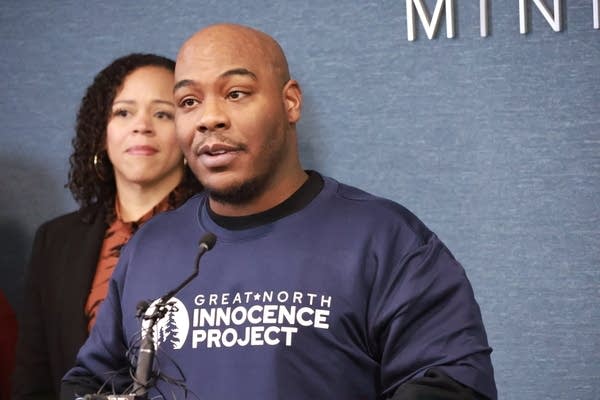
Man in blue T-shirt speaks at lectern

A Minnesota man may receive $4.5 million from the state, after spending nearly two decades in prison for a murder conviction that was later overturned.

In 2023, Marvin Haynes was released from the Minnesota Correctional Facility in Stillwater, after a judge found that an “unnecessarily suggestive” identification procedure used by police and a lack of any physical evidence was enough to vacate his conviction.

A claims bill working its way through the Legislature would pay Haynes $4.5 million under the state’s Imprisonment and Exoneration Remedies Act.

On Wednesday, the Minnesota Senate Finance Committee approved the claims bill, and it is set to have a hearing in a House committee. It will need approval of both bodies and the governor to be paid out.

“I hope that Mr. Haynes has a good rest of his life,” Sen. John Marty, DFL-Roseville, said during Wednesday’s Finance Committee hearing.

Haynes was convicted in the killing of Harry “Randy” Sherer in Minneapolis, a crime that happened when Haynes was 16.

Years later, the Great North Innocence Project filed post-conviction petitions, calling into question the police identification procedure, finding two eyewitnesses who recanted on their testimony and an overall lack of any physical evidence tying Haynes to the crime. A judge agreed and vacated the conviction, writing in the order to vacate “the interests of justice would be served by dismissing with prejudice all charges.”

When Haynes was finally released, he’d spent 19 years, six months and 23 days in prison.

After his release, Haynes wrote in a statement that “it is devastating that it took so long for the truth to come out. My life was destroyed by the officers who wrongly chose to fabricate a case against me, and I have a long road in front of me to heal.”



Source link

Leave a Reply

Subscribe to Our Newsletter

Get our latest articles delivered straight to your inbox. No spam, we promise.

Recent Reviews


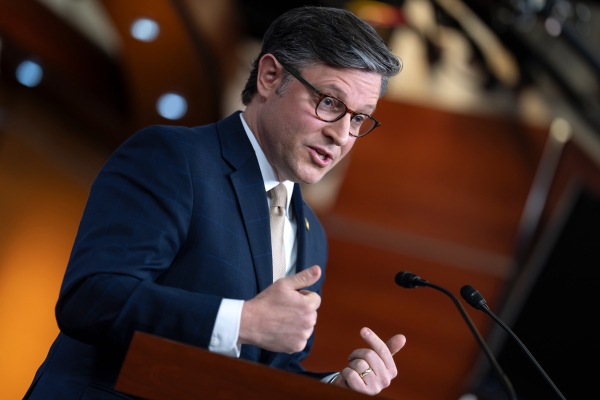
Speaker of the House Mike Johnson, R-La., takes questions at a news conference at the U.S. Capitol on April 21, 2026.

Speaker of the House Mike Johnson, R-La., takes questions at a news conference at the U.S. Capitol on April 21, 2026.
Speaker of the House Mike Johnson, R-La., takes questions at a news conference at the U.S. Capitol on April 21.
J. Scott Applewhite | AP

The House of Representatives voted Thursday to reopen most of the Department of Homeland Security, ending the longest agency shutdown in U.S. history.

The House passed a bill funding DHS, minus dollars for Immigration and Customs Enforcement and Customs and Border Protection. The measure passed by voice vote on what was the 76th day of the shutdown.

Democrats refused to back funding for many of the agency's immigration functions in an unsuccessful effort to secure reforms including body-worn cameras and broad restrictions on face coverings after federal law enforcement killed two American citizens in Minnesota earlier this year.

The Senate, led by Republican Majority Leader John Thune, R-S.D., unanimously advanced this funding legislation in March. At the time, Speaker Mike Johnson, R-La., referred to the proposal as "a joke" and refused to bring it up for a vote. Many members of the House Republican conference refused to fund the agency in a piecemeal fashion and did not want to negotiate over reforms to immigration enforcement operations.

On April 1, Johnson reversed course. He announced the funding bill would be voted on "in the coming days." More than four weeks later, he finally made good on that commitment.

In an effort to appease his hardline members, Johnson waited to bring the Senate's proposal to a vote until that chamber's Republicans started the arcane procedural process, known as reconciliation, to fund all of DHS — including Immigration and Customs Enforcement (ICE) and Customs and Border Protection (CBP) — for the remainder of Trump's term without any backing from Democrats.

The funding bill comes as Secretary of Homeland Security Markwayne Mullin warned the agency was close to running out of funds to pay staff.

"We have reached all the emergency funds we can reach into," Mullin told Fox News on Friday. "I am completely out of the slush fund, I have no place to move at the end of the month."

Mullin said the agency was relying on appropriated funds from last year's One Big Beautiful Bill, which allocated more than $150 billion to DHS on top of its regular annual appropriations funding.

President Donald Trump signed a memo this month authorizing DHS to use some of the money from that legislation to fund the department's operations — potentially infringing on the powers granted to Congress by the Constitution to direct how taxpayer money is spent.

Copyright 2026, NPR


Source link