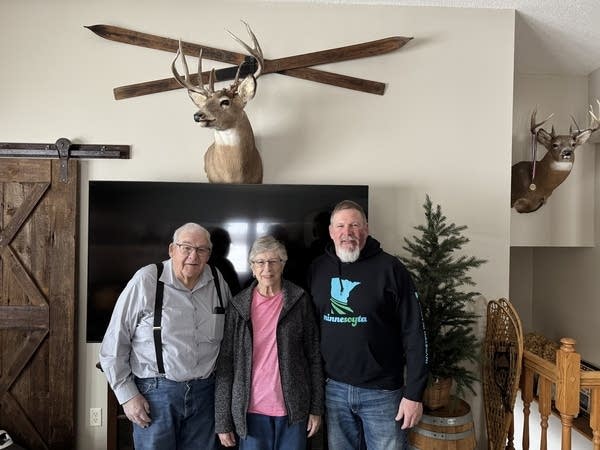
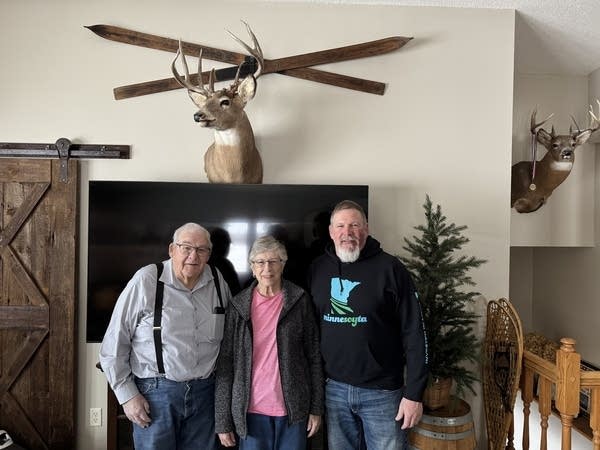
For four generations, the Garry family has farmed in Polk County, dating back to the Great Depression. They’ve weathered multiple crises, coming out on top each time, although it hasn’t been easy.
Dennis Garry, who is 85, remembers a pivotal moment from his childhood that forced him to become a full-time farmer much earlier than planned.
“I was 16 years old, and my father had a very bad heart attack,” Dennis said. “He couldn't do the work anymore, so I took over from there.”
He’d eventually get married and start a family of his own, which included his son Dave. Dave grew up during the 80s farm crisis, a tough time for the Garry clan. He remembers that his dad tried his best to keep the family’s financial troubles a secret.
“Oh, at times you could tell. Pops would be working harder, and you'd see that he wasn't getting as much as he should in crops or whatever,” Dave said. “You always had a sense of things going on.”
Dave, now in his 50s, faces his own challenges as the only child who stayed to take care of the family farm.
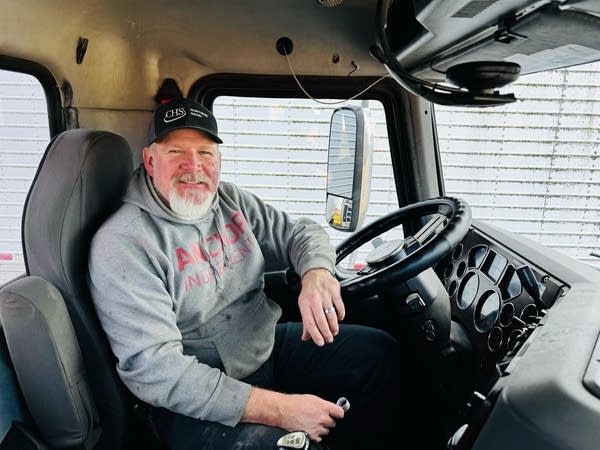
A few years ago, a business he contracted with to sell sunflower seeds went bust and nearly forced him into bankruptcy.
“If it wasn't for Pops, I wouldn't be farming today,” Dave said. “I didn't have the collateral or equity to borrow enough money to continue on, and he did.”
The ag economy remains volatile today. Dave says he and his wife have both felt stressed as a result.
“She's like, ' Why do you want to keep doing this?’ Well, it's in my blood. I don't know what else to do,” Dave said. ”I don't want to be the generation that loses the family farm, but it's getting tougher and tougher to hold on every year.”
When farmers need help
Farming is one of the industries with the highest risk for suicide. Mental health experts say financial pressures are a common reason why.
A recent survey of farmers from Purdue University found that the “percentage of producers who expected good times in the next five years was 37 percent, which is 12 percent lower than the share reported in March 2025.”
Bad crop prices from trade turmoil with China, and now, increasing operating costs stemming from the Strait of Hormuz’s closure, have continued to squeeze farmers’ margins.
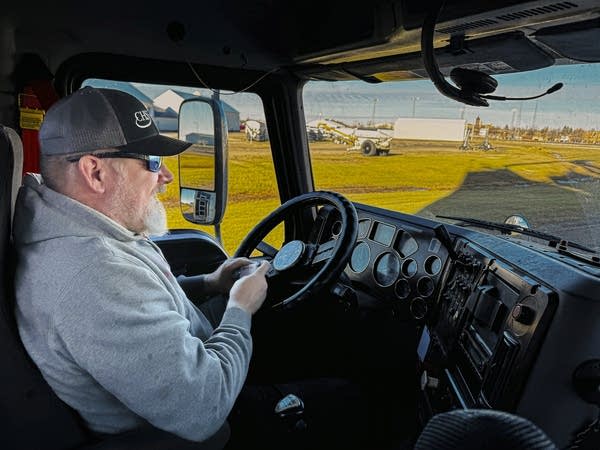
Cynthie Christensen, a therapist in Rochester who has counseled farmers for 18 years, said it can be hard for farmers to come to therapy when it means talking to a stranger about their problems.
“They're very independent, so I think they just really try to solve their own problems,” Christensen said.
Christensen grew up on an Iowa cattle farm and says she understands how farmers also can feel judged for admitting they’re struggling.
“There's a lot of stigma attached to seeking a therapist in the rural environment,” Christensen said. “I wish I wasn't saying that, but I think it takes a lot of courage for somebody to call me.”
So, if mental health professionals want to help more farmers, Christensen said the industry needs to rethink how it provides services.
‘What are they going to think about me?’
Tracie Rutherford-Self, one of three agricultural mental health specialists who provide free care for farmers and their families for the state of Minnesota, said there’s often stigma associated with going to a therapist’s office. She operates out of Mankato.
“There's some reality to ‘hey, if somebody sees me going into a therapy office, what are they going to think about me? And what they think about me, literally, could impact my livelihood,’” Rutherford-Self said.
If the local banker knows a farmer is struggling, for example, it might be harder for that client to get a loan for seed or a new tractor. That’s why she visits her clients on the farm or neutral spots like community college campuses.
She adds that if mental health providers want to build trust with their clients, they need to demonstrate understanding of the unique pressures of farming. Rutherford-Self said she explains early in sessions about her own rural upbringing and that her husband comes from a farm family.
That’s because if farmers do come in for a therapy session, out-of-touch comments can discourage them from returning.
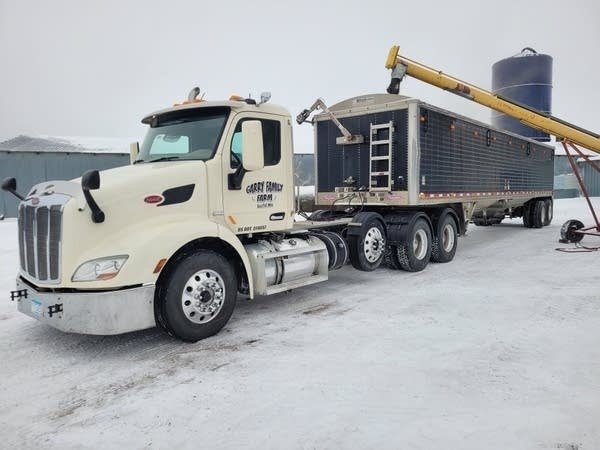
Rutherford-Self recalls a time when a client told her that at an appointment with a mental health provider, they were told that they’d be better off by not farming.
“While on some level, there actually may be some truth to that, as far as finances and stress, I think it really shows a lack of understanding of what our farmers really value, and that is legacy and being able to continue to do the work,” Rutherford-Self said.
Rutherford-Self said that not only do communities need to train more providers to work in rural areas, but the mental health care system also needs to think more expansively about who can help.
“I have a really big philosophy that if you wait for the first call to come straight to me, we're going to miss people,” Rutherford-Self said.
Farmers’ usual lifelines: other farmers
When people are struggling, especially farmers, their first call isn’t to a therapist. It’s to a family member or a friend, Rutherford-Self said. So, according to her, mental health providers should leverage this by training all kinds of community members to recognize mental health warning signs.
She’s training some bankers right now because they’re often the first to hear if a farmer is struggling financially. Oftentimes, farmers are more willing to reach out to friends than professionals.
“Farmers seek advice from other farmers because they know that they're going through the same thing and that they can relate with you a lot more than a therapist or a priest who maybe aren't going through the exact same hardships,” said Caylor Rosenau, a corn and soybean farmer who lives in northeast North Dakota.
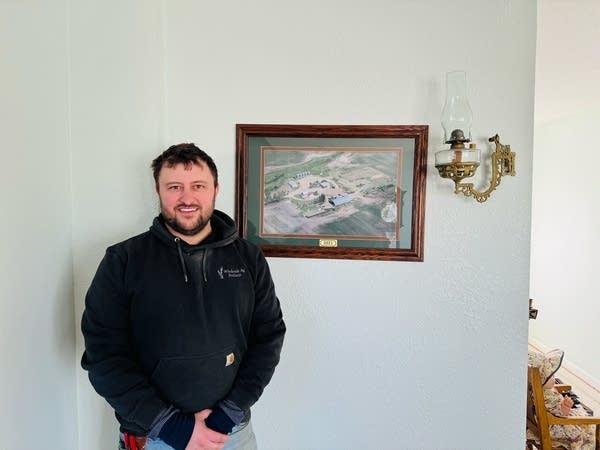
Fellow farmer Dave Garry can relate.
“I get a lot of calls from friends and neighbors that are having tough days, and they don't want to take it home with them, so they end up calling you and you talk them off the ledge,” he said, noting he also calls friends when he needs to vent.
Christensen, the therapist, suggests that more everyday people in rural communities should get trained to recognize and watch for the signs of mental health issues.
“We all have to kind of know some CPR, something about the Heimlich maneuver,” she said. “And I think it's the same kind of life-saving thing that we know something about the questions that we can ask to see if our neighbors are struggling with their mental health.”
This story is part of Call to Mind, American Public Media and MPR's initiative to foster new conversations about mental health.