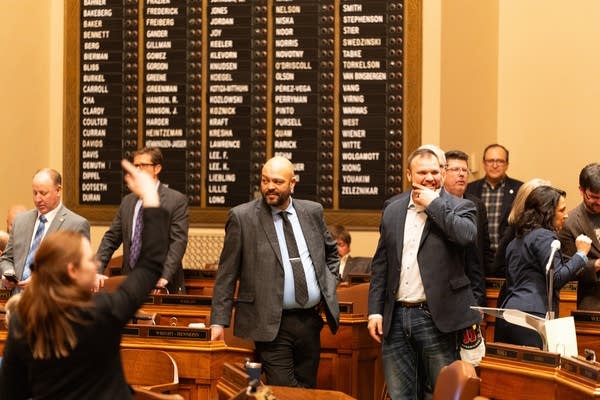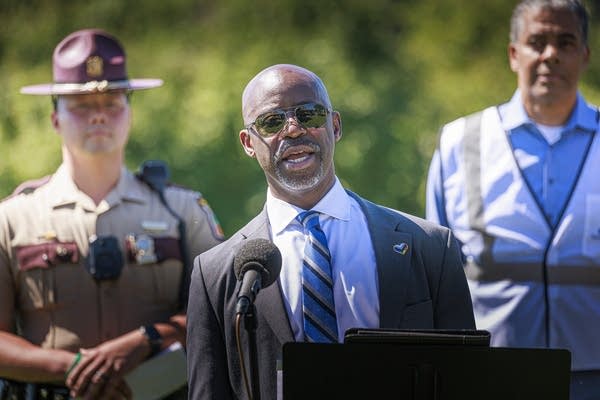

Minneapolis Mayor Jacob Frey on Thursday vetoed the city council’s second attempt to extend the city’s eviction notice timeline.
He also vetoed a council ordinance decriminalizing drug paraphernalia.
Both ordinances passed with the support of the progressive wing of the city council. The council can attempt to override the vetoes — but unless some council members change their votes, they likely don’t have the support to do so.
Eviction timeline extension
The ordinance would have required landlords to give tenants 45 days’ notice before officially filing to evict them — an extension from the 30 days currently required under city rules.
Council members supporting the extension said it would help people who are still struggling to pay rent after the federal immigration enforcement surge.
In his letter to the city council on the veto, Frey wrote that rental assistance money is the best way to support tenants — not extensions.
“The City of Minneapolis has a longer pre-eviction notice period than most cities in the country,” Frey said. “I am not convinced that more time will result in improved outcomes.”
He pointed to the eviction moratorium imposed during the pandemic in 2020, and the wave of evictions that followed when the moratorium was lifted. He said the same in March, when he vetoed a similar council ordinance that would have extended the notice timeline to 60 days.
Some shelter leaders and housing experts agreed with Frey, saying that more time without more financial assistance available to renters would put them further in debt.
But some noted that, this time, there is city funding available — the council and the mayor have approved $3.8 million in rental assistance, which residents can now apply for. Council members and housing experts supporting the eviction notice extension said it could help give renters time to access those funds.
The council would need nine votes to override the veto. Last week, the council passed it on a 8-5 vote.
Drug paraphernalia decriminalization
Frey also vetoed an ordinance that would have decriminalized drug paraphernalia in Minneapolis.
The ordinance was recommended by outreach workers, who said the city’s current policies discourage drug users from seeking help or getting clean needles and other materials, out of fear of getting in trouble. Under the city’s current rules, possession of drug paraphernalia is a misdemeanor.
In his letter to the council, Frey said the current rule makes it easier for police to investigate drug-related crimes, as they can stop people for having drug paraphernalia and investigate further.
He said the ordinance also is frequently used by Metro Transit police to keep people from using drugs on light rail trains.
“I remain a firm believer in harm reduction, but we need every tool available to combat addiction and related quality-of-life issues,” Frey said.
Advocates for the ordinance said the current law complicates their work.
Jay Orne is a researcher and manager of HIV prevention programs at the Aliveness Project. He oversees the organization’s outreach to people on the streets — which involves providing clean needles, plus Narcan and HIV testing. Orne said people who use that program have been stopped by police after picking up clean needles.
“That makes the folks that we work with hesitant to take the supplies that they need,” Orne said.
He worries that people will instead use old needles and less-safe practices — which can further the spread of HIV.
Orne said it creates a dilemma for outreach workers, too. Their work handing out safer supplies is funded by state and county dollars, but it’s technically illegal for drug users to carry the supplies they’re given.
“That’s — I think — the hypocrisy, or just the weirdness of the situation,” Orne said. “One hand is saying, ‘this is such an important public health strategy that we’re going to fund your program to be out there on the street’… and then another hand is saying, ‘that’s actually illegal.’”
Several council members said they worried that decriminalizing paraphernalia would lead to more drug use in public places and paraphernalia left on the streets.
Council member Elizabeth Shaffer said constituents report issues with litter left on the streets, including drug paraphernalia.
“Public health is not just about the health of the people engaged in the behavior being regulated. It encompasses the well-being of the entire community, including people who are not using drugs,” Shaffer said.
Several residents echoed those complaints in public comments.
Council member Jason Chavez said continuing to criminalize paraphernalia isn’t helping drug users or other residents in the city.
“This ordinance was brought forward to address public health and safety issues harming our communities,” Chavez said. “Not a single Minneapolis resident will see their health or safety improve because of the mayor’s action.”
The council voted 7-6 in favor of the ordinance last week. That leaves them two votes short of the required majority to overturn the mayor’s veto.