Minnesota grants pardon to man facing deportation


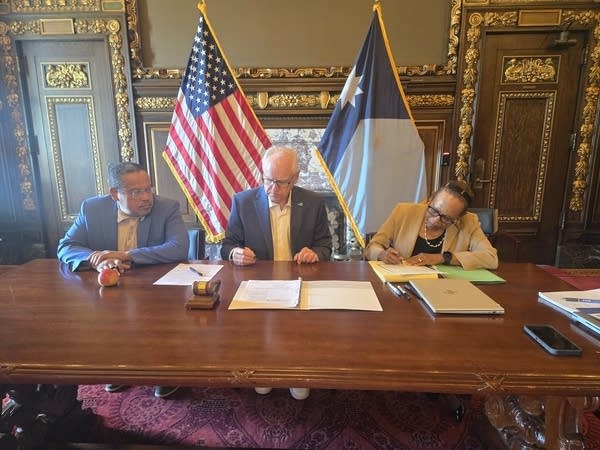
Attorney General Ellison, Governor Walz and Chief Justice Hudson sign papers in front of U.S. and Minnesota flags.

The Minnesota Board of Pardons granted clemency during a Monday emergency meeting to a man who was scheduled to be deported early this week.

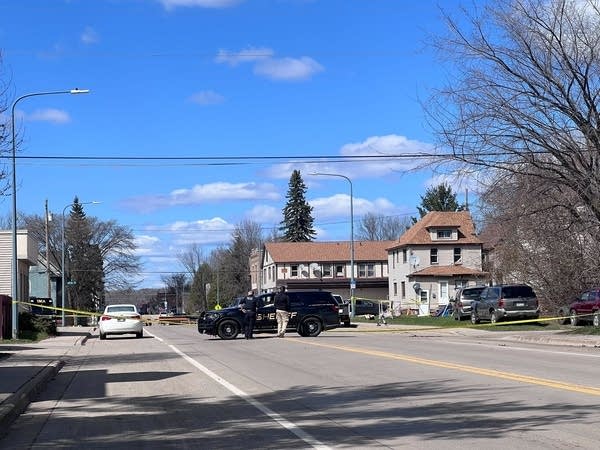
At “Ricky” Chandee applied for a pardon before federal immigration agents arrested him at his home in Brooklyn Park in January. He was born in Laos and has a deportation order related to a 1992 conviction for second-degree assault.

The Clemency Review Commission, a group that recommends clemency decisions to the Board of Pardons, voted 6-0 to grant his pardon. The pardon board, which includes Gov. Tim Walz, Attorney General Keith Ellison and Minnesota Supreme Court Justice Natalie Hudson, was not scheduled to meet until June 10.

All three board members acknowledged they likely would have approved Chandee’s pardon at that meeting, but acted more quickly after learning he was scheduled to be deported in the next two days.

“There is nothing in this application, or nothing in the facts before us that would suggest that Mr. Chandee is a danger to the public in any way, shape or form,” Hudson said. “He has a lot of family support, which is obviously very important, and he's had that support over the last 29 years.”

A federal appeals court in Louisiana has paused Chandee’s deportation for 14 days in response to a request Chandee’s lawyer filed last week.

The federal government is likely to contest the pardon, according to his lawyer. The Department of Homeland Security has not responded to a request for comment.

Chandee was one of several immigrants who appeared before the Clemency Review Commission on Friday. He was scheduled to make his case over videoconference, but was unable to appear after being transferred the night before from a detention center in Texas to one in Louisiana.

Two men smile and hold up four large fish, with more fish laid on the ground
At "Ricky" Chandee and his son, Alex, who is a member of the U.S. Air Force.
Courtesy of Tina Huynh-Chandee

Tim Blaylark, a family friend, read Chandee’s statement in his place. Family, friends and colleagues testified in support of his pardon and dozens of other supporters filled the room.

“My dad wanted me to live the life he never had and I believe my father has done very well in that,” Chandee’s son, Alex Xayasounethone, told the commission.

At least five other applicants with hearings on Friday said they are at risk of deportation and one, in addition to Chandee, is in ICE detention. The commission recommended clemency for all except one.

In that case, the group approved of pardoning some crimes but not a kidnapping conviction they viewed as more serious. Walz said the pardon board will look at each case “in its entirety.”

“Just an order for removal does not mean you’re going to be granted a pardon. It certainly depends on many factors, rehabilitation being one of those,” he said.

MPR News politics fellow Cait Kelley contributed reporting for this story.


Source link

Leave a Reply

Subscribe to Our Newsletter

Get our latest articles delivered straight to your inbox. No spam, we promise.

Recent Reviews


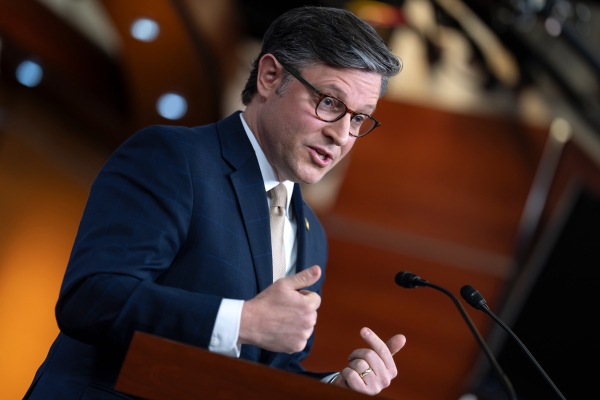
Speaker of the House Mike Johnson, R-La., takes questions at a news conference at the U.S. Capitol on April 21, 2026.

Speaker of the House Mike Johnson, R-La., takes questions at a news conference at the U.S. Capitol on April 21, 2026.
Speaker of the House Mike Johnson, R-La., takes questions at a news conference at the U.S. Capitol on April 21.
J. Scott Applewhite | AP

The House of Representatives voted Thursday to reopen most of the Department of Homeland Security, ending the longest agency shutdown in U.S. history.

The House passed a bill funding DHS, minus dollars for Immigration and Customs Enforcement and Customs and Border Protection. The measure passed by voice vote on what was the 76th day of the shutdown.

Democrats refused to back funding for many of the agency's immigration functions in an unsuccessful effort to secure reforms including body-worn cameras and broad restrictions on face coverings after federal law enforcement killed two American citizens in Minnesota earlier this year.

The Senate, led by Republican Majority Leader John Thune, R-S.D., unanimously advanced this funding legislation in March. At the time, Speaker Mike Johnson, R-La., referred to the proposal as "a joke" and refused to bring it up for a vote. Many members of the House Republican conference refused to fund the agency in a piecemeal fashion and did not want to negotiate over reforms to immigration enforcement operations.

On April 1, Johnson reversed course. He announced the funding bill would be voted on "in the coming days." More than four weeks later, he finally made good on that commitment.

In an effort to appease his hardline members, Johnson waited to bring the Senate's proposal to a vote until that chamber's Republicans started the arcane procedural process, known as reconciliation, to fund all of DHS — including Immigration and Customs Enforcement (ICE) and Customs and Border Protection (CBP) — for the remainder of Trump's term without any backing from Democrats.

The funding bill comes as Secretary of Homeland Security Markwayne Mullin warned the agency was close to running out of funds to pay staff.

"We have reached all the emergency funds we can reach into," Mullin told Fox News on Friday. "I am completely out of the slush fund, I have no place to move at the end of the month."

Mullin said the agency was relying on appropriated funds from last year's One Big Beautiful Bill, which allocated more than $150 billion to DHS on top of its regular annual appropriations funding.

President Donald Trump signed a memo this month authorizing DHS to use some of the money from that legislation to fund the department's operations — potentially infringing on the powers granted to Congress by the Constitution to direct how taxpayer money is spent.

Copyright 2026, NPR


Source link